
Executive Summary
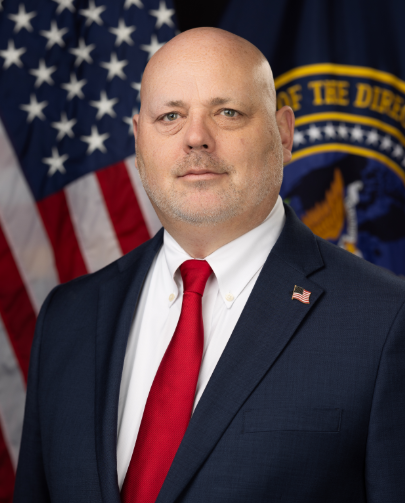
George “Wes” Street was appointed as Director of National Counterintelligence and Security Center (NCSC) following his U.S. Senate confirmation on 18 September 2025. He was appointed by Director of National Intelligence (DNI) Tulsi Gabbard. The NCSC states as its mission the leading of U.S. efforts to detect, deter, and counter foreign intelligence threats across government and industry. As the nation’s principal counterintelligence authority within the Office of the Director of National Intelligence (ODNI), its leadership in interagency coordination is central to safeguarding national security, making Street’s appointment a significant development. [source]
George Street is likely to pursue structural reforms within the NCSC to professionalise counterintelligence as a distinct career field—a long-advocated move within the U.S. intelligence community. His tenure is also expected to emphasise greater interagency coordination to strengthen the national counterintelligence posture. In parallel, Street is likely to focus on imposing strategic costs on foreign intelligence actors, particularly China, through coordinated deterrence measures. However, his ability to expand or reform NCSC operations will likely be constrained by Gabbard’s budget cuts and internal restructuring within ODNI.
Profile
Professional Path
- November 1992 – May 2004: U.S. Army, Active Duty Soldier. His roles included Carpentry/Masonry, Air Traffic Control, and Counterintelligence Special Agent. [source]
- March 2004 – May 2007: U.S. Army Civilian, Europe. He worked as a Counterintelligence Special Agent with Army Europe staff, including deployments to places like Bosnia, Kosovo, Macedonia, Kuwait, Iraq, and stationed in Heidelberg, Germany. [source]
- May 2007 – July 2009: U.S. Army Civilian, Europe. He became Supervisory Counterintelligence Special Agent with Army Europe (G2X), based in Heidelberg. [source]
- August 2009 – October 2012: US Army Civilian, Intelligence and Security Command. He served as Counterintelligence Special Agent in Charge in Monterey, California. [source]
- October 2010 – July 2011: (Deployment) He was deployed to Kabul, Afghanistan, during that time acting as Supervisory Counterintelligence Special Agent with the ISAF Joint Command (J2X). [source]
- June 2012 – August 2019: US Army Civilian, Intelligence and Security Command. He held the position of Supervisory Counterintelligence Special Agent, and also Director of the Operations Support Division, within Army/Intelligence Command G2X at Fort Belvoir, Virginia. [source]
- January 2018 – November 2018: (Deployment) He was deployed to Camp Arifjan, Kuwait, serving as Supervisory Counterintelligence Special Agent and Director of the Theater Intelligence Platform Task Force. [source]
- August 2019 – December 2024: US Army Civilian, Department of the Army, (J2). He acted as Supervisory Special Agent, Senior Army Counterintelligence Liaison to the FBI, and head of Counterintelligence Task Force duties in Washington, D.C. [source]
- December 2024: US Army/OUSD (1&S). He was the DoD Deputy Director of the National Counterintelligence Task Force, based in College Park, Maryland. [source]
- 18 September 2025: George Street confirmed as Director of NCSC.
Education
- 2002 – November 2004: Bachelor of Science at Excelsior College. [source]
Specialised Intelligence/ National Security Expertise
- Counterintelligence Investigations
- Counterintelligence Collection
- Counterintelligence Analysis
- Counterintelligence Functional Services
- Multinational Operations
- International Liaison
- US Intelligence Community Expertise
- Damage Assessments
- Classification Reviews
Honours and Awards
- Army Meritorious Civilian Service Award
- Army Superior Civilian Service Award
- Army Civilian Special Act Award
- US Department of State Meritorious Honor Award
- LTC Arthur D. Nicholson Award for Excellence in Intelligence
- Letter of Appreciation from the Romanian Military Intelligence Directorate
- Army Meritorious Service Medal
- Joint Service Commendation Medal
- Army Commendation Medal
- Army Achievement Medial
- National Defense Service Medal
- Armed Forces Expeditionary Medal
Personal life
- Born 11 November 1970 in Marlborough, Massachusetts. [source]
- Based in Virginia. [source]
- Married to Stephanie and has three children. [source]
- Keeps his personal life extremely private. Key details are redacted from public records. [source]
Political Affiliations:
- Publicly, George Street maintains an apolitical profile with no outward political views. [source]
- In his Senate questionnaire, he reported “No Political Contributions… Affiliations… [nor] Political activities.” [source]
Key Judgements
KJ-1. Street is likely to pursue structural reform within the NCSC to professionalise counterintelligence as a distinct career field.
- In press coverage, Street is described as advocating a new counterintelligence career field. In his answers to Senate questioning, he listed this a “top priority, ” further proposing creating “training and professional development for counterintelligence personnel” and standardising CI career paths. [source, source]
- He has publicly criticised the absence of a dedicated job series for counterintelligence professionals – “This leads to disparate training, execution and understanding of counterintelligence across the IC and whole-of-government,” Street stated in his answers to the Senate. [source]
- When asked about increasing counterintelligence awareness at academic institutions, Street said the government needs “to do a better job at speaking academia.” [source]
- On the platform X, Street further stated America’s greatest strategic assets is their “innovation system,” which he identified as including U.S. universities. [source]
KJ-2. Street will likely work to strengthen operational integration between NCSC, FBI, DHS and DoD counterintelligence elements.
- He describes the NCSC in his Q&A as a “fusion point” meant to bridge federal counterintelligence, law enforcement, and interagency coordination. [source]
- Street declared: “I also intend to have very regular collaboration with the Federal Bureau of Investigation on at least a weekly basis to ensure that we are synchronized and collaborating together as a whole of government to achieve effects against the adversary.” [source]
- Street shared a post on X in which stated the “key” to intelligence is to “build trusted partnerships,” emphasising the importance of collaboration, including with the private-sector. [source]
- Street stated that the exploitation of US structures “require[s] an interagency whole of government approach” and that “enhanced collaboration across federal entities is critical to success.” [source, source]
- Street brings extensive experience in interagency collaboration and has already achieved success coordinating authorities through the National Counterintelligence Task Force (NCTIF). [source]
KJ-3. Street’s tenure will likely focus on imposing strategic costs on foreign intelligence actors, particularly China, through coordinated deterrence measures.
- In his congressional Q&A, Street states one of his priorities is to “impose cost on adversaries” for their exploitation activities. [source]
- Street further stated that China “represents the most prolific threat to national security.” [source]
- Foreign interference threats are increasing, and multiple intelligence community assessments – including ODNI reporting – have acknowledged these threats, aligning with the strategic cost and deterrence approach likely to define Street’s tenure. [source, source]
- Media reporting highlights that in his Senate hearing, Street especially elevated drones and foreign influence as significant threats, signalling a willingness to treat adversarial espionage as an active challenge. [source]
KJ-4. Street’s ability to expand or reform NCSC operations is highly likely to be constrained by ODNI’s cuts and internal restructuring.
- The ODNI 2.0 reform plan calls for reducing ODNI by over 40% and cutting $700+ million in annual expenses, including reorganisation of counterintelligence units. [source]
- Reports indicate NCSC’s leadership was recently reduced (six senior directors/assistant directors cut to one acting director) as part of the restructuring. [source]
- The Homeland / coordination centers like NCSC and National Counterterrorism Center (NCTC) are under review for job cuts or functional relocation. [source, source]
- The restructuring is already being critiqued across media platforms for reducing coordination capacity and creating capability gaps in intelligence sharing. [source, source]
- The widely recognised increase in counterintelligence threats may further strain NCSC as budget reductions and reorganisations take effect, a concern echoed by former senior U.S. officials. [source, source]
Statement on Analysis
This analysis draws on a range of reliable open sources, including official press releases, Street’s responses to Senate questioning, and media reporting, providing moderate confidence in the judgements. While the evidence strongly suggests that Street will pursue these priorities, practical implementation may face limitations. Internal deliberations, classified planning, or evolving interagency strategies may not be visible and could indeed influence outcomes. Furthermore, the specific impact of budget cuts on particular areas is less clear, consequently our confidence in predictions about its direct impact is somewhat lower. Lastly, because George Street maintains a relatively private profile compared to other intelligence officials, with very little personal information publicly disclosed, it is difficult to account for all factors – such as his personality – when predicting the trajectory of his tenure.