
1. Introduction
Taiwan has eleven intelligence bodies across the defence, law enforcement, immigration, and border protection mission areas. Its intelligence community is comparatively sophisticated and is built around three main organisations:
- The National Security Bureau (NSB) acts as the central intelligence coordinator and the president’s principal intelligence adviser.
- The Ministry of Justice Investigation Bureau (MJIB), a hybrid security law enforcement agency responsible for counter-espionage, internal security, and major organized crime.
- The Military Intelligence Bureau (MIB), the Ministry of National Defense’s (MND) primary external and military intelligence service, focuses on China’s People’s Liberation Army (PLA) and broader issues related to regional warfare.
Taipei has, since the late 1990s, steadily pursued intelligence reforms designed to improve coordination across agencies, accelerate intelligence fusion, strengthen cyber and forensic capabilities, and expand cooperation with foreign partners — especially the United States and other advanced democracies. In support of this shift, the National Intelligence Work Act (NIWA), passed in 2005 and later amended, now serves as the central legal framework guiding Taiwan’s intelligence community. NIWA formally defines the eleven intelligence agencies and assigns the NSB a central coordinating role. Over three decades, these agencies transitioned from authoritarian-era instruments of internal control into a more regulated, democratically accountable intelligence apparatus—though challenges remain in oversight, politicisation, and transparency. [source]
Taiwan’s intelligence community’s main priority is monitoring and countering People’s Republic of China (PRC) operations across three overlapping fronts: military coercion, clandestine intelligence collection, and cyber/information operations. [source, source, source, source]
2. Mottos, Symbols, and Institutional Identities
2.1 National Security Bureau (NSB)
The NSB emblem features the blue “sun” of the ROC at its centre, surrounded by the seal-script motto 「安如磐石」— “as solid as bedrock.” Laurel/olive branches frame the emblem. The design draws on ancient Han-dynasty eave-tile ornaments to symbolise continuity and good fortune. Together, the symbols communicate NSB’s identity as the “bedrock” of national security and guardian of peace and public well-being. [source]

2.2 Ministry of Justice Investigation Bureau (MJIB)
MJIB’s emblem incorporates an outer ring (glory and dynamism), a plum blossom (integrity, loyalty, and perseverance), a shield (solemn duty), scales (justice and fairness), budding wheat (vitality and prosperity), and interwoven ribbons (unity and teamwork). The visual design underscores MJIB’s dual identity as a national-security and criminal-investigation agency grounded in professionalism, integrity, and collective effort. [source]
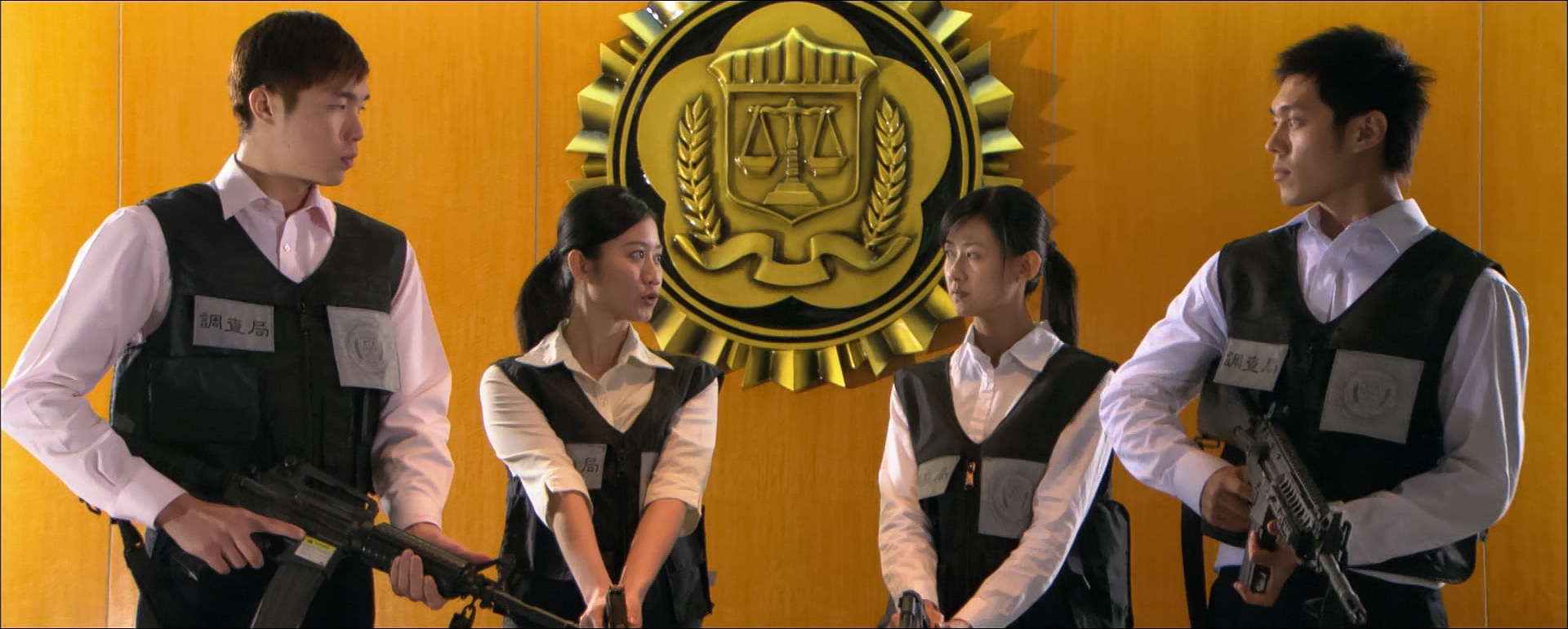
2.3 Military Intelligence Bureau (MIB)
MIB uses standard ROC military symbology and its own seal. Its institutional narrative emphasises anonymity and sacrifice. At the reopening of the military intelligence memorial hall in 2018, President Tsai Ing-wen highlighted the commemorative motto often translated as “We write the blank pages of history,” capturing the idea that many contributions will never be publicly acknowledged. [source, source]

3. Historical Evolution
3.1 National Security Bureau (NSB)
The NSB emerged from Kuomintang (KMT) security structures. In March 1955, Chiang Kai-shek ordered the creation of a central body to supervise and coordinate military, administrative, and party security organs. In 1967, the National Security Council (NSC) replaced the National Defense Council, placing the NSB directly under presidential authority. [source, source]
Martial law ended in 1987, and democratisation prompted a major legal reform. The NSB Organic Act (1994) and NIWA (2005) officialized the NSB’s coordinating role and defined the agencies comprising the intelligence community. These reforms marked the shift from a party-dominated “security system” (情治系統) to a more modern, legally defined intelligence structure. [source, source, source, source, source]
3.2 Ministry of Justice Investigation Bureau (MJIB)
MJIB traces its origins to Dai Li’s intelligence organisations of the late 1920s and 1930s during the Northern Expedition and the war against Japan. In 1956, the Bureau was moved to the Ministry of Justice; in 1969, it was reorganised into the present MJIB. [source, source, source, source]
MJIB’s remit expanded over time from traditional counter-espionage and internal security to include anti-corruption, economic and financial crime, narcotics, money laundering, cybercrime, and advanced forensics — proving Taiwan’s evolution toward a rule of law-based security environment. [source, source]
3.3 Military Intelligence Bureau (MIB)
MIB inherits its lineage from Dai Li’s clandestine organisations, including the Military Statistics Bureau (Juntong) and the Investigation and Statistics Bureau, all within the Nationalist military. After the ROC’s relocation to Taiwan, these units were absorbed into the MND and, by 1955, reorganised into the MIB under the General Staff Headquarters. [source, source, source]
Cold War-era operations against the PRC were often aggressive and covert. The 1984 assassination of dissident Henry Liu in the U.S. — linked to military intelligence elements — triggered political backlash and accelerated reforms separating intelligence from covert action. Modernisation efforts gradually shifted MIB toward strategic intelligence, professionalism, and tighter legal controls. [source, source, source]
The Handbook of Asian Intelligence Cultures by Ryan Shaffer (2022, Rowman and Littlefield Publishers) describes Taiwan’s system as a “community in constant transformation,” moving from militarised authoritarian structures toward more professional, legally bounded services, while retaining some legacy culture and secrecy. [source]
4. Current Organisation and Roles
4.1 National Security Bureau (NSB)
Under the NIWA and the NSB Organic Act, the Bureau is responsible for:
- Collecting and analysing intelligence related to foreign states, the PRC (“Mainland”), and internal security;
- Producing national-level strategic assessments and warnings for senior leaders;
- Providing integrated guidance and coordination across Taiwan’s intelligence community;
- Overseeing national cryptographic policy and secure communications;
- Coordinating protective security for the president, vice president, and designated dignitaries through the Special Service Centre.
[source, source, source, source, source]
NSB’s internal divisions cover foreign intelligence, Mainland affairs, Taiwan-area security, strategic analysis, scientific and technological intelligence, and telecommunications and cryptography. The Bureau chairs national intelligence coordination meetings that align collection priorities across agencies. [source, source]
4.2 Ministry of Justice Investigation Bureau (MJIB)
MJIB is a judicial police agency with nationwide jurisdiction under the Ministry of Justice. Its missions are:
- Safeguarding national security: counter-espionage, protection of state secrets, counter-terrorism, cross-Strait security, and internal security investigations.
- Combating major crime: corruption, election bribery, economic and financial crime, narcotics, organised crime, money laundering, and cybercrime.
[source]
MJIB operates specialised technical units, including:
- A Cybersecurity Division and ISO/IEC 17025–accredited Cyber Forensics Laboratory;
- A Forensic Science Division (chemical, document, DNA, physical, and image forensics);
- Communications surveillance, anti-money laundering (AML), and technical operations units.
MJIB’s operational role intersects security intelligence and law enforcement. It leads many counter-espionage investigations against PRC infiltration and technology theft, while also handling major crime cases with national-security relevance. [source]
4.3 Military Intelligence Bureau (MIB)
MIB is subordinate to the MND General Staff Headquarters and focuses on:
- Military intelligence on the PLA and regional forces;
- Strategic warning, including scenarios of invasion, blockade, and grey-zone pressure;
- HUMINT operations, strategic liaison, and defence planning support;
- Integration into joint operational planning and targeting via intelligence fusion.
The Bureau remains highly secretive, as open-source insights rely on court documents, defector accounts, and limited official references.
5. Intelligence, Culture, and Oversight
Taiwan’s intelligence culture retains influences from the martial-law era (1949-1987), when security agencies were central to political surveillance and authoritarian control. Transitional justice efforts have included the declassification and transfer of NSB archives from earlier periods, contributing to public scrutiny of historic abuses. [source]
Post-democratisation, the community increasingly follows professional, technocratic norms while maintaining strong internal secrecy and centralised executive control. For example: [source, source]
- Executive oversight. NSB reports to the president through the NSC; MIB through the MND; MJIB through the Ministry of Justice. [source, source]
- Legislative Yuan. Committees examine budgets and question agency heads, though access to detailed testimony is limited. [source]
- Control Yuan and audit bodies. Investigate misconduct and review the use of funds. [source]
- Judicial oversight. MJIB’s criminal investigations and forensic outputs feed into the prosecutorial system, creating more external accountability than for NSB or MIB. [source, source, source, source, source]
The 2019–2020 NIWA amendments clarified definitions of intelligence work, tightened rules on domestic collection and improved mechanisms for penalising abuses. However, the NSB’s budget remains classified, and parliamentary scrutiny is limited compared with some Western democracies. [source, source]
6. Financing
Taiwan does not publish a consolidated intelligence-community budget. Most lines are either fragmented across ministries or classified.
- NSB. Legislative reporting suggests that ~80% of its budget is classified; unclassified portions amounted to just over USD $35M in 2025, excluding confidential funds. [source, source, source]
- Ministry of National Defense (MND). The 2025 defense budget reached USD $20.5 billio), around 2.45–2.6% of GDP, and includes funding for MIB and other intelligence-related units. [source, source, source, source, source, source, source]
- Special budgets. Taiwan has established multiyear “resilience” and procurement budgets, including a USD $17.5 billion package with USD $3.6 billion earmarked for wartime stockpiles and resilience measures relevant to intelligence and command-and-control. [source]
- 2026 defence budget. Approved at USD $30 billion, approximately 3.32% of GDP using broader accounting, reflecting a sustained pressure to increase defense investment. [source, source, source]
Past scandals involving secret funds led to stricter rules under the Budget Act and enhanced audit mechanisms. Transparency has improved, though itemisation of intelligence-related spending remains limited. [source, source, source, source]
7. Key Figures
Leadership of NSB, MJIB, and MIB has historically been dominated by military officers and prosecutors, with gradual diversification. As of late 2025, the leadership of the community includes:
- Tsai Ming-yen (蔡明彥) — NSB Director-General since 2022/2023; previously deputy foreign minister and NSC deputy secretary-general. He has publicly described enhanced secure links for real-time intelligence exchange with Five Eyes partners. [source]

- Chen Pai-li (陳百里 / Michael Chen) — MJIB Director-General; a career investigator known for major counter-espionage and anti-corruption work. [source, source, source]

- Yang Jing-se (楊靜瑟) – Director-General of MIB, a general with a long military intelligence and attaché background, described as leading efforts to “get military intelligence back on its feet” amid PLA pressure and prior operational setbacks. [source, source]
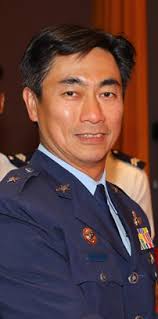
The Handbook of Asian Intelligence Cultures notes that leadership appointments remain highly discretionary, with limited transparency — a lasting vulnerability to politicisation. [source, source]
8. Recruitment and Workforce
MJIB
MJIB is the most open on recruitment, which entails that military service is necessary for male candidates applying for the Taiwan MJIB, along with being able to show that the service has been completed or approved for exemption, recruiting most personnel through competitive civil-service examinations for “investigation officers,” focusing on law, criminology, accounting, IT, and forensic science. Training combines legal procedure, investigative methods, intelligence work, cyber skills, and laboratory techniques. MJIB regularly graduates new investigative cohorts, sometimes in ceremonies attended by the president. [source, source, source, source, source]
NSB
Draws heavily from across government, including analysts, linguists, technical specialists, and secondees from other ministries and the armed forces. Personnel undergo strict clearance processes, psychological screening, and suitability checks. The mix reflects NSB’s emphasis on strategic analysis and interagency coordination. [source, source, source, source]
MIB
Recruitment is largely internal to the armed forces, such as the Military Intelligence Bureau Professional Reserve Officer Class. Officers receive training in foreign languages, intelligence tradecraft, PLA order-of-battle analysis, resistance to interrogation, communications, and special operations skills. Some unconfirmed open-source reports suggest annual training courses with basic and specialised modules, including clandestine techniques and operational field skills. [source, source, source, source]
Across the community, there is a growing demand for cybersecurity, AI data analysis, and foreign languages. [source, source]
9. Cooperation and Strategic Partnerships
Taiwan is excluded from most formal security alliances, so cooperation with partners is highly sensitive, bilateral, and often informal.
- Five Eyes. NSB leadership has publicly stated that Taiwan has enhanced secure systems enabling real-time intelligence exchange with Five Eyes partners. [source, source]
- United States. Cooperation covers military intelligence, joint tabletop exercises, early-warning integration, and analysis of PLA air–naval activity. [source, source]
- Japan. Information-protection agreements and regular dialogues enable limited intelligence exchange, especially on PLA operations and cyber threats, with recent strong public support between both nations. [source, source]
- Law enforcement and financial intelligence. MJIB cooperates internationally on anti-money laundering (AML), cybercrime, narcotics, and organised crime cases through cross-border intelligence exchanges. [source, source, source]
The Handbook of Asian Intelligence Cultures highlights Taiwan’s shift from a primarily U.S.-centric posture to a more networked framework involving European and regional democracies. [source]
10. Equipment and Technical Capabilities
Open-source material provides only partial visibility, but several capability clusters are clear:
- Cyber and digital forensics (MJIB). ISO/IEC 17025–accredited Cyber Forensics Laboratory handles computer, mobile, and multimedia forensics with an annual caseload increasing by ~20%. [source, source, source, source, source]
- Forensic science. MJIB’s DNA, chemical, document and image labs support thousands of judicial and investigative cases annually. [source source, source, source]
- Signals and communications intelligence. Taiwan maintains communications and signals intelligence units under MND and NSB, which coordinate to monitor PLA communications and regional activity. [source]
- Cryptography and secure communications. NSB oversees government cryptographic policy and provides a framework for lawful intercept in national security and serious crime cases. [source, source, source, source]
- Joint Intelligence Operations Center (JIOC). Press reporting suggests expanded fusion of ISR, radar, and multi-source data to support real-time situational awareness of PLA operations. [source]
These capabilities support both external warning and internal counter-intelligence.
11. Tactical–Operational Profile
Operational patterns visible through court records, legislative hearings, and media reporting show:
- Counter-espionage. MJIB routinely investigates PRC recruitment of retired officers, technology theft in defence industries, and attempts to infiltrate critical infrastructure. Cases typically combine HUMINT, digital forensics, and financial tracking. [source]
- PLA monitoring. MIB and NSB contribute assessments of PLA exercises, deployments, and doctrinal changes, feeding daily briefings for senior leadership. [source]
- Election and information protection. Ahead of elections, NSB has reported increased PRC cyber and disinformation activity, including AI-generated content, enabling mitigation efforts with electoral authorities and social-media platforms. [source]
The operational environment is shaped by severe asymmetry in manpower, budget, and geographic depth vis-à-vis the PRC, driving a focus on robust counterintelligence, redundancy, and rapid damage-limitation when penetrations occur. [source]
12. The Future
Taiwan’s intelligence community faces overlapping challenges that will shape its development:
- Escalating threat environment. PLA modernisation, expanded China’s Ministry of State Security activity, and increasingly sophisticated cyber and information operations continue to raise demands for high-quality strategic warning and political and warfare analysis. [source, source, source]
- Balancing secrecy and democratic oversight. NSB and NSC remain opaque to parliamentary scrutiny, and debates persist over a proposed National Security Strategy Act and improved legislative reporting. [source, source]
- Human capital and integrity. Recruiting skilled analysts, linguists, cyber specialists, and case officers remains difficult; insider risks and corruption require strong personnel-security systems. [source, source]
- Technology and data governance. Wider use of big-data analytics, AI, and digital monitoring tools must be reconciled with constitutional protections and public expectations.
The Handbook of Asian Intelligence Cultures concludes that Taiwan’s intelligence community will remain in continuous transformation, with reforms driven by external threats, political competition, and pressure for transitional justice. [source]
13. Conclusion
Taiwan’s intelligence community has evolved over the past four decades from an authoritarian, party-dominated security apparatus into a more structured, legally defined, and increasingly professional set of organisations now represented by the NSB, MJIB, and MIB. This transformation is significant, but evolution is still underway. Legal frameworks and oversight have improved, yet transparency gaps, secrecy, and politicisation risks remain active.
Today’s environment is more dangerous than at any time since the 1950s, with the PRC applying sustained military, intelligence, cyber, and political-warfare pressure from every possible angle. Taiwan’s intelligence agencies must operate under democratic constraints, limited resources, and diplomatic isolation. Their strategic trajectory will be judged along three axes:
Effectiveness — providing timely intelligence warning, countering PRC espionage, and supporting military and political decision-making.
Integrity — maintaining professional standards while resisting infiltration, corruption, or political misuse as a solid democratic regime.
Legitimacy — operating under law, maintaining proportionality, and preserving meaningful democratic oversight.
How Taiwan balances these demands will shape its security, its democratic credibility, and its attractiveness as an intelligence partner in the years ahead, especially for the United States.