
1.0 Introduction
During the Vietnam War, the U.S. pursued a highly secretive program aimed at disrupting supply routes through environmental modification. Known as Operation Popeye, this initiative, which began in 1966, involved cloud seeding over the Ho Chi Minh Trail to extend the monsoon season, with the explicit goal to produce sufficient rainfall along these lines of communication to “interdict or at least interfere with truck traffic between North and South Vietnam.” Endorsed by the Joint Chiefs of Staff, Operation Popeye marked the first systematic attempt to harness clouds, storms, and rainfall as instruments of war. However, it was met with significant scrutiny at home and abroad, helping spur treaties banning environmental warfare. [source]
2.0 Background: Birth of Cloud Seeding
2.1 Vincent J Schaefer and General Electric (GE)
Cloud seeding emerged originally through a scientific curiosity in the mid 20th century. Vincent J Schaefer, a self-taught chemist, was at the centre of this innovation. Shaefer left high school early to support his family, giving him time to explore his deep fascination with the natural world, including archeology, environment, natural history and the like. [source]
As a teenager skating on frozen ponds, he became captivated by the intricacies and complexities in snowflake crystals, and began experimenting with ways to preserve their form. He was also interested and equally frustrated with how little the scientific community at the time understood their formation. [source]
That early fascination eventually followed him into his work at New York based General Electric (GE) research laboratory. During his time at GE, Schaefer became increasingly interested in the physics of ice formations inside supercooled clouds – atmospheric pockets where water remains liquid despite the freezing temperatures. He experimented by introducing various powders and particles into the chilled air of a freezer to see if they would create the nuclei for snowflakes, but nothing happened. [source]
On a hot day in the 1940’s, Schaefer added a small piece of dry ice to help the struggling freezer cool down, dropping the temperature quickly, which caused a small cloud to quickly turn into ice crystals. Once this was realised, the experiment quickly moved from a freezer to the sky – repeating it from a modified B17 bomber over Mount Greylock, Massachusetts, releasing 6 pounds of dry ice into clouds in 1946. He watched as the clouds flashed into snowfall. [source, source, source]
In the months that followed, Schaefer collaborated with fellow researcher Bernard Vonnegut, who identified lead and silver iodide as a far more efficient agent in nucleating ice. Dry ice had to be released inside the cloud to be effective. However, silver iodide could be dispersed outside the cloud and naturally drift in. Their findings resulted in huge global publicity. [source, source]
Their research quickly attracted the military’s attention. The Army Signal Corps and the Office of Naval Research funded GE following the outbreak of WWII in hopes for scientific research to support their war efforts, under a 1947 program named “Operation Cirrus.” During this, the team focused on “on generating artificial fogs, learning about static electricity that forms on aircraft wings during flight through storms, and mitigating crippling aircraft icing.” They helped develop numerous significant innovations, including submarine detectors, a smoke screen generator, and gas mask filters. [source source source]
2.2 Weaponising Weather
A series of other secret weather weaponisation initiatives followed Project Cirrus in several nations, including the Soviet Union, the U.K., and China. The Soviet Scientist Petr Mikhailovich Borisov proposed constructing a 55 mile long nuclear-powered dam designed to redirect ocean currents and in turn manipulate global weather. Yet the scheme never progressed beyond proposal. There were also other attempts, such as by America’s Project Baton, yet none seemed to fully materialise. Project Baton was a U.S. DoD research program that studied how thunderstorms form, using light cloud seeding in its experiments partly to explore the possibility of future weather control. [source, source]
In the 1940s, General George C. Kenney, commander of the Strategic Air Command, stated,
“The nation which first learns to plot the paths of air masses accurately and learns to control the time and place of precipitation will dominate the globe.” [source]
Acknowledging the potential of weather modification in wartime, the idea continued to be indulged. The Vietnam War, beginning in 1955, marked the moment where these ambitions were revived in practice. Operation Popeye was the U.S. project aimed at influencing rainfall over the Ho Chi Minh Trail in Vietnam for purposes of disrupting enemy movement.
3.0 Operation Popeye: Why the U.S. Turned to Weather Warfare
At the height of the Vietnam War, conventional military strategies were proving to be increasingly ineffective against the North Vietnamese Army’s logistics.
The Ho Chi Minh Trail was a network of roads, mountain paths and secret supply routes that stretched through Laos and Cambodia. The trail developed into a critical network that even had its own underground supply caches, fuel pipelines, barracks and even hospitals – all concealed from aerial observation. [source]
President Johnson’s refusal to deploy combat forces into Laos led the U.S. to conduct most of its efforts to stop the trail from the air. The U.S. largely relied on geographical intelligence, where analysts created tractionability maps to understand where vehicles were able to move in southern Laos. [source]
The U.S. had a strong interest in disrupting the Ho Chi Minh Trail because it was arguably the most important supply line keeping the communist forces in South Vietnam alive. Following 1964, the U.S. conducted huge bombing campaigns targeting the trail. However, the trail was constantly rebuilt, and was built to survive attacks. Under dense jungle canopy, with it mostly concealed, plus guarded with defences like anti-aircraft belts, the trail stood strong. [source, source]
The U.S.’s first approaches included Operation Ranch Hand, which extensively sprayed herbicides to expose jungle cover. According to the Environment and Society organisation, by 1966, it was estimated that 1500km of roads had been doused with 200,000 gallons of herbicides. Another operation, named Project Commando Lava, used paper sacks filled with secret chemical concoctions to destabilise the soil, but to little avail. [source]
The U.S. continued to innovate ways to successfully target the trail. They knew that the monsoon season in this part of Asia was intense. Areas of the trail would turn into impossible swamps. Thus, they looked for ways to manufacture, if not, intensify the damage caused by the extreme weather. Cloud seeding emerged as a potential instrument, and the Joint Chiefs of Staff approved the concept in September 1966. This marked the first large scale and systematic use of cloud seeding as a military tactic. [source, source]

4.0 Execution
4.1 Test Phase
The first phase of the operation was conducted during October 1966. This phase was designed to be a controlled experiment to assess the efficacy of such tactics. It was conducted in the Laos Panhandle and finished 9 November the same year. Over this course, U.S. aircraft conducted 56 controlled seeding attempts, dispersing silver iodide into selected cloud formations. The stated success was enough to convince military planners to try it against the Ho Chi Minh Trail. [source]

4.2 Full Operational Deployment
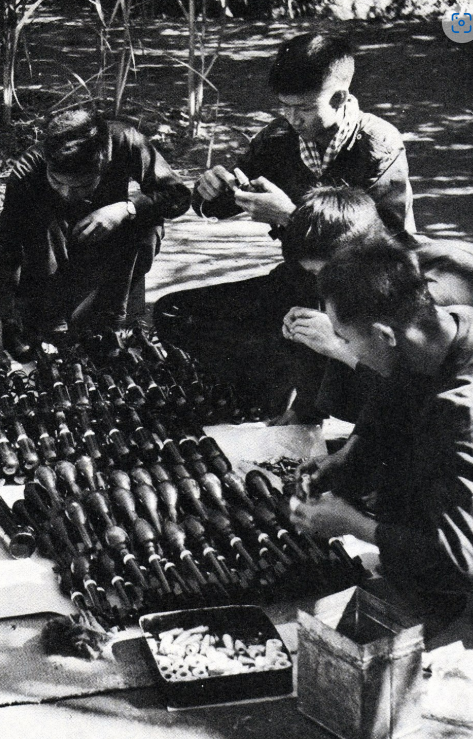
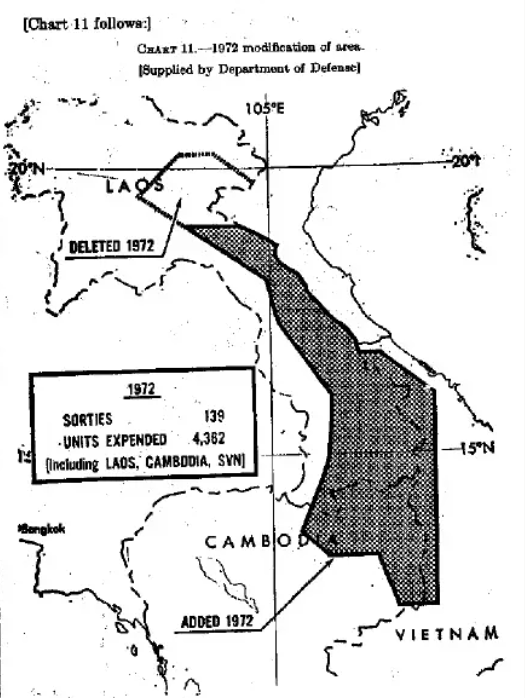
Following the apparent successes of the test missions, Operation Popeye was formally launched on 20 March 1967 and continued for five years under strict secrecy. U.S. Air Force WC-130 and RF-4C flew more than 2,600 cloud seeding sorties and 47,409 seeding units over Laos, Cambodia, and parts of Vietnam. [source, source]
The goal of Operation Popeye was to:
- Soften road surfaces
- Trigger landslides
- Wash out river crossing
- Keep supply routes muddy and impassable
5.0 How Does it Work?
- Identify suitable cloud
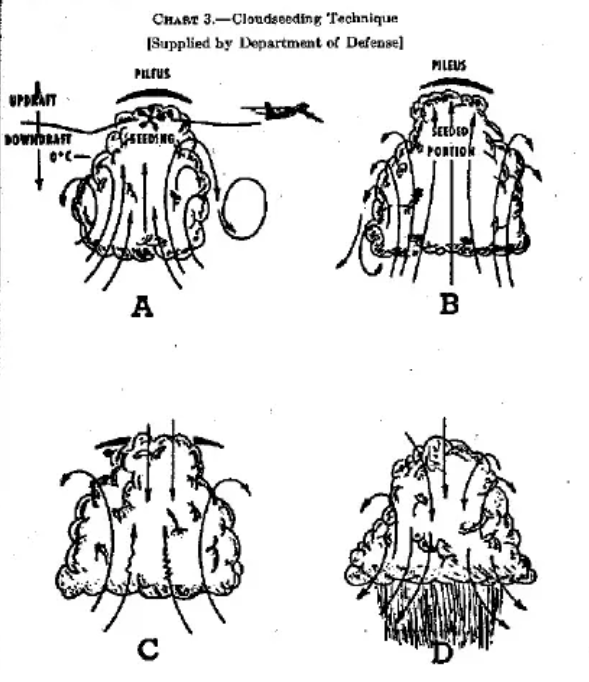
Weather stations monitor the atmosphere for suitable clouds, preferably in the range of -20 to -5 degrees celsius. Cloud seeding only works in those with already sufficient moisture, especially those with Supercooled Liquid Water (SLW).
- Deliver seeding agent
Particles such as silver iodide or dry ice are dispersed into the cloud by aircraft or ground generators. Silver iodide has a similar molecular shape as naturally occurring ice, which incites the growth of ice particles.
- Ice crystals form
These particles act as ice nuclei, allowing for supercooled water droplets to freeze and form ice crystals. They then grow by taking in surrounding water vapour, increasing in size as droplets attach to them.
- Precipitation
Once large enough, the crystals fall as snow or melt into rain, thus artificially producing rain. [source]
6.0 Did it Work?
Assessments of Operation Popeye’s efficacy remain highly contested since its disclosure. Initially, the U.S.expressed strikingly high confidence in the potential of cloud seeding in warfare. In a 1967 memorandum by Deputy Under Secretary of State for Political Affairs Kohler, the test phase of Operation Popeye was described as “outstandingly successful.” He stated: [source]
- 82% of cloud seeding produced rain quickly after seeding. This rate is apparently far above what would normally occur without seeding.
- The induced rainfall was considered heavy enough to help make key vehicle routes unusable, and no post-season repairs or traffic were observed.
- In one case, a seeded cloud drifted east across the Vietnam border and dropped nine inches of rain in four hours.
- Department of Defense scientists judged the tests to show a capacity to sustain rainfall long enough to saturate the ground and thus slow movement on foot and make travelling by vehicles impracticable.
In its operational phase, the Defense Intelligence Agency estimated that rainfall may have increased “up to 30%” in some areas. [source
However, this was based on “empirical and theoretical techniques based on units expended and the physical properties of the air mass seeded,” which as Global Security Org states, is basically a scientific guess based on theoretical models rather than direct measurement. [source, source]
The memorandum also stated that sensor data showed the North Vietnamese consistently struggled with monsoon-season mobility. However, this is a normal and predictable case for the period and area. At some points, like in 1971, the tropical storms – which were formed from the Indian Ocean or South China Sea – intensified and/or prolonged the monsoon rains, not necessarily as a result of cloud seeding. Ironically, the sheer volume of rain produced by these typhoons actually undercut the seeding effort; the cooler, saturated conditions suppressed the warm air updrafts that the cloud seeding depended on. [source, source]
In short, the program’s results were seemingly impossible to isolate from the region’s already volatile climate.
A 2005 U.S. Senate Hearing regarding weather modification by the Subcommittee on Science and Space, Disaster Prevention and Prediction stated “we know that seeding will cause some changes to a cloud. However, we still are unable to translate these induced changes into verifiable changes in rainfall, hail fall, and snowfall on the ground, or to employ methods that produce credible, repeatable changes in precipitation.” [source
7.0 Exposure and Political Fallout
What Operation Popeye unquestionably affected was political, not necessarily tactical/strategic. Once exposed in 1971-1972, the program triggered intense backlash and international concern over the militarisation of weather. Congress and environmental committees were particularly critical of the operation. Concerns about treaty violations, environmental damage, and fears the U.S. was opening the door to a new unpredictable class of covert environmental weapons were paramount. Within five years of such negative publicity, U.S. military weather-modification research had ceased. [source, source]
Opposition within the U.S. government was led especially by Senator Claiborne Pell, who demanded answers about the operation from the Defense Department in September 1971. This was met with resistance, waiting four months to get a response, and then declining to speak on the basis of potentially threatening national security. In fact, in 1972, Secretary of Defense Melvin Laird proceeded to deny any activity regarding U.S. and weather modification over North Vietnam, which later, after leaked documents, admitted to providing false testimony. [source]
As hearings unfolded, the Pentagon tried to minimise the program’s significance, insisting that any rainfall increases were small and “unverifiable.” Some even defended the concept as more “human” than conventional weapons, coining the phrase “make mud, not war.” [source]
Scientists, however, strongly opposed. Philip Handler, President of the National Academy of Sciences, condemned the idea as a serious misuse of science intended for human welfare and peacetime. He stated:
“It is grotesquely immoral that scientific understanding and technological capabilities developed for human welfare to protect the public health, enhance agricultural productivity, and minimize the natural violence of large storms should be so distorted as to become weapons of war. ” [source]
Oppositionists continued to call for a global treaty banning the use of environmental or geophysical modification as weapons. Pell in July 1972 introduced a resolution expressing this desire. The Senate ultimately approved the resolution in 1973, leading to the Environmental Modification Convention (ENMOD), which entered into force on 5 October 1978. The convention prohibits purposeful manipulation of the environment, and was signed by 31 nations, including the Soviet Union. As of today, the convention has 78 states as parties. [source, source, source]
7.1 Environmental Modification Convention
However, there were concerns about the treaty’s efficacy in prohibiting such weapons. While the treaty clearly bans hostile environmental modification, its efficacy is restrained by, as Fatemah Albader stated in a February journal article, “mislabeling, vague or ambiguous language, and enforcement issues.” [source]
ENMOD only applied to environmental modification techniques that produced “widespread, long-lasting or severe effects.” Lawmakers, including Senator Pell and Congressman Gude worried that this threshold was so high that it would leave room for tactical weather warfare, the very kind used in Operation Popeye. Popeye ran for five years, across multiple countries, yet U.S. officials insisted it was “limited” and “ineffective.” This means it may not meet ENMOD’s criteria. [source]
It raised the alarming possibility that the treaty would only ban catastrophic, large-scale attacks while allowing for smaller, targeted operations. This issue was presented in a 21 January 1976 Senate Hearing:
Senator Pell: “The paragraph suggests to me, and it should to you, that anything that is effective militarily would be prohibited by the criteria of ‘widespread, long lasting or severe’… Only those activities which while hostile, are ineffective, would be permitted… If that is so, why not eliminate those criteria because I don’t really understand why it is necessary to preserve an ineffective option?”
Mr. Davies responded with: “The reasoning is particularly difficult because it always starts with a recounting of past actions which obviously cannot be prohibited. I think that if dealing with the past, we must also note that had anyone known that it would not have been effective, it would never have been proposed.” [source]
During subsequent discussions and review processes, attempts were made to strengthen the treaty, with Pell asking for the removal of such stringent criteria, but no agreement was reached. [source]
8.0 Conclusion
Operation Popeye stands as one of the most unusual and controversial chapters of the Vietnam War. The Operation reminds us that even seemingly ordinary aspects of the world, like the environment, can be weaponised with the right technology and with those who are willing. While weather modification is real and was indeed a military interest, it has fuelled endless conspiracy theories, often inflating the impact and capabilities of weather modification in warfare.
