
The Swedish Security Service (Säkerhetspolisen aka SÄPO) is Sweden’s main domestic national security agency responsible for counterintelligence, counterterrorism, crime prevention, and other security missions. Throughout its history it evolved from a wartime police agency to a security force tasked with national security. Formally established in 1989, it is headquartered in Solna, close to the country’s capital Stockholm and has 1500 employees. It reports to Sweden’s Ministry of Justice.
Images Sourced From: Säkerhetspolisen

1 History
The history of SÄPO dates back to 1914, when Sweden established the General Staff’s First Bureau (Polisbyrån) to counter espionage threats emerging during World War I and secure Swedish neutrality during the conflict. After the war, the Polisbyrån was disbanded and the responsibilities were taken over by the police (Statspolisen). [source, source]
In 1937, the need for a secret security service was recognized again amid rising threats from Nazi Germany and the Soviet Union. Sweden established the Allmänna Säkerhetstjänsten (General Security Service). The Allmänna Säkerhetstjänsten expanded Sweden’s signal intelligence (SIGINT) capabilities, intercepting around 200,000 letters and intercepting around 25,000 phone calls during the course of World War II.
The Cold War changed the threat landscape, putting a particular focus on Soviet espionage activities. This led to increased counterintelligence methods to track suspected spies and a closer collaboration with NATO.
In the 1980s the organization underwent changes and increased scrutiny due to deficient methods and a need for greater transparency. As a result, SÄPO became more independent and was officially established as a separate entity within the Swedish police system in 1989.
In 2015, SÄPO became a fully independent agency under the Ministry of Justice, further enhancing its responsibilities, consolidating regional offices, and opening the headquarters in Solna. This was a consequence of the reorganization of the National Police Board and the police authorities into one authority. Sweden thus gained two police authorities: the Police Authority and the Security Service. [source, source]
2 Organisation and Structure
SÄPO officially employs around 1500 people, most of which are based in the Stockholm headquarters. It also has multiple regional offices in:
- Umeå
- Uppsala
- Örebro
- Linköping
- Gothenburg
- Malmö [source]
According to its website, around half of the staff have a police training background, working as close protection officers, investigators, and in surveillance. Other professions resemble what one can expect from a security agency, including analysts, technicians, translators, economists, legal advisers, interpreters, and administrative staff. It also has liaison officers stationed abroad to maintain ties with other security services. [source]
The regional offices focus on crime prevention and maintain contacts with local municipalities and government agencies and use their local knowledge to advise on counterintelligence, counterrorism, crime, protecting classified information, and other security related topics. [source]
The Security Service is headed by a Head of the Swedish Security Service, with a Deputy Head of the Security Service overseeing daily operations. Like other Swedish government agencies, it operates under a high degree of autonomy and is guided by a general policy. However, most of its governing, reporting, and planning documents are classified due to their sensitive nature. [source]
2.1 Departments
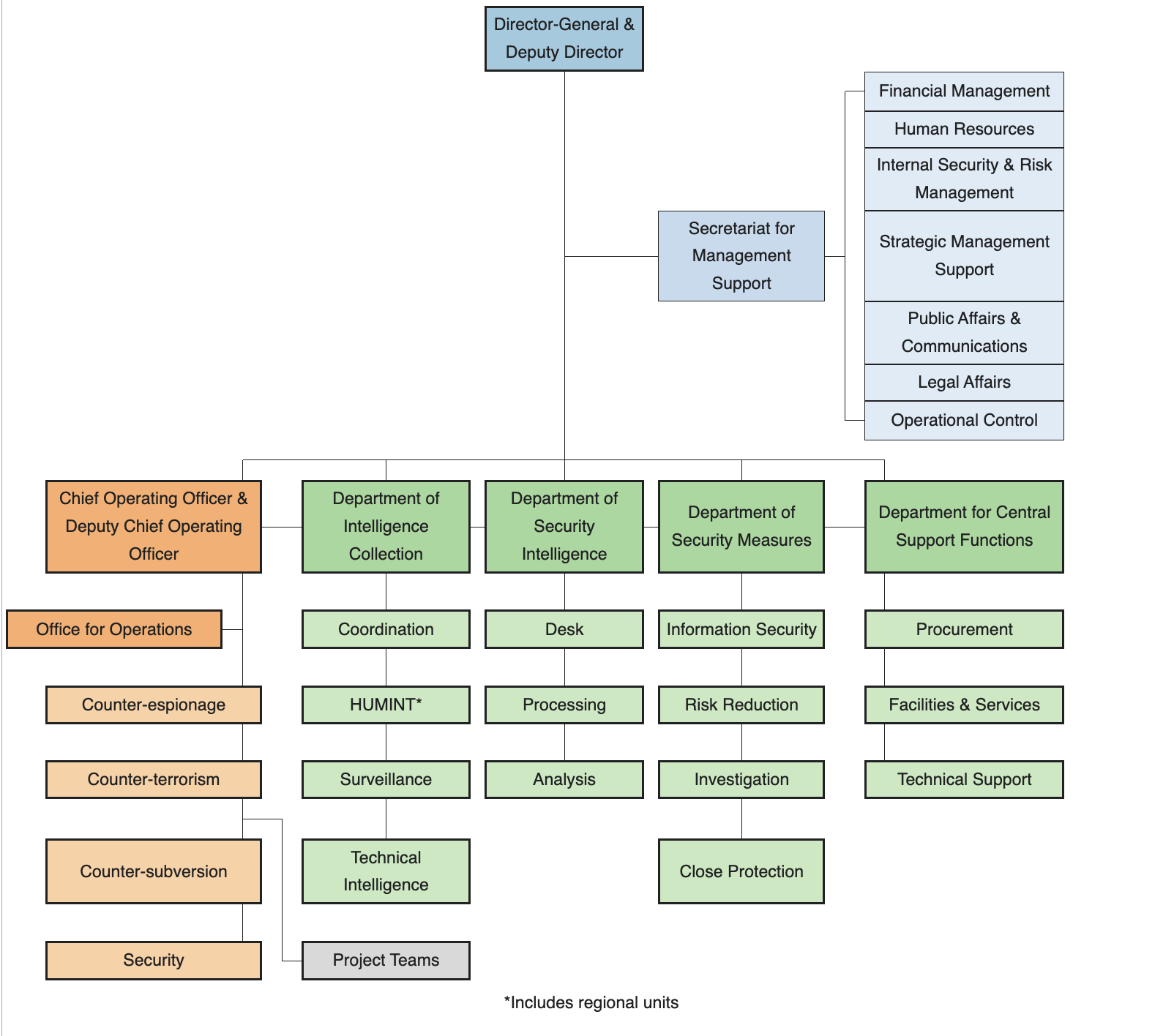
SÄPO is organized in offices, secretariats, and departments:
- Secretariat for Management Support: tasked with management support functions such as Human Resources, Legal Affairs, and Finances.
- Chief Operating Officer & Deputy Chief Operating Officer: Oversees the Office for Operations which leads counterintelligence, counterterrorism, and countersubversion operations.
- Department of Intelligence Collection: Responsible for intelligence gathering across the range of intelligence collection methods, including physical surveillance, SIGINT, and human intelligence (HUMINT)
- Department of Security Intelligence: Provides support for the department on security measures, assessing and analyzing threats and vulnerabilities
- Department of Security Measures: Responsible for information security, close protection details, and measures to reduce risks for operations.
- Department for Central Support Functions: Supports daily operations, provides technical support, conducts procurement, and maintains facilities and services. [source]
3 Mission
SÄPO, as a domestic agency, does not have an external intelligence gathering mandate but rather focuses on countering threats within Sweden’s borders. Its mission includes a full spectrum of services and capabilities:
- Counterintelligence: Preventing and exposing foreign intelligence collection efforts in Sweden or against Swedish interests abroad.
- Counterterrorism: Investigating and protecting against terrorist and extremist threats.
- Security Protection: Adjusting the public threat level, providing analysis and advice on security threats to government officials and offices.
- Dignitary Protection: Providing security details to the Head of State, the President, Members of Parliament, the Prime Minister, the Royal Family, foreign diplomats and officials, and other persons with elevated protection needs.
- Counter-subversion: Countering threats that seek to undermine the democratic functioning of society; for example, violence, disinformation, foreign influence, or corruption.
- Non-proliferation: Preventing the unauthorized export of Swedish technologies and know-how that could be used to build weapons of mass destruction (WMDs). [source, source]
3.1 Current threat landscape
Sweden faces a diverse and sophisticated threat landscape, ranging from terrorism and foreign espionage activities to cyber attacks. [source]
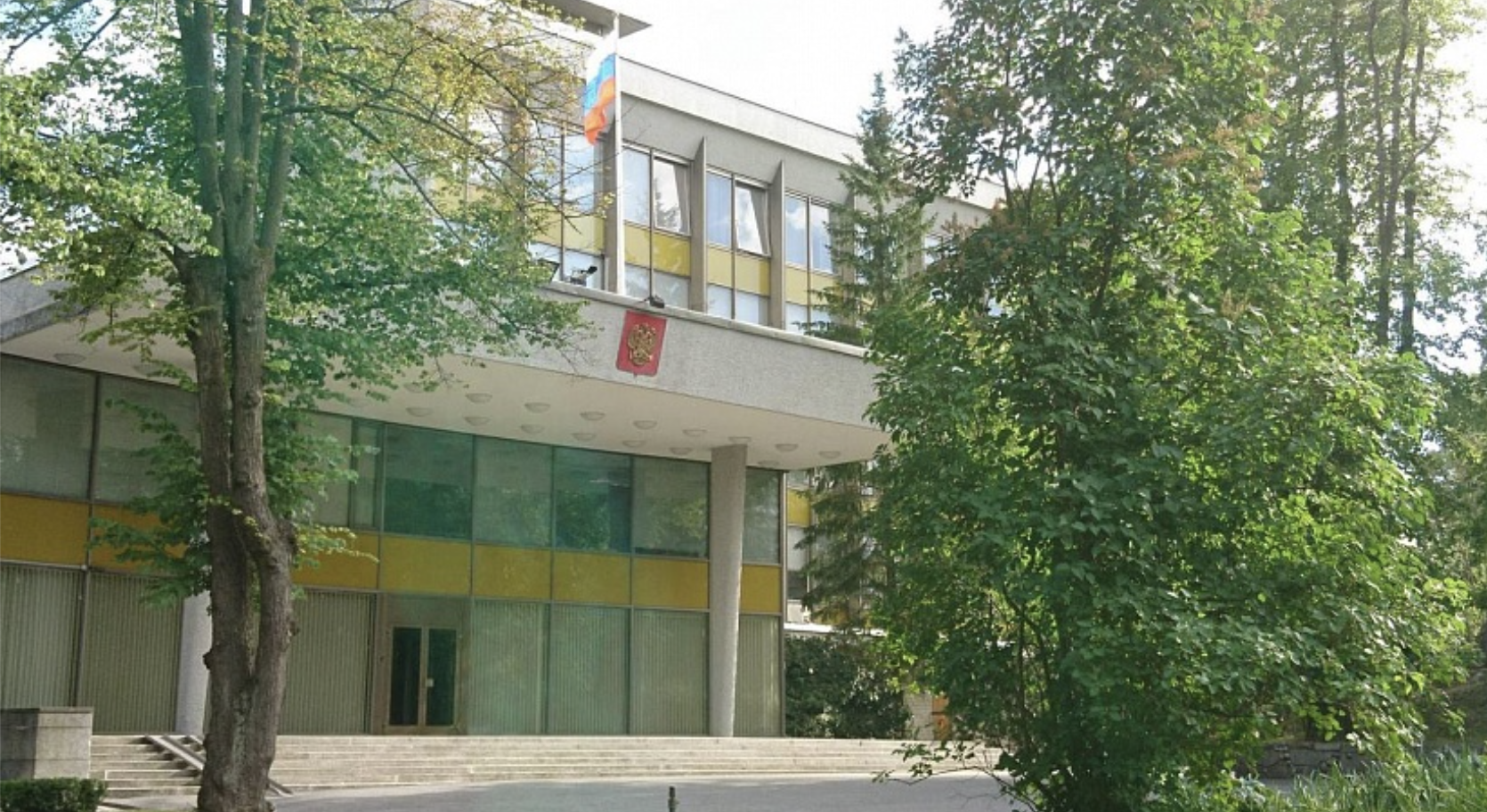
SÄPO’s most recent threat assessment highlights Russia, Iran, and China as the main state-level threats. In addition to regular recruitment channels such as embassies, Russia uses novel techniques such as targeting marginalized individuals (e.g. people with substance addictions) for sabotage acts. Russia also had successes in recruiting members within the SÄPO itself. Disinformation campaigns, hybrid attacks such as drone incursions, and cyberattacks also pose a security challenge, as they seek to gain access to critical infrastructure, classified information, and steer public narratives. Amid rising tensions over Sweden’s accession to the NATO alliance, such threats are likely to grow. [source, source, source]
The terrorism threat, although relatively low, continues to evolve. It predominantly originates from ideologically motivated violent Islamists and right-wing extremists. There is a growing concern about young individuals being radicalized online, a trend also observed in other countries. In May 2025, SÄPO lowered the terrorist threat to 3 out of 5, highlighting an elevated – but not high – threat level. The reason for this was an observed decline in terrorist propaganda portraying Sweden as an Islamophobic country. [source, source]
3.2 Future Trends
In June 2025, the Swedish government published a review, proposing reforms to Sweden’s intelligence apparatus. The review proposes the establishment of a civilian foreign intelligence service, a Swedish version of the CIA or the MI6, that would report directly to the government and be led by a National Intelligence Chief. Further, the review also proposes significant investments into cloud-based infrastructure, OSINT capabilities, and cross-sector cooperation. The aim of this reform is to better position Sweden against hybrid threats, including cyber attacks, transnational crime, and the adversarial use of artificial intelligence (AI). [source]
While the review does not propose direct changes to the SÄPO, it does portray a trend for all Swedish security services as they seek to build resilience amid evolving threats.
4 Criticism
The Swedish Security Service has faced a wide range of criticism in its history. During the cold war, SÄPO extensively monitored left-wing activists and movements, often without clear legal mandates. It was later revealed that the service used secret registers and “working notes” to track individuals and groups, while circumventing oversight practices and obstructing transparency. [source]
In January 2025, the Swedish National Audit Office audited SÄPO activities, revealing several weaknesses and inefficiencies that limit operational effectiveness. This included ambiguities in internal management and responsibilities, resource shortages, lack of supervision of security protection, inconsistent reporting, and inconsistent application of procedures during background investigation. While it impacts SÄPO’s effectiveness, the report also highlighted that all of these issues are resolvable. [source]
5 Conclusion
SÄPO is a key pillar in Sweden’s national security architecture. It evolved from a war-time police force to a modern agency dealing with a wide range of security threats. Its role and responsibilities are likely to stay important, especially after Sweden’s joining of the NATO alliance and amid the current tensions with Russia. It is likely that the agency will foster even closer ties and collaboration with other partner agencies to maintain a competitive edge in ensuring Sweden’s national security as the threat landscape continues to evolve.