
The Anka-3 is an advanced unmanned combat aerial vehicle (UCAV). Turkish Aerospace Industries (TAI) leads the development as part of Turkey’s ambition to advance its indigenous military aerospace capabilities. Characterised by its stealth flying-wing design, jet propulsion, and multi-role operational capacity, the Anka-3 represents another leap in Turkey’s unmanned aerial systems, combining high speed, endurance, and payload capacity to perform intelligence, surveillance, reconnaissance (ISR) and precision strike missions.
Images Sourced From: Turkish Aerospace
1 History of the Anka-3
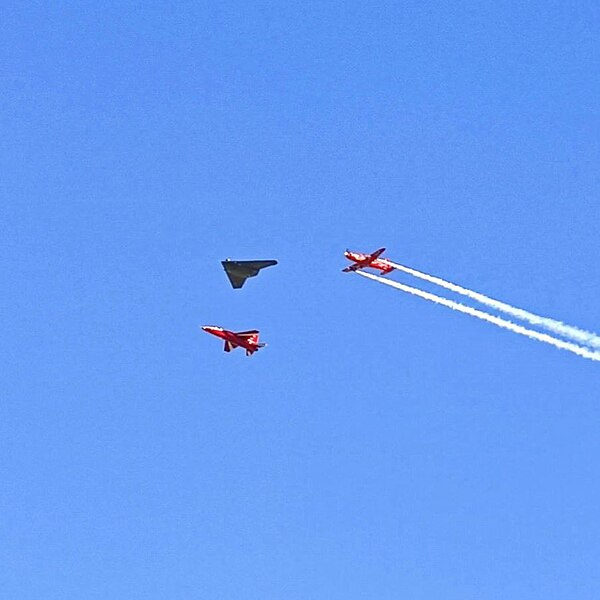
The prototype of the Anka-3 was revealed in March 2023, and made its maiden flight in December 2023. Tests continued afterwards, with the drone demonstrating precision strike capabilities, becoming the first drone to be controlled in a “loyal wingman” role by another aircraft, and completing internal munition release tests. [source, source]
The project is part of Turkey’s broader Project MIUS (Combatant Unmanned Aircraft System). It also includes the Bayraktar Kızılelma 5th generation UCAV. [source]
The Turkish Air Force plans for operational deployment starting in 2026.
2 Technical Specifications
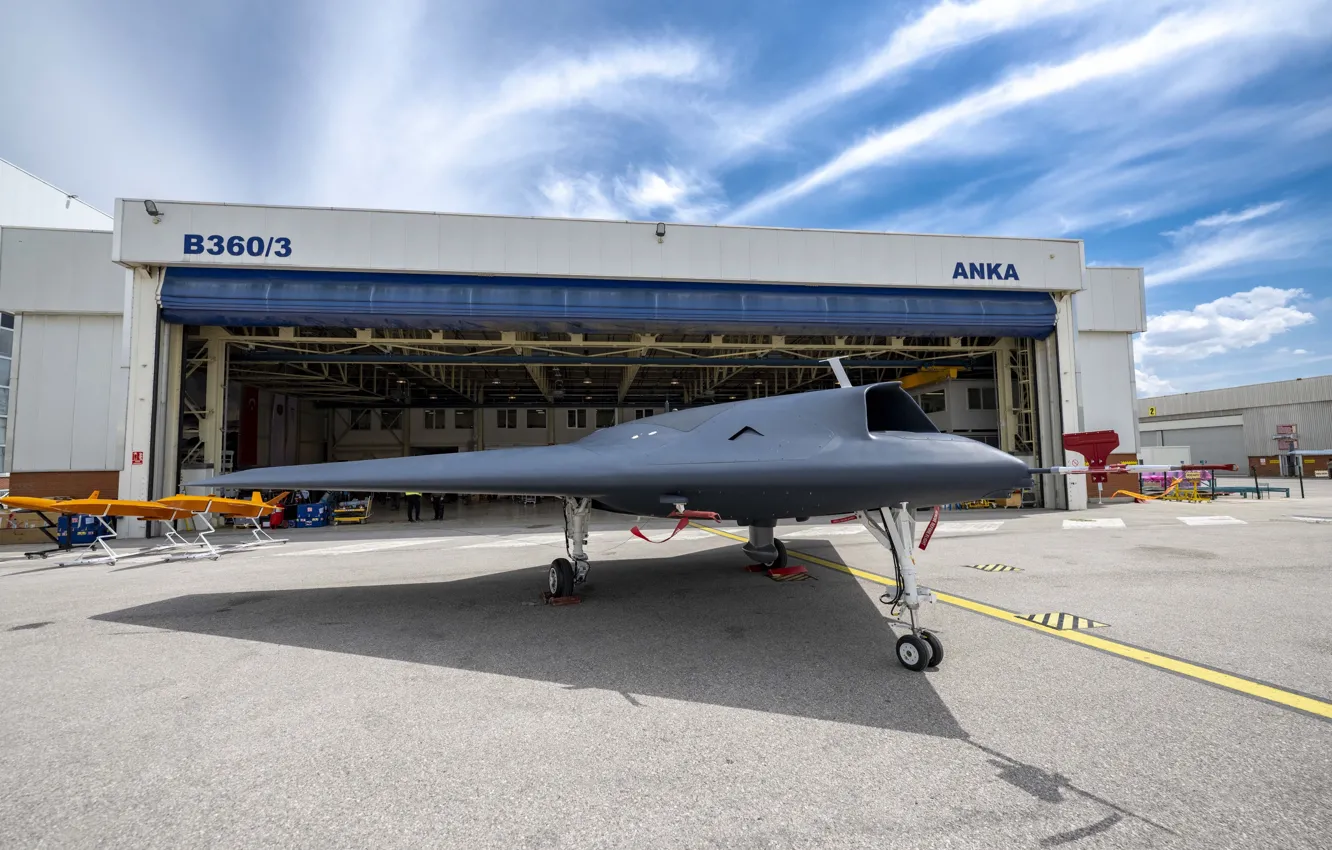
The Anka-3 is a tailless, flying-wing stealth UCAV with the following known characteristics: [source]
- Dimensions: 7,9 meters long, 12,5 meters wingspan, 2,5 meters height,
- Maximum takeoff weight: 6.5 tonnes
- Payload capacity: 1200 kg
- Cruise speed: 250 knots (460 km/h)
- Maximum speed: 450 knots (830 km/h)
- Service ceiling: 12,000 m(40,000 ft)
- Endurance: 10 hours, allowing for deep strike missions thousands of kilometers away
- Engine: Single AI-322 turbofan engine, with plans to upgrade to twin TEI TF-10000 engines for supersonic capability
- ISR: EO/IR Camera, SAR/GMTI-ISAR Radar
- Electronic warfare: COMINT, ELINT, ESM(Electronic Support Measure), EA (Electronic Attack), ComJam (Communication Jamming)
- Operation support: SATCOM, Radio Relay, Air Launched Drone, AIS (Automatic Identification System), PLS (Personnel Locator System), ELT (Emergency Locator Beacon), RVT (Remote Video Terminal), TCAS (Traffic Collision Avoidance System)
- Armament: Internal weapons bay allows for a variety of munitions including SOM-J cruise missiles, MAM smart micro munitions, Mk82 bombs, bunker busters, and domestically produced guided bombs like Tolun.
The common avionics architecture and ground control station (GCS) other Turkish UCAVs can accelerate integration into Turkey’s military as well as simplify logistics.
3 Mission
The Anka-3 aims to support Turkish military operations through:
- ISR: Long endurance and high-altitude allow surveillance over contested or denied areas.
- Precision strike: Equipped with internal weapon bays to maintain stealth, it can deploy a range of precision-guided munitions.
- Electronic warfare: Potential future variants may include electronic warfare payloads to disrupt enemy sensors and communications.
- Loyal wingman: Capability to be remotely controlled by manned aircraft, serving as a force multiplier in network-centric warfare scenarios.
Additionally, its high mission endurance and beyond-line-of-sight (BLOS) satellite communication extend its operational radius to potentially thousands of kilometers, enabling deep strike and support missions. The stealth design reduces radar detection risks, allowing operations in heavily defended airspace. [source, source, source]
4 Turkish “Dronecraft”: Strategic Impact
Turkey’s UCAV development has evolved rapidly over the last decade, driven by operational lessons from regional conflicts and a desire to reduce reliance on foreign suppliers. Turkey also aims to compete on the global UCAV market, offering alternatives to Israeli, American, or European models. Its defense industry, including companies like Aselsan, Baykar, and Roketsan, supports this development. With advanced avionics, sensors, and munitions, it creates a vertically integrated UCAV capability that is growing more popular. [source, source, source]
Turkish drones gained prominence in real-world conflicts such as the 2020 Second Nagorno-Karabakh War, where Azerbaijan employed Bayraktar TB2 drones against Armenian forces. The TB2s were instrumental in destroying enemy armor, artillery, air defense systems, and logistical targets, significantly contributing to Azerbaijan’s battlefield successes. [source]
The TB2 also had a significant impact in the early stages of the war in Ukraine, carrying out precision strikes on Russian armor, artillery, naval vessels, and supply lines. However, Russian forces countered through sophisticated electronic warfare (EW) systems and advanced air defenses, which significantly reduced the TB2’s effectiveness. [source, source]
The Anka-3, alongside the Bayraktar Kızılelma, represents the next generation of Turkish UCAVs, featuring jet propulsion, stealth characteristics, enhanced payload and speed capabilities, and integration into a broader networked warfare concept involving manned-unmanned teaming.
5 Conclusion
The Anka-3 embodies Turkey’s continued efforts to advance their drone manufacturing capabilities. Combining stealth, speed, and endurance in a single platform, it underscores Turkey’s commitment to advancing unmanned combat systems as a core component of its military. As part of a broader Turkish UCAV ecosystem, the Anka-3 enhances the Turkish Armed Forces’ ability to conduct persistent ISR operations in contested environments.
It also signals Turkey’s growing influence in the global UCAV market and an emphasis on self-reliance in defense. The integration of domestically produced engines, weapons, and avionics promises to ensure operational independence amid uncertain geopolitical alliances.