
March 2024 marks the 60th anniversary of the first major attempt to unify Myanmar’s Shan resistance forces, when representatives from the Shan State Independence Army (SSIA), the Shan National United Front (SNUF), and the Kokang Revolutionary Force (KRF) met secretly in Chiang Mai, Thailand to form the Shan State Army (SSA), officially announced on 24 April 1964.
The Shan State Army represents one of the most significant ethnic armed organisations (EAOs) in Myanmar’s complex landscape of conflict. Operating in Shan State—a northeastern region bordering China, Laos, and Thailand—the group is rooted in an area long associated with poppy and heroin production. Over the decades, it has undergone several transformations, shaped by shifting political dynamics within Myanmar and across its borders.
Images Sourced From: freeasia, Frontier Myanmar, BNI

1 Historical Background
The original Shan State Army (SSA) emerged in the 1960s, founded by Shan students motivated by nationalist aspirations. Over time, this organisation evolved into what became known as the Shan State Progress Party (SSPP), which maintained control over territories in northern and central Shan State. The SSPP became known as the “Shan State Army-North” (SSA-N).
However, the Shan armed resistance landscape dramatically changed in the 1990s following the surrender of the Mong Tai Army (MTA), led by the notorious opium kingpin Khun Sa, to the Myanmar military government in January 1996. When Khun Sa surrendered, not all MTA members accepted this decision. A group of younger officers led by Yawd Serk broke away to establish a new force, initially known as the Shan United Revolutionary Army (SURA), which was later renamed the Restoration Council of Shan State (RCSS) in 1999. This group became known as the “Shan State Army-South” (SSA-S). [source, source, source]
2 Key Figures
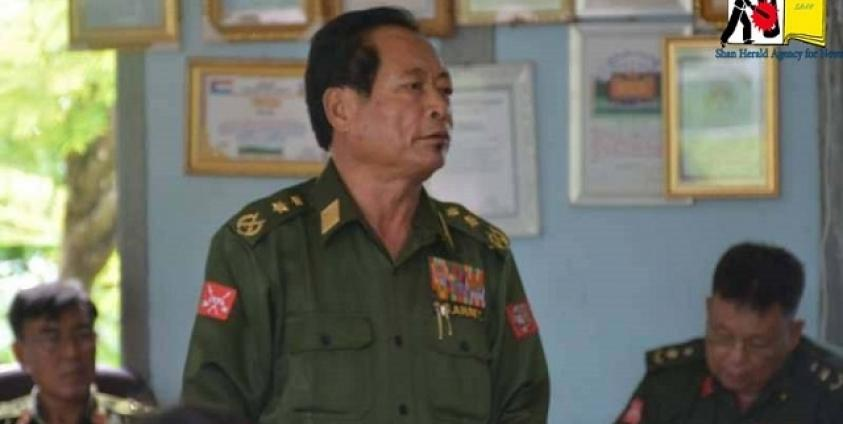
2.1 Shan State Army-North: Chairman General Sao Pang Fa
The SSA–N is led by General Sao Pang Fa, who serves as Chairman of the Shan State Progress Party and commander-in-chief of its armed wing. Pang Fa is a veteran Shan guerrilla with decades of experience. Under his leadership, the SSA–N maintained the 1989–2011 ceasefire and later oversaw the return to insurgency. He holds the rank of lieutenant general (often referred to as Maj Gen. Pang Fa in earlier reports) and is known for his hardline stance on defending Shan autonomy.
Pang Fa has also been active in inter-ethnic alliances; for example, he was a key representative in the Committee for Shan State Unity and has coordinated with leaders of the Wa, Ta’ang, and other ethnic forces in the region. [source, source]
2.2 Shan State Army-South: General Yawd Serk
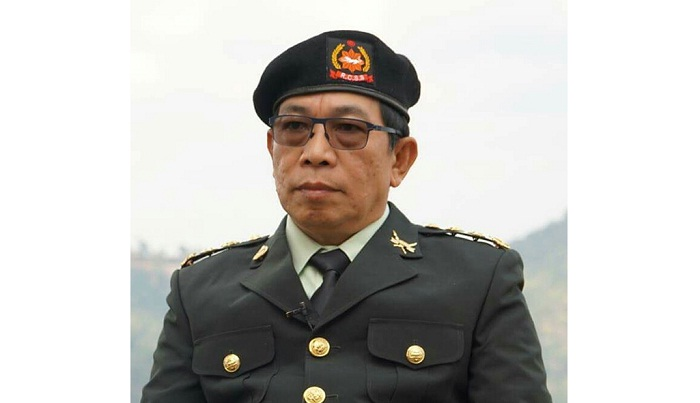
A former field commander of the Mong Tai Army (MTA) under drug warlord Khun Sa, Yawd Serk rose to prominence in the mid-1990s during fierce battles along the Myanmar–Thailand border. Refusing to surrender alongside Khun Sa in 1996, he broke away with a loyal contingent of fighters to form the SSA-S, until his resignation on 3 February 2014. Throughout the 2000s and 2010s, he played a key role in facilitating peace negotiations between major Shan insurgent groups and the Myanmar government. The Restoration Council of Shan State (RCSS) was later established as its political wing.
From his base in Loi Tai Leng, Yawd Serk led both guerrilla warfare and political efforts. He controlled key border areas while joining periodic ceasefire talks. In 2015, he signed the Nationwide Ceasefire Agreement (NCA). However, critics later accused him of opportunism. He expanded RCSS influence into northern Shan State, allegedly with support from the Myanmar military, which drew heavy criticism.
Yawd Serk is seen as both a nationalist figure and a pragmatic strongman. He continues to lead the RCSS through shifting alliances and internal rivalries. The group also faces pressure from stronger actors like the United Wa State Army. Although the RCSS signed the NCA and took part in peace talks, critics question its sincerity. Accusations of collusion with the military and political overreach have damaged its credibility.
Since the 2021 coup, the RCSS has taken an ambiguous stance, declining full participation in the resistance and instead engaging in opaque negotiations with the junta. This has left it politically isolated, militarily weakened, and distrusted by both fellow EAOs and civil society. [source, source]
3 Shan State’s Army Equipment
The SSA lacks access to factory-made weapons. As a result, it depends on craft-produced firearms like the Yat-Thai rifle. This locally assembled AK-type weapon was developed in Loi Tai Leng. It combines foreign and Burmese rifle parts. The Yat-Thai fires 5.56×45mm rounds, often using barrels from M16S or Burmese MA-series rifles. These are matched with AK receivers and wooden stocks made by hand.
In November 2019, the Myanmar military reported a major weapons seizure in Namhsan Township, northern Shan State. The cache was said to belong to the Ta’ang National Liberation Army (TNLA). Among the items was an FN-6 MANPADS—a Chinese-made surface-to-air missile. This type of weapon is rarely seen outside of state control. Its presence raised serious international concern. Analysts highlighted the risk of such advanced technology in the hands of a non-state group like the TNLA. [source, source]
4 Army and Opium
Opium, heroin, and methamphetamine production and use dominate Myanmar’s borderlands. Armed actors—both state and non-state—have long embedded the drug trade into local power structures. They use drug profits to fund conflict, carry out counter-insurgency operations, and uphold informal political deals that maintain fragile stability.
Drugs move along the same cross-border networks as legal goods, with profits often reinvested into the formal economy. As such, narcotics have become not only a tool of survival and conflict financing but also a significant source of capital within Myanmar’s broader economic system.
4.1 The History of Opium in Shan State
In the late 1940s, following their defeat by the People’s Liberation Army, around 12,000 Chinese Kuomintang troops retreated from Yunnan into Shan State, where they established. Although opium cultivation had existed in the Shan highlands for decades. The Kuomintang’s presence significantly expanded the region’s narcotics economy by creating a dense network of cultivators, traffickers, and labourers to sustain their forces. Around the same time, the Communist Party of Burma (CPB), forced out of urban areas. It regrouped in the Shan hills and received cross-border support from the Chinese Communist Party in its fight against both the Kuomintang and the Burmese government. By 1961, most Kuomintang troops had been driven into northern Thailand. But the CPB’s insurgency would dominate conflict in northeastern Myanmar until its collapse in the late 1980s.
From the 1970s to the 1990s, Shan State became the centre of the “Golden Triangle”. The world’s leading heroin-producing region, with key figures like Lo Hsing-Han and Khun Sa controlling vast drug empires. They were producing an estimated 2,500 tons annually. U.S. drug enforcement officials report emerging trafficking routes moving drugs from Myanmar through Laos into southern China, Cambodia, and Vietnam.
In January 1996, Khun Sa—one of Shan State’s most notorious drug lords—announced his “surrender” to Myanmar’s ruling military junta, then known as SLORC. However, the United States expressed scepticism about the nature of the deal. Suspecting that Khun Sa had been granted permission to maintain control over his opium operations in return for ending his decades-long insurgency against the government. [source, source, source]
4.2 Shan State’s Exceeding Afghanistan.
Myanmar has surpassed Afghanistan to become the world’s leading producer of opium, according to a new UN report. Opium production in Myanmar was projected to reach 1,080 tonnes in 2023. A significant 36% increase from the previous year, far exceeding Afghanistan’s 330 tonnes following the Taliban’s opium ban. This surge is driven by several factors. Political instability has worsened since the 2021 military coup. The economy has collapsed, pushing many into survival strategies. Ongoing civil war adds to the crisis. Remote and conflict-affected areas like Shan State are hit the hardest.
Shan State remains the primary hub for opium poppy cultivation in Myanmar, accounting for 88% of the country’s total production. While cultivation slightly declined in North and South Shan, East Shan—bordering Laos and Thailand—saw a 10% increase. Kachin State experienced a 10% drop in cultivation, whereas Chin State, particularly near the Indian border, recorded the largest surge at 18%. Kayah State, which traditionally has lower levels of poppy farming, also noted an 8% rise in 2024.
A key driver behind these shifts appears to be market dynamics. Farmgate prices for dry opium dropped by 8%, averaging US$304 per kilogram, while regional heroin prices showed signs of saturation after three years of increased output. However, the global decline in opiate supply due to reduced production in Afghanistan could push prices upward, potentially motivating more farmers in Myanmar to turn to opium cultivation in the near future. [source, source, source]
5 Conclusion
The Shan State Army, in both its northern (SSA-N) and southern (SSA-S) formations, remains a central player in Myanmar’s protracted ethnic conflicts. Born from the aspirations of Shan nationalism in the 1960s and shaped by decades of war, fragmentation, and negotiation, the SSA has evolved into two distinct entities with divergent strategies and alignments. While the SSA-N, under Pang Fa, maintains a hardline stance against the junta and aligns with other northern EAOs, the SSA-S, under Yawd Serk and the RCSS, has taken a more ambiguous path, signing ceasefires and engaging in contested political dealings with the military regime. This division reflects the broader challenges of unity and coherence among Myanmar’s ethnic resistance movements.
Militarily, the SSA’s reliance on locally produced weapons like the Yat-Thai rifle underscores both its ingenuity and limitations, particularly in contrast to groups like the TNLA or UWSA, which have demonstrated increasing access to advanced systems such as MANPADS. While the SSA continues to influence the military and political dynamics of Shan State, its future depends on its ability to navigate shifting alliances, restore trust among Shan communities, and respond to rising threats from both the Tatmadaw and rival ethnic groups. Whether through armed resistance, political negotiation, or a recalibration of strategy, the Shan State Army remains a key bellwether for the evolving security landscape of Myanmar.