
1.0 Introduction
Amid tensions between the U.S. and Iran, the legacy of Operation Ajax, or Operation Boot as London named it, remains ever present. In August 1953 the CIA and MI6 covertly orchestrated a coup to remove Prime Minister Mohammad Mossadegh, a firm anti-imperialist who moved to nationalise the British-controlled Iranian oil industry. Widely recognised as the CIA’s first major covert operation, the coup restored the autocratic and U.S.-friendly Shah to power and installed General Fazlollah Zahedi as Prime Minister. Iranian oil, stripped from national control, was effectively returned to British hands through a new BP-led consortium. The coup, known by the CIA cryptonym “TPAJAX,” became a root of Iran’s enduring mistrust of the U.S. and the U.K., a grievance that still shapes relations today.
It took 60 years before the CIA formally acknowledged its role in the coup, releasing heavily redacted documents in 2013 and 2017. The declassified CIA materials explicitly confirm that the Agency planned and executed TPAJAX, despite earlier decades of denials and destroyed records. By contrast, London has released almost nothing. The Foreign Office continues to withhold its files under security exemptions and has repeatedly pressured Washington to suppress or redact British-related material, including attempts in 1978 to block “very embarrassing” disclosures in the Foreign Relations of the United States (FRUS) volume. [source, source, source]
“Mosaddegh’s ghost has never left Iran.” – Robert Fisk [source]
2.0 Background
2.1. Britain’s Monopoly on Oil
Iran’s greatest natural strength, and at the same time its greatest vulnerability, lay beneath its deserts. In 1901, the weakening Qajar dynasty granted British entrepreneur William Knox D’Arcy a major concession covering most of the country, giving him exclusive rights to explore for oil across Iran. The concession would last 60 years and in exchange, the Shah would receive a small upfront payment and a share of future profits. [source]

In 1908, D’Arcy and his team discovered petroleum at Masjed Soleyman in Iran’s Khuzestan Province. They learned that Iran sat on the largest oil reserves on earth. The following year, the Anglo-Persian Oil Company (later renamed Anglo-Iranian Company) was established to secure these resources. The company essentially cemented a British monopoly over Iranian oil and embedded the country’s resources into the core of imperial strategy. [source, source]
After the creation of the Anglo-Persian Company, the enterprise expanded rapidly, building one of the world’s largest refineries at Abadan. Part of the agreement barred the Iranians from looking at the ledger books – which, as journalist and author Scott Anderson stated, was essentially a licence to steal. In 1914, the British government purchased a controlling stake in the company to secure fuel for the Royal Navy, giving Britain 52.55% of the voting stock and formalising state control over Iranian oil. [source, source]
Through the interwar period, the British continued to have an absolute monopoly over Iranian oil production and export, with royalties to Iran amounting to roughly 16% of the value of extracted oil. By the late 1940’s, Anglo Iranian profits were nearly three times the royalties paid to Iran – a striking disparity given that oil agreements elsewhere were often 50-50 profit sharing agreements. This arrangement became a flashpoint with Iranian nationalists, who became increasingly intolerable of the profit margins and absence of equitable revenue. [source]
2.2 Mossadegh’s Arrival

In April 1951, Shah Mohammad Reza Pahlavi appointed Mohammad Mossadegh as Prime Minister. Mohammad a nationalist populist whose political identity was built on rejecting imperial exploitation and royal absolutism. The National Front, or Jebhe-ye Melli party, was the political vehicle for Mossadegh. [source, source]
He channelled the Iranian people’s deep public anger at British exploitation and Iran’s decades-long loss of sovereignty over its own petroleum resources. Mossadegh did not just deeply distrust the British, but found them inherently evil:
“You do not know how crafty they [the British] are. You do not know how evil they are. You do not know how they sully everything they touch.” — Mossadegh speaking to US Special Envoy W. Averell Harriman in 1951. [source]
He became an icon of Iranian nationalism, but was also known for his eccentric public behaviour. He gave interviews in bed, wore pyjamas outside, and publicly wept about his poor health – all which the British and Americans exploited in their propaganda. [source]
His immediate priority was to nationalise Iran’s oil, and he succeeded. Just three days following his appointment, Mosaddegh signed the nationalisation bill. The bill led to the expulsion of the Anglo-Iranian Oil Company, and the establishment of the National Iranian Oil Company (NIOC) as a replacement. [source]
2.3 Britain’s Response
The British were furious. Oil was arguably the force that transformed Britain into a global power, and London had no intention of losing cheap Iranian oil – especially without adequate compensation. The British viewed it as theft. Britain escalated with economic pressure through sanctions, trade embargoes, and an international boycott designed to cripple Iran’s economy. [source]
The boycott inflicted severe damage on Iran’s economy. Iranian oil production collapsed from roughly 700,000 barrels per day in 1950 to 20,000 by 1952, depriving the government of its main source of revenue. As oil income disappeared, Mossadegh faced mounting economic pressure, and pushed his government to rely on emergency financial measures. Unemployment rose sharply. Britain worked hard to isolate Iran from international oil markets, pressuring major oil companies against purchasing or refining Iranian crude, making it extremely difficult for Tehran to find buyers abroad. In addition, even those sympathetic with Iran’s nationalisation efforts were often unwilling to risk any retaliation from the British by engaging with Iranian exports. [source, source, source]
However, Mossadegh was still standing, and thrived off popular support. The British attempted to resolve the dispute through the International Court of Justice, but its proposals failed to address Iran’s central demand: full sovereignty over Iranian oil. Neither side was willing to negotiate. British and Iranian relations were at their lowest, and in October 1952, Mossadegh severed diplomatic relations. All British personnel left Iran in November of the same year. [source]
Meanwhile, ideas originating from the British Foreign Office of overthrowing Mossadegh covertly were becoming increasingly appealing as other options collapsed. They concluded American support and participation was needed for any operation against Mossadegh to be a success. However, at the time, the administration of U.S. President Truman was not on board. [source]
As of July 1952, the U.S. State Department policy position, with which CIA agreed, was to maintain Mossadegh’s government:
“It is the policy of the Department of State to maintain the present government in Iran so long as this government has the authority to govern, or until it appears certain that the government will be taken over by the Communists.” [source]
British officials’ quiet exploration of covert options met a cold reception in Washington. The State Department warned that even if the British managed to topple Mossadegh, they would “never get their own man to stick in his place.” At the time, the U.S. had little interest in toppling a democratically elected government that they believed was actually “an effective bulwark against Soviet penetration.” [source]
2.4 Eisenhower’s Approval Of TPAJAX
On 20 January 1953, Dwight D Eisenhower became the 34th president of the U.S. Unlike Truman, whose administration had been reluctant to intervene directly in Iran, Eisenhower entered office with advisers, particularly Secretary of State John Foster Dulles, who interpreted the communist threat as more urgent and who were more open to covert action to contain perceived communist expansion. [source, source]
Recognising this shift in Washington and frustrated with Truman’s lack of reception, British intelligence soon intensified efforts to shape American perceptions of Mossadegh. Officials in London increasingly portrayed Mossadegh as either dangerously entangled with communist forces, referring to his ties to the Tudeh party, or simply too politically fragile to resist them. The message reaching Washington was that if Mossadegh remained in power, Iran could drift into the Soviet sphere of influence. [source, source]
Some academics, especially Steve Marsh, argue that people often overstate the differences between the Truman and Eisenhower administrations. They contend that Eisenhower’s administration appeared more willing to consider British proposals not because of a fundamentally different worldview, but because of timing. By early 1953, the diplomatic, economic and legal efforts had largely failed and covert action was becoming the final available option. [source]
The British repitched the idea to the Eisenhower administration with this newer framing, and the argument found favour among Eisenhower and other senior officials, including John Foster Dulles and his brother, Director of Central Intelligence Allen Dulles. It is important to note that the United States based its involvement not only on ideological concerns but also on economic interests. U.S. companies saw a chance to gain access to Iranian oil and reduce Britain’s control over the region’s petroleum industry. U.S. officials were also worried that if Iran successfully nationalized its oil industry, other countries might follow, threatening U.S. access to oil in other regions. [source]
3.0 Operation Ajax
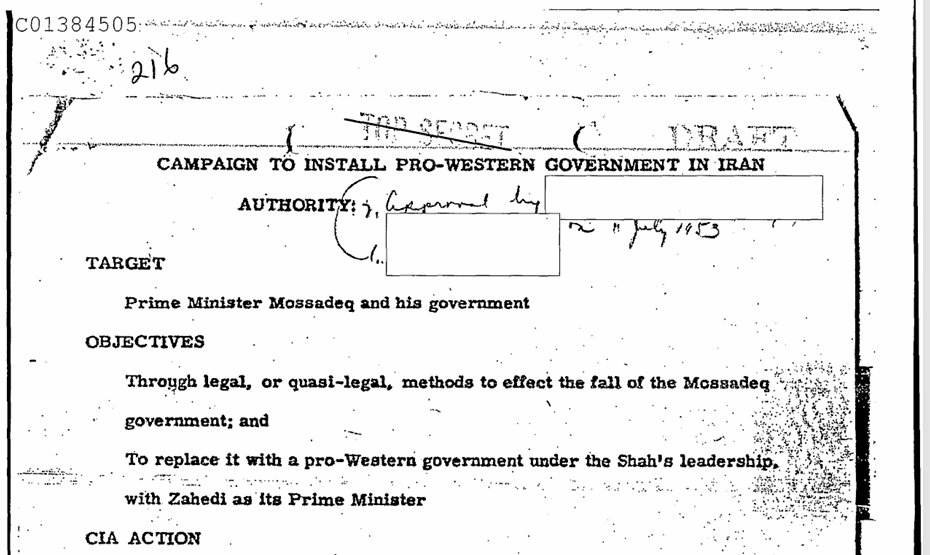
On 11 July 1953, President Eisenhower, John Foster Dulles, and Allen Dulles approved TPAJAX, the covert plan to overthrow Mossadegh. While unusual by more modern standards, CIA Near East Division Chief Kermit Roosevelt worked on the ground in Iran during the coup and played a key role in the operation.
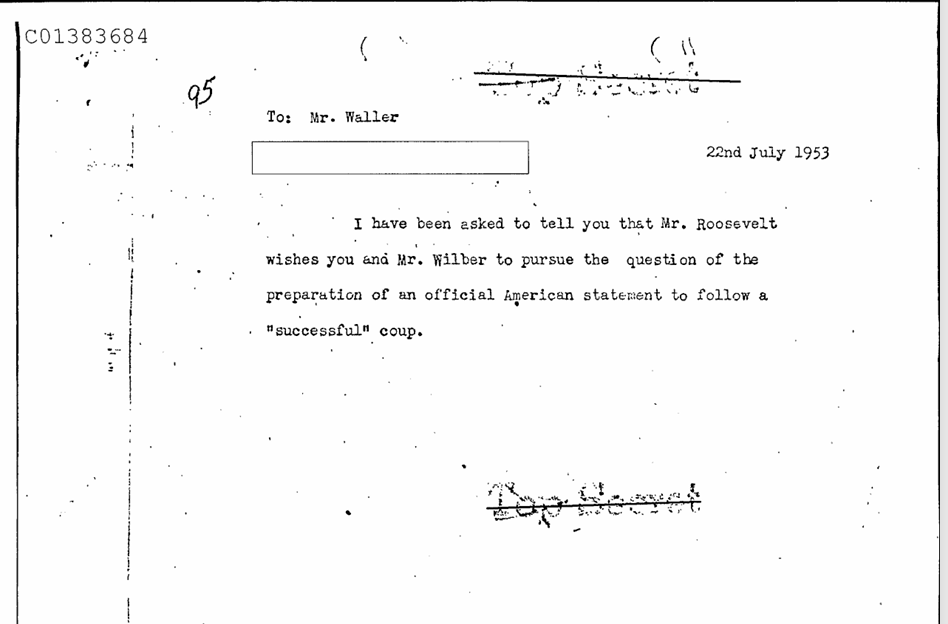
“The goal of the operation was to replace Mosadeq with a leader whom the Shah and the army would support and who would be willing to negotiate a reasonable oil settlement that would prevent an economic collapse and reduce Iran’s vulnerability to the Soviet Union. General Zahedi was such a man, perhaps the only one who met all the requirements.” – stated objectives inside the declassified CIA files. [source]
The files state the following reasons why the U.S. believed Zahedi was the most suitable to lead against Mossadegh’s government:
- He was the only man in Iran openly bidding for the prime ministership.
- He thus displayed unique courage in that action.
- He had displayed courage in the past as a soldier of 25 years. He had been made Brigadier General in recognition of combat leadership against the Bolheviki.
- His life had been saved by an American doctor after four of Zahedi’ ribs had been removed.
- He was known to be pro-American and had permitted his son, Ardeshir, to study in the U.S. for six years. He was a senior major General and had won the respect of many senior and junior officers. [source]
3.1 Propaganda
Influencing the public perception of Mossadegh, and in turn the Shah, was a continuous covert phase of British and American attempts to overthrow Mossadegh. Le Monde believes the propaganda campaign began in May 1953 and intensified in the weeks before the coup. The U.S. and Great Britain crafted covert influence pieces, translated them into Persian and placed them in Iranian newspapers as editorials. The narrative against Mossadegh focused on a few specific themes designed to hit fears already present in Iran during the time:
- Mossadegh is leading Iran toward communism
- Mossadegh is anti-Islam
- Mossadegh is a dictator
- Mossadegh is emotionally and physically unstable
- Economic collapse is Mossadegh’s fault
A released 1953 anti-Mossadegh propaganda leaflet argues that Mossadegh was corrupting Iran’s traditional national character. The CIA presented Mossadegh as making Iranians “rude, violent, and Bolshevik-like” instead of hospitable and tolerant. [source]
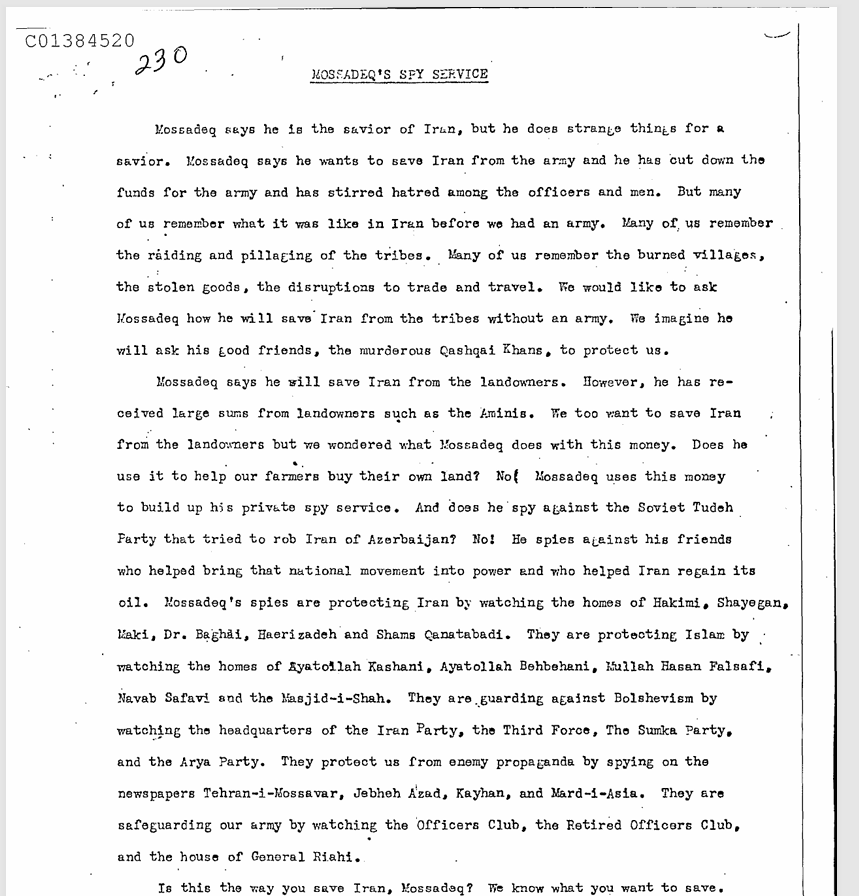
Another declassified file titled “Along the Road Toward Dictatorship” depicts Mossadegh as deliberately abusing power. This is also similar to the claim that Mossadegh used the domestic spy service to undemocratically monitor everyone. [source]
3.2 TPAJAX Execution and Initial Failure
Bringing Zahedi to power through a military coup would be “fundamentally legal” with the Shah’s participation. This legal facade was essential, and thus securing the Shah’s signatures became the first operational hurdle.
The CIA declassified files consider the first phase of TPAJAX, beginning on 15 July 1953, to be when Mi6 sent Princess Ashraf to return to Tehran to urge the Shah, her brother, to sign the decrees. However, she was unenthusiastic. [source]
Her lack of impact pushed the British and Americans to escalate their efforts. Within days, CIA’s Kermit Roosevelt went to Tehran to personally sustain pressure on the Shah. Roosevelt assured the Shah that the U.S. fully backed the operation and that key military units had already pledged their support to General Zahedi. Gradually, the Shah’s resistance weakened as US and British officials stressed that Mossadegh’s position was rapidly eroding his. [source]
Roosevelt eventually persuaded the Shah, under pressure, to sign the two decrees on 13 August. One document dismissed Mossadegh as prime minister, and the other appointed Zahedi as his replacement. The orders were handed to Colonel Nematollah Nassiri, commander of the Imperial Guard. Nassiri was tasked with delivering them to Mossadegh and arresting him on the spot. [source]
The coup was meant to begin during the night of 15 August, when members of the Imperial Guard would move against Mossadegh. Instead, the operation collapsed almost immediately. Mossadegh had been tipped off in advance, allowing security forces that were loyal to the government to intercept the operatives before they could take control. Furthermore, loyalists arrested Nassiri, and news of the failed attempt quickly spread through Tehran. [source]
The sudden collapse of the plan caused panic among its backers. Convinced that his position was no longer secure, the Shah fled the country. He travelled first to Baghdad, and later to Rome. Inside Iran, authorities began hunting those linked to the conspiracy. In Washington and London, many officials assumed the operation was over and began withdrawing its remaining personnel. [source]
3.3. Kermit Roosevelt
While the operation was widely believed to have collapsed, Roosevelt refused to accept that outcome. He remained in Tehran despite having no explicit authorisation from CIA headquarters. Roosevelt continued coordinating with the small network of CIA linked Iranian contacts already in place, working to keep the operation active rather than shutting it down. [source]
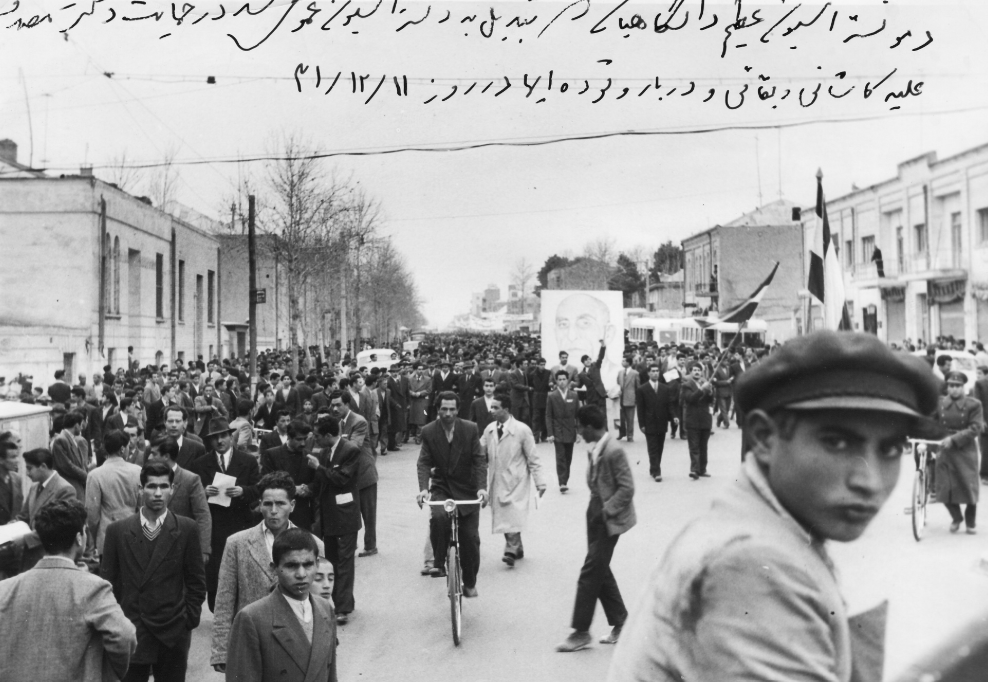
In the days that followed, Mossadegh had called his supporters into the streets to demonstrate and celebrate the outcome. However, it left a window of opportunity for Roosevelt. The capital was politically exposed and increasingly unstable – a situation Roosevelt moved quickly to exploit. [source]
Roosevelt revived the coup by organising counter demonstrations. He financed pro-Shah crowds and hired men to stage anti-Mossadegh demonstrations. It created the impression that Mossadegh faced large opposition and that the Shah still had popular support. In addition, Roosevelt organised paid CIA agents to pose as pro-Tudeh demonstrators and riot in support of Mossadegh. Essentially a false flag operation, by presenting Mossadegh supporters as volatile and dangerous, it helped turn public opinion against him and strengthen the argument that only the Shah could restore order. [source]
3.4. August 19th Success
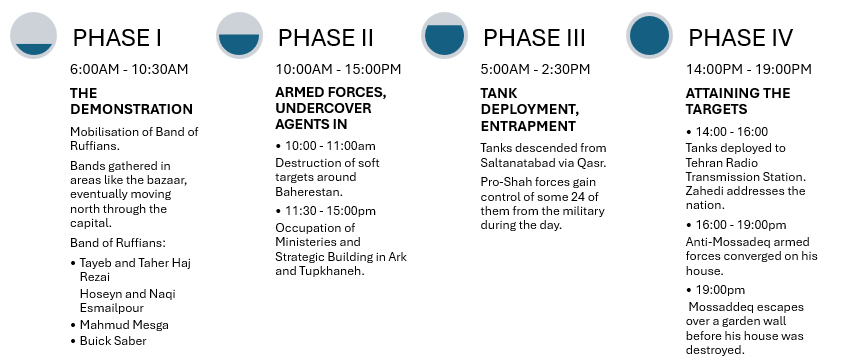
TPAJAX began to see success during the early hours of 19 August 1953. At this point, pro-Shah demonstrators and anti-Mossadegh groups began moving out of southern Tehran and the bazaar districts toward the city centre. The CIA report describes these demonstrations as “partially spontaneous,” but the CIA political action assets “contributed to their beginnings.” [source, source]
.jpg)
By late morning, the unrest had expanded into coordinated attacks on state infrastructure. Pro-Shah police, military office and armed groups moved against key targets including police headquarters, government ministries, the main telephone exchange, and communication centres around Arg Square. One of the most important objectives was Radio Tehran. According to CIA accounts, control of this station was decisive in TPAJAX. It allowed coup forces to broadcast that Mossadegh had fallen and that Fazlollah Zahedi was the rightful prime minister. In the early afternoon, Radio Tehran was captured, broadcasting messages like the following: [source]
“Oh people of Iran, let the Iranian nation prove that the foreigners cannot capture this country! Iranians love the King. Oh tribes of Iran, Mossadegh is ruling over your country without your knowledge, sending your country to the government of the hammer and sickle.” [source]
By noon, pro-Shah street groups and Army units controlled Tehran. Outnumbered, the remaining Tudeh members withdrew. With only two CIA cables coming in, Washington depended largely on wire-service reports to understand what was happening. Roosevelt later admitted that he deliberately avoided sending real-time updates. He argued that London and Washington “would have thought they were crazy and told them to stop immediately.” [source, source]
During the afternoon, military involvement became decisive. Armoured units and tanks moved from barracks into central Tehran, securing major roads and intersections before advancing toward government buildings and Mossadegh’s residence on Kakh Street. [source]
The final stage of TPAJAX focused on Mossadegh’s residence. Pro-Shah military units supported by tanks surrounded and attacked the compound during the late afternoon. After prolonged fighting, the residence was heavily damaged, and Mossadegh escaped over a garden wall before surrendering the following day. By the evening, Zahedi had emerged publicly as prime minister while the Shah prepared to return to Iran. [source]
To provide Zahedi with urgently needed funds before the British could deliver large-scale government assistance, the CIA covertly supplied USD $5 million within two days of his assumption of power. [source]
4.0 Aftermath of TPAJAX
The coup restored the Shah’s authority and eliminated Mossadegh from political life. The Shah returned to Iran on 22 August. Mossadegh was arrested, tried in a military court, and removed permanently from public affairs. His death sentence was commuted to three years imprisonment followed by a lifelong house arrest, ensuring that the nationalist movement lost its central figure. [source, source]
Oil policy was the first major area reshaped after TPAJAX. Zahedi’s government negotiated the 1954 Consortium Agreement, which ended Iran’s brief period of full national control, and reestablished foreign dominance over production and management. [source]
British Petroleum received the largest share. Additionally, American companies collectively gained an equal stake, with smaller portions going to Royal Dutch Shell and French Clean Fuel Project. Although Iran’s revenue share increased compared to the pre-nationalisation era, the principle of sovereignty over oil was decisively lost. [source]
4.1 Post-coup Political Order
In the years following TPAJAX, the Shah emerged with far greater authority than before. Concerns about future threats to the monarchy led the Shah to expand Iran’s internal security apparatus.
In 1957, with assistance from the CIA and Israeli intelligence services, the government established the SAVAK (Sazeman-e Ettela’at va Amniyat-e Keshvar). The SAVAK was Iran’s national intelligence and security organisation. Tasked with monitoring political opposition and protecting the regime, it quickly established itself as one of the most powerful and feared institutions in the Middle East. The SAVAK undertook extensive surveillance, censorship, and the detention of political opponents. [source, source]
During the 1960’s and 70’s, over 400 SAVAK officers received intelligence and security training in the U.S., including at facilities near McLean, Virginia. The SAVAK has been accused of widespread human rights abuses, with former political prisoners reporting beatings, electric shocks, prolonged sleep deprivation and other forms of physical and psychological mistreatment during detention. [source, source]
7.0 Conclusion
The 1953 coup remains a defining rupture in modern Iranian history. By toppling an elected government to protect Western strategic and commercial interests, the U.S. and the U.K. set the stage for decades of authoritarian rule under the Shah, and created a deep, enduring mistrust that still shapes Iran’s relations with both powers. TPAJAX’s success created a template for U.S. covert regime change operations—visible in countries like Guatemala, Congo and Chile—in the decades that followed. TPAJAX did not simply remove a government. It reordered the nation’s political future, leaving a legacy that is still well remembered by the people of Iran.