
The Kraken Unit is a special force within the Main Directorate of Intelligence of Ukraine tasked with reconnaissance and sabotage operations. Operating primarily in Eastern Ukraine, the regiment specialises in unconventional warfare and direct action, as well as hard target defeat during high-profile offensives. This article on the Kraken Unit seeks to display, through open source information and proprietary sources on the ground, a comprehensive dossier on the underground resistance network that became a special mission unit within the military intelligence infantry.
1 Symbols, Patches and History
1.1 Symbols and Patches
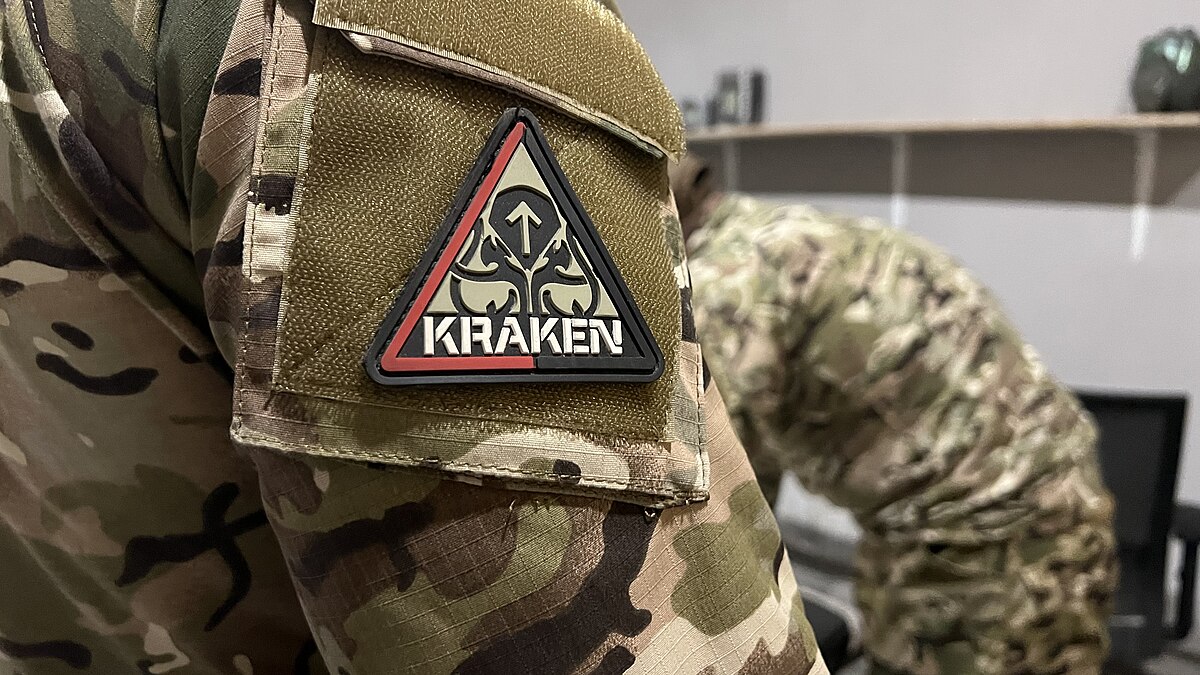
Kraken Unit’s name and symbol come from the mythical creature that resembles a giant squid. Quotes obtained by The Washington Post and the Ukrainian Pravda from active members suggest the Kraken Unit’s affiliation with sea icons comes from the fact that the founders of the regiment were veteran members of the Azov Battalion, named after the Azov Sea. [source]
Inside the regiment, every company wears a different version of the Kraken as their unit patch. Variations can go from a hovering red-eye creature in the drone company to Low Power Variable Optic (LPVO) covered in tentacles that represent the sniper group. Regiment colours, which also may vary depending on the company, include red, black and green ochre. [source]
1.2 Kraken Foundation
The Ukrainian Main Directorate of Intelligence formed the Kraken Unit in February 2022. Kyrylo Budanov, chief of the agency, revealed that the framework of the regiment was created nine days before the Russian invasion of Ukraine as military intelligence officers established resistance networks in Kharkiv with the assistance of the civilian population. [source]
During the following weeks, the civilians were baptised in combat in the defence of Kharkiv and trying to repel the Vilkhivka offensive. Kostiantyn Nemichev, acting chief of the National Corps local militia, named the 300-strong coalition of intelligence officers and civilian volunteers as the Kraken Unit in March 2022. Since then, the underground resistance movement grew into a special force of 1,800 soldiers. [source]
2 Organisation
2.1 Place Within Broader Government.
The Kraken Unit structure within the national government matches no official army template of the Ukrainian military. Although their assignments are a mixture of special mission units and light infantry elements, their operations are directed by the Main Directorate of Intelligence. Furthermore, their activities are regulated by national intelligence legislation, not standard military regulations. [source]
2.2 Command Structure
Konstantin Nemichev acted as commander of the Kraken Unit until August 2023, when Azov-Kharviv volunteers left the unit and transferred to the 60th Mechanised Brigade. Oleksandr Haydenko, an active colonel, is now the commanding officer. According to active service members, the entire command structure of the regiment takes part in operational planning. [source, source]
2.3 Regiment Structure
2.3.1 Assault Formations
- 1st Assault Company
- 2nd Assault Company
- 3rd Assault Company
- 4th Assault Company
- Kraken Armoured Company
- Kraken Tank Company
2.3.2 Support Companies
- Civil Affairs Department
- Kraken Medical Service
- Cegs Engineering Company
- Drone Strike Company
- Kraken Artillery Group
2.3.3 Special Outfits
- Biznes Assault Team
- Bravo Reconnaissance Group
- Special Assault Company
- Voryat Sniper Team
2.4 Recruitment Process
Kraken Unit recruits through different means, including social media advertising and physical field offices. Recruit candidates undergo a two-week assessment and selection phase at the Main Directorate of Intelligence. During the initial screening, the candidates are taken to a black site inside a car with no windows. There, they undergo physical exams and polygraph tests. [source]
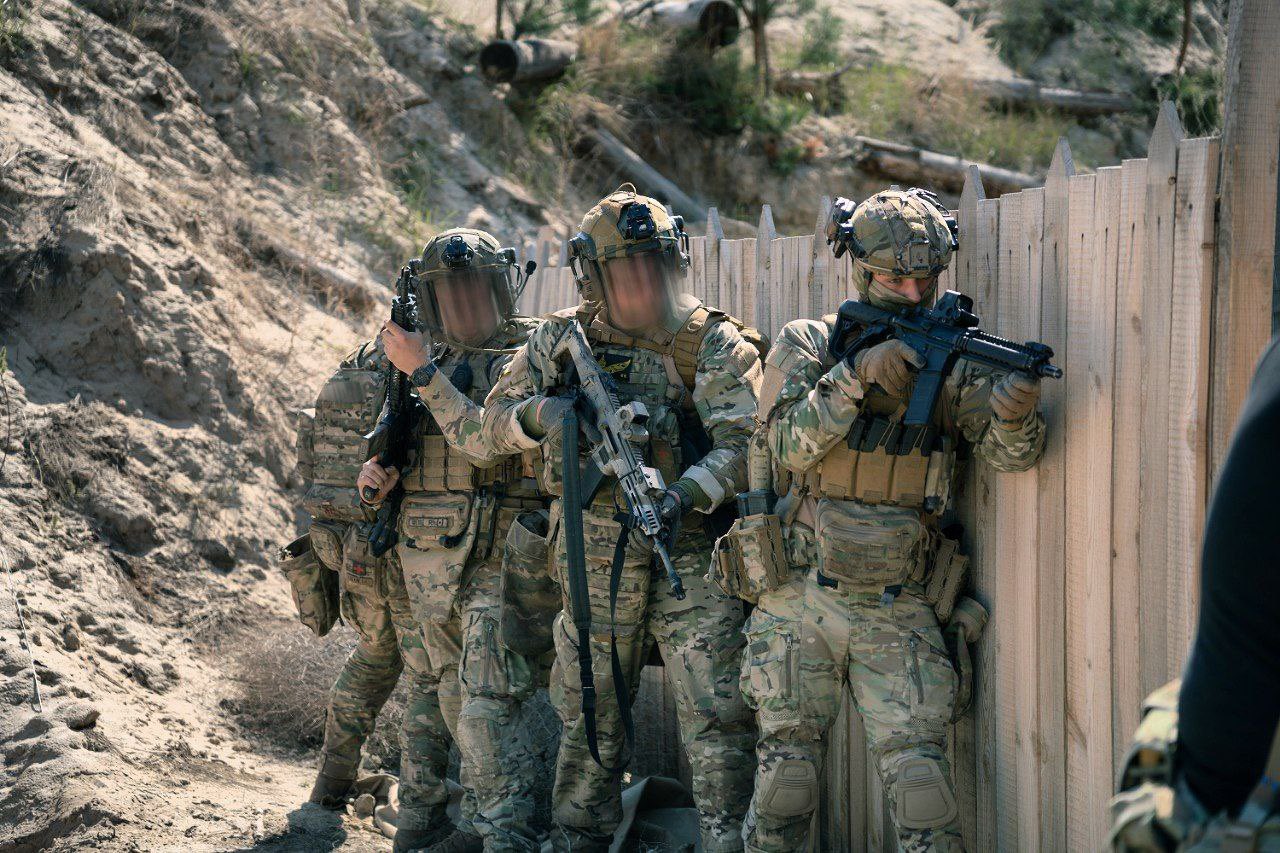
After the candidates are approved, the intelligence agency sends them to an internal month-long basic training course. Further training happens after the newcomers are assigned to the regiment. Kraken Unit promotional multimedia products show the existence of dedicated facilities that recreate Close Quarter Combat (CQB) and Military Operations in Urban Terrain (MOUT) training scenarios. [source, source]
2.5 Foreign Volunteers
Recently, the regiment started to accept foreign volunteers, but further details about the training pipeline and the assessment phase are not available in open sources. Ukrainian special mission units have requirements for foreign volunteers that can differ from normal infantry formations. Units—for example, one called “Rogue”—only take foreign nationals if they can prove at least five years of previous military experience in combat roles. [source]
3 Gear Information
3.1 Weapons
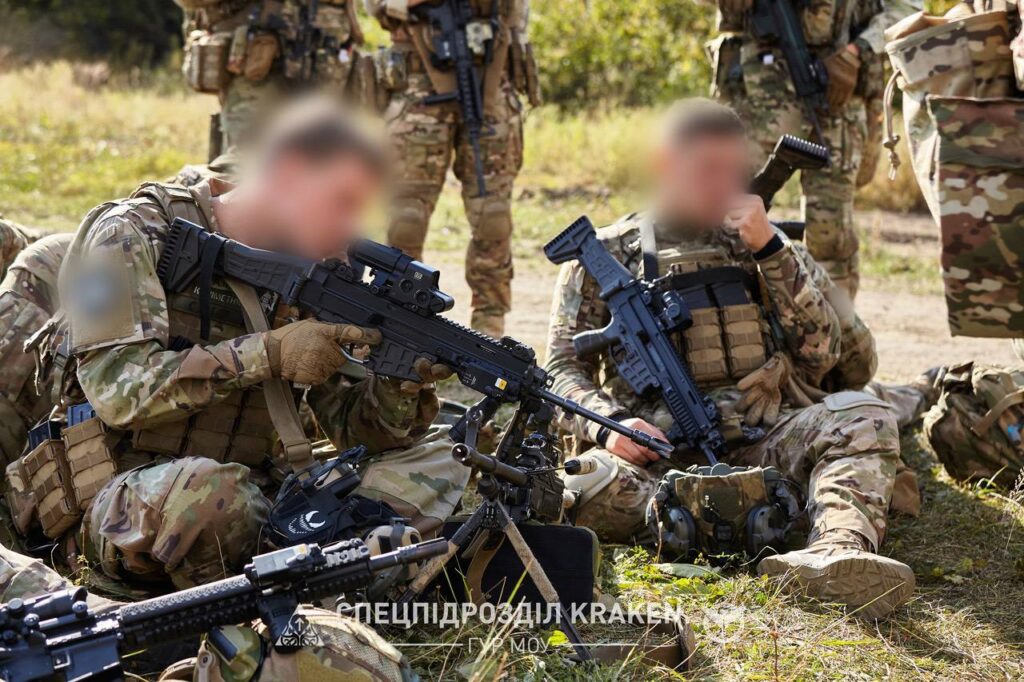
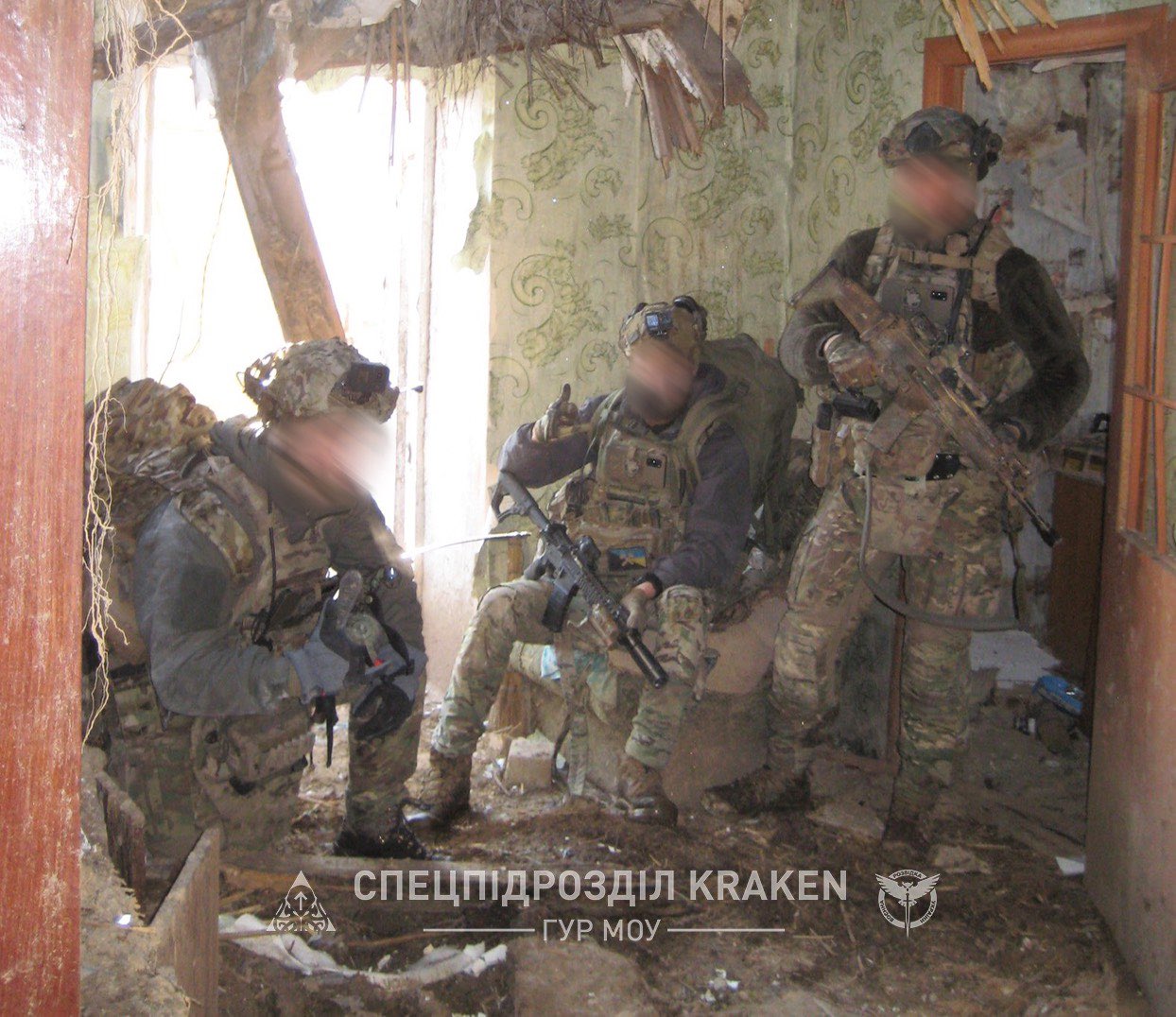
Publicly Available Information (PAI) provides indication that the regiment assaulters are normally issued with CZ BREN 2 rifle system, while the majority of the team members involved in reconnaissance and sabotage carry COLTs M4A1s and DD-MK18s. PKMs and AK-74 have also been spotted inside the images released by the group, but in more limited numbers. [source, source, source, source]
3.2 Vehicles
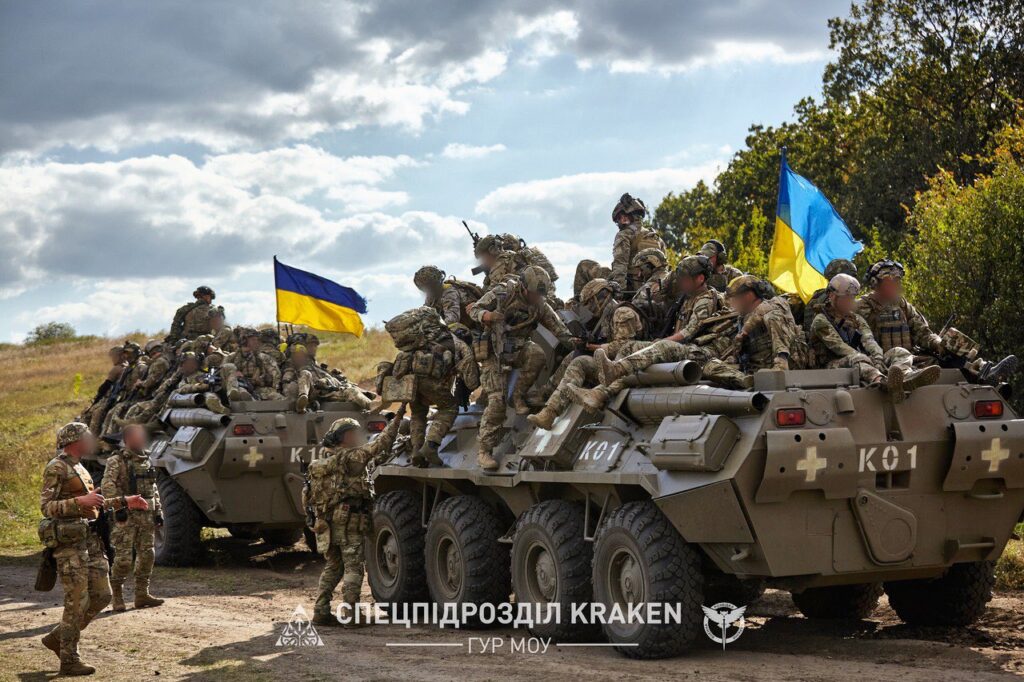
Kraken uses a large array of vehicles, armoured and unarmoured, for different purposes that range from infantry insertion to fire support. Logically, the armoured companies of the special regiment operate the heavier platforms like the BTR 82 and the M113s troop carriers, while the reconnaissance and assault formations drive military-issued Tigris and self-funded Toyota Hiluxs or Mitsubishi Tritons. [source, source]
3.3 Armor and Kit
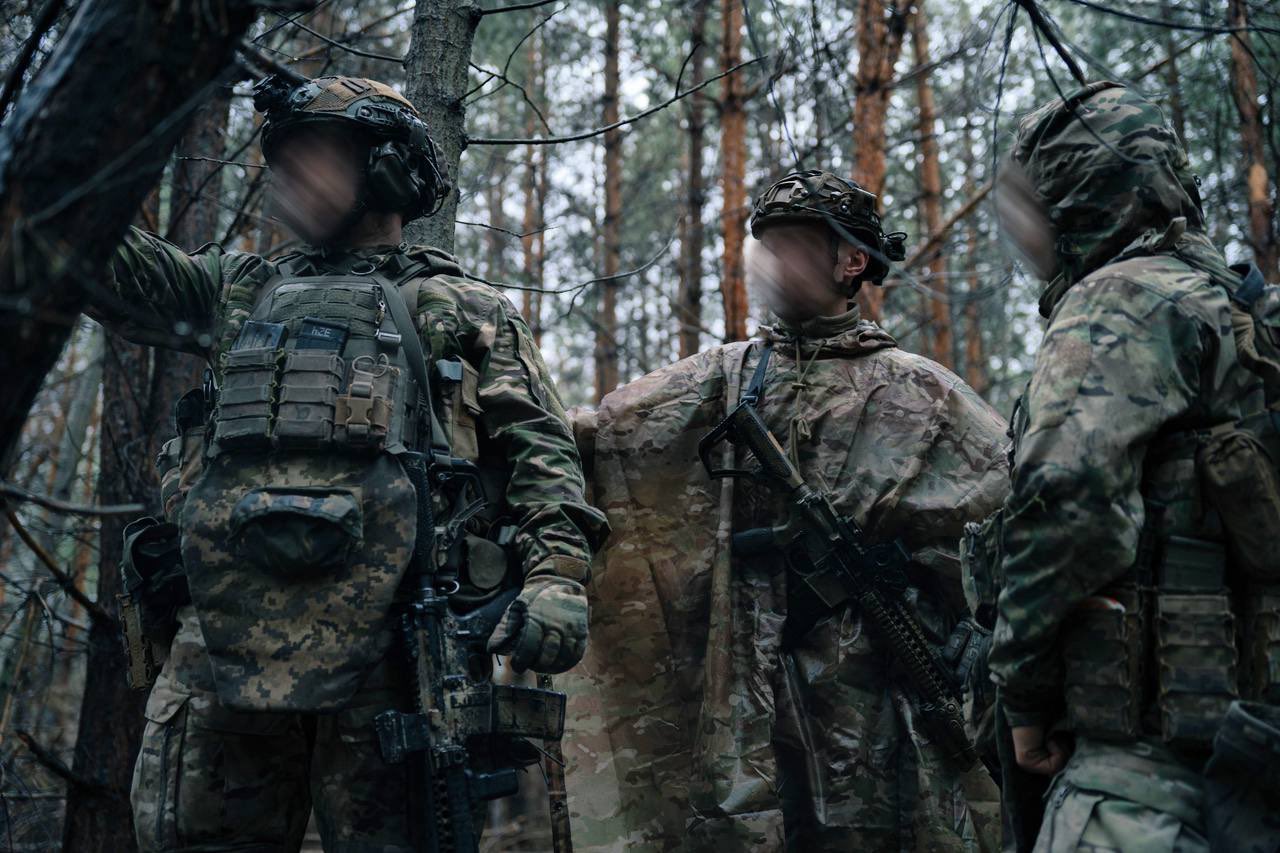
Kraken soldiers wear a mixture of Multicam (MCM) and Poroh-1(MM14) field uniforms during daily operations. These are reinforced by a large array of different national and foreign plate carriers, battle belts, and chest rigs of the same camouflage patterns. Helmets, on the other hand, vary in each company, with the UARM TOR high cuts and KASKA-1M low cuts being the most popular. [source, source]
4 Tactical-Operational Information
4.1 Operations
Early Kharkiv
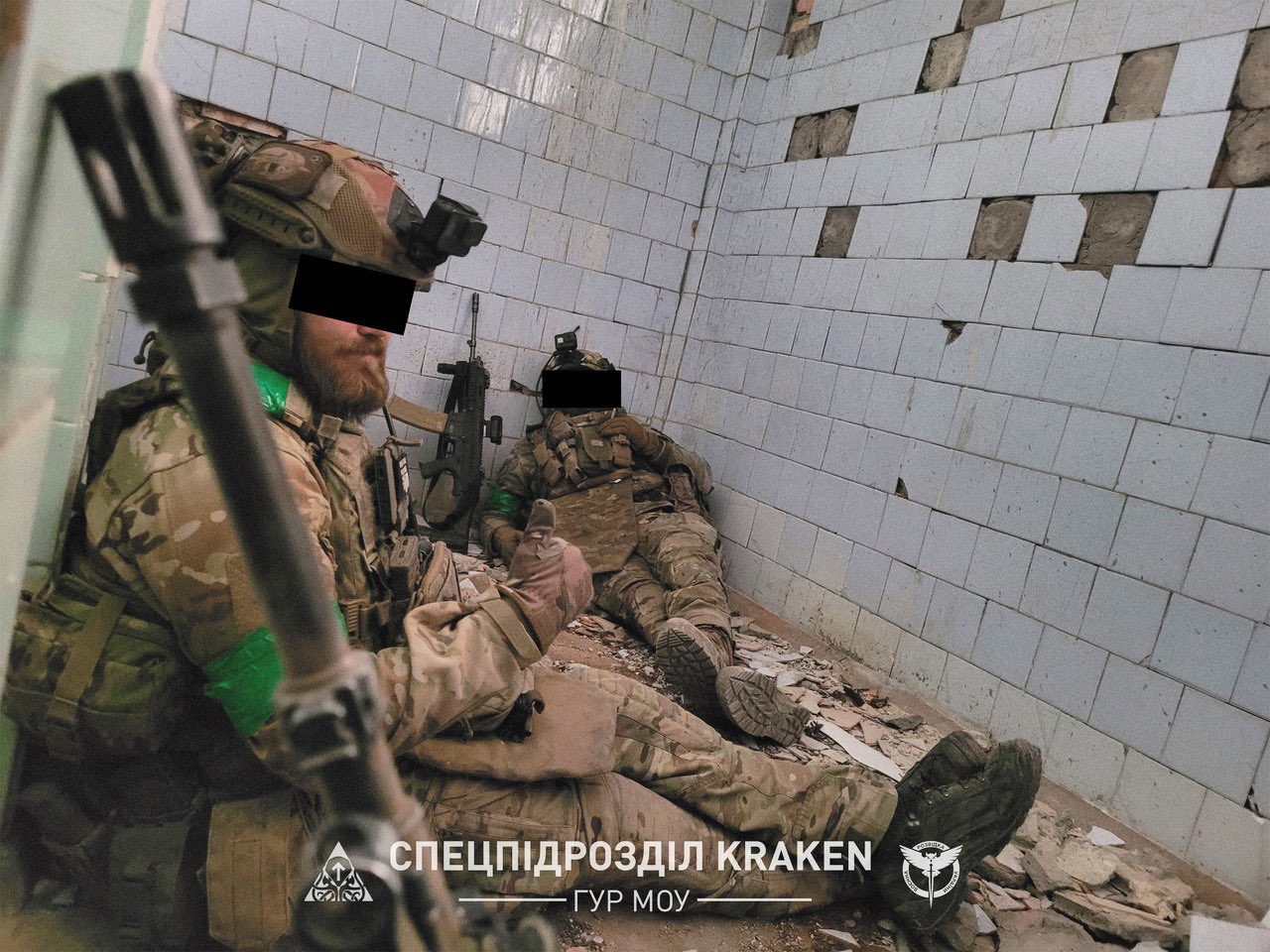
The Kraken Unit started its operations on the Kharkiv Front. On 27 February 2022, their fighters engaged and destroyed elements of the Russian 2nd Guards Spetsnaz Brigade that were holding the second floor of the Kharkiv School No. 134. Other operations during the initial campaign include the liberation of Vilkhivka, a village situated on Kharviv eastern flank, during a raid to take prisoners. [source, source]
Following the collapse of the Russian offensive on the Kharkiv–Chuhuiv axis in March 2022, Kraken Unit stormed and liberated the settlement of Ruska Lozova on 29 April 2022. Pyotomnyk, another town that bordered the city, was also assaulted and liberated by the initial volunteers. During that time, other members of the unit were fighting outside Kyiv, in Irpin and Bucha. [source, source]
April and May of that same year saw the unit transform from a defensive militia into an assault force, as Ukraine launched a counteroffensive against the Russian forces stationed in the Kharkiv region. Kraken Unit launched raids against the 24th Separate Guards Special Purpose Brigade and the Russian Army 15th Motor Rifle Brigade in Bilohorivka and Kupiansk. [source]
Late Missions
Kraken Unit’s role in reconnaissance and sabotage shifted briefly to heavy infantry in 2023, as Russia launched another offensive into Kharkiv. The Intelligence Directorate elite team stopped enemy assaults that included heavy armour and motorised infantry. The Special Assault Company also saw action in July 2024, when a Russian offensive broke through the Belgorod line. [source, source]
Sergey “Kama” Melnikov, chief of the “Russia-Storm‑Ossetia” battalion, was killed by Kraken operators on the Vasylivka–Tokmak highway, Zaporizhzhia region, in December 2024. Most recently, on 4 July 2025, Kraken destroyed a couple of Russian observation towers in Bryansk and Kursk using anti-tank guided missiles and kamikaze quadcopters loaded with high explosive munitions. [source]
Although the regiment has a high operational tempo, most of its operations behind enemy lines and day-to-day missions remain secret for operational security purposes. This article on the Kraken Unit reflects only the operations that have been disclosed by either team members or intelligence officials, as well as public battles that were witnessed or documented by media outlets.
4.2 Core Purpose
Kraken Unit’s purpose is to serve as a shock force for the Directorate of Intelligence, capable of conducting small raids and sabotage operations, as well as acting as an assault formation in complex offensives that involve drone warfare and motorized platforms. Since its inception, the regiment has also been responsible for acting as a force multiplier for intelligence operators. [source, source]
4.3 Tactics
Kraken tactics vary depending on the objective or assignment. Teams assigned to reconnaissance or sabotage are known to infiltrate behind enemy lines and encircle fixed positions before collapsing on targets. During a raid on Bilohorivka in the spring of 2022, the intelligence operators neutralised lookouts and spotters with melee weapons before surprising the main element inside the village. [source]
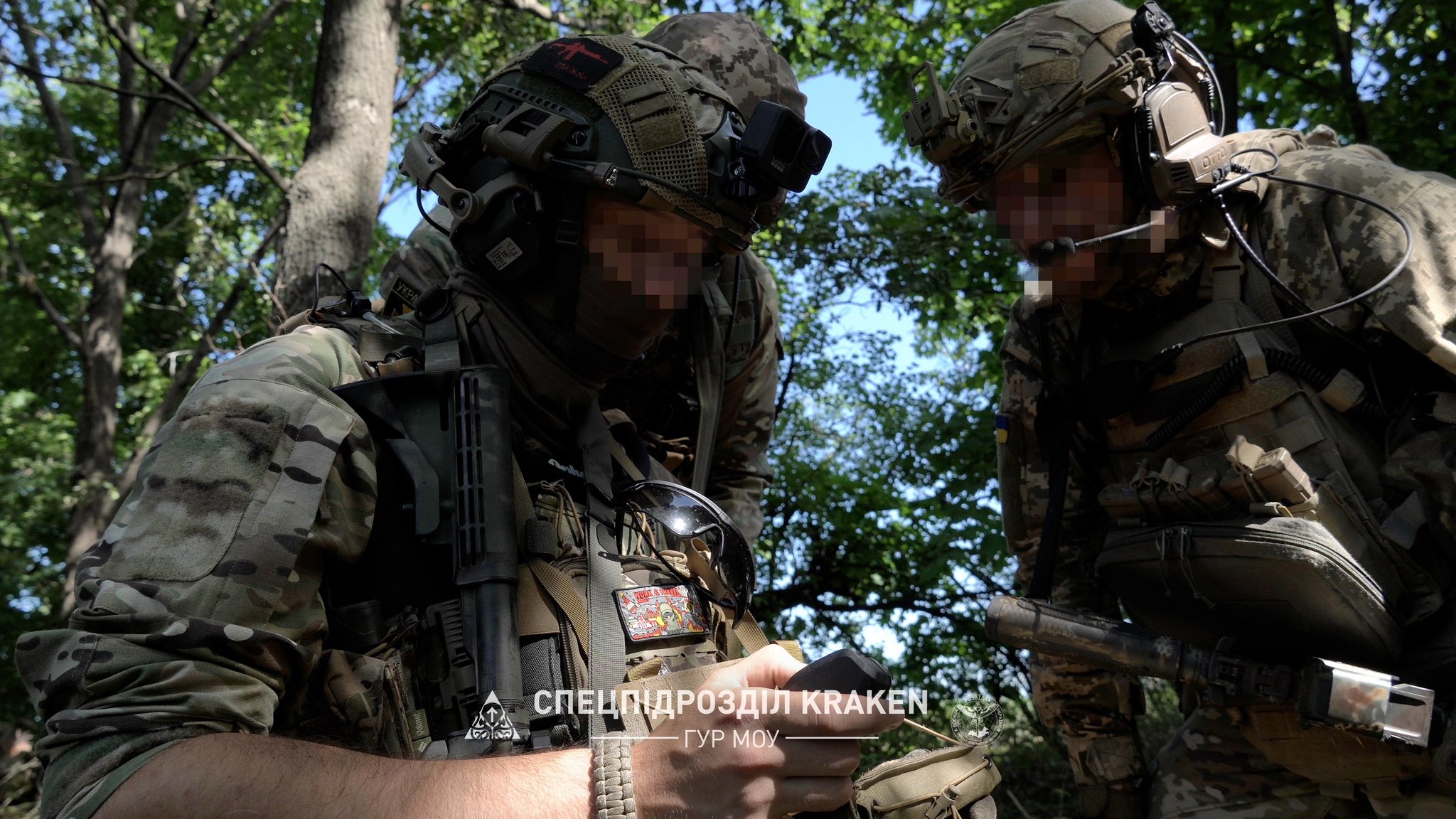
Furthermore, public images of the special unit provide indications that reconnaissance operators do not wear reflective tape or bright patches. Instead, they rely on camo netting and slow movements to traverse forested areas. Foreign volunteers in Ukraine report that a mixture of previously discussed hand signals and passwords are heavily employed by forward elements for friendly identification procedures. [source]
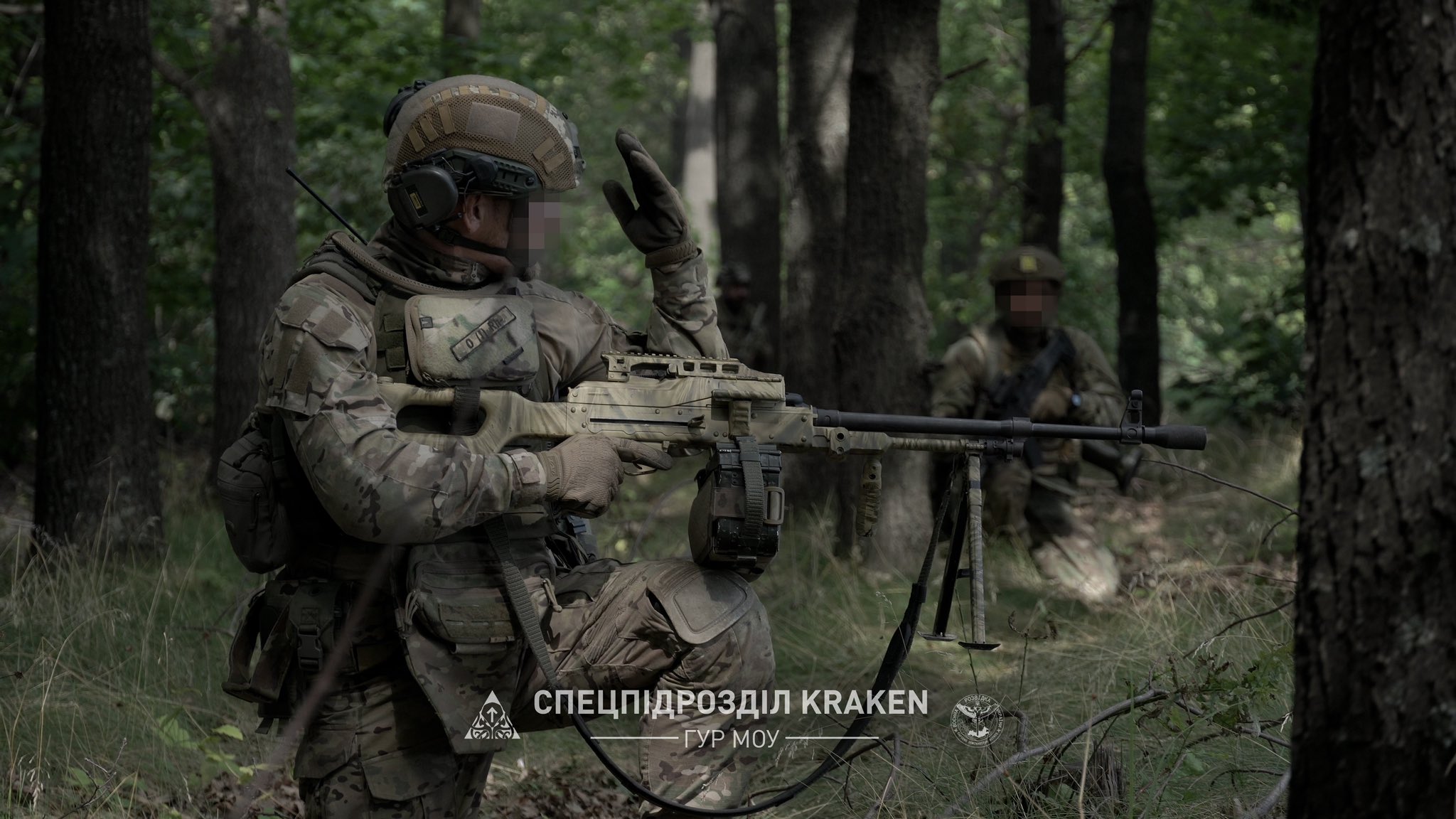
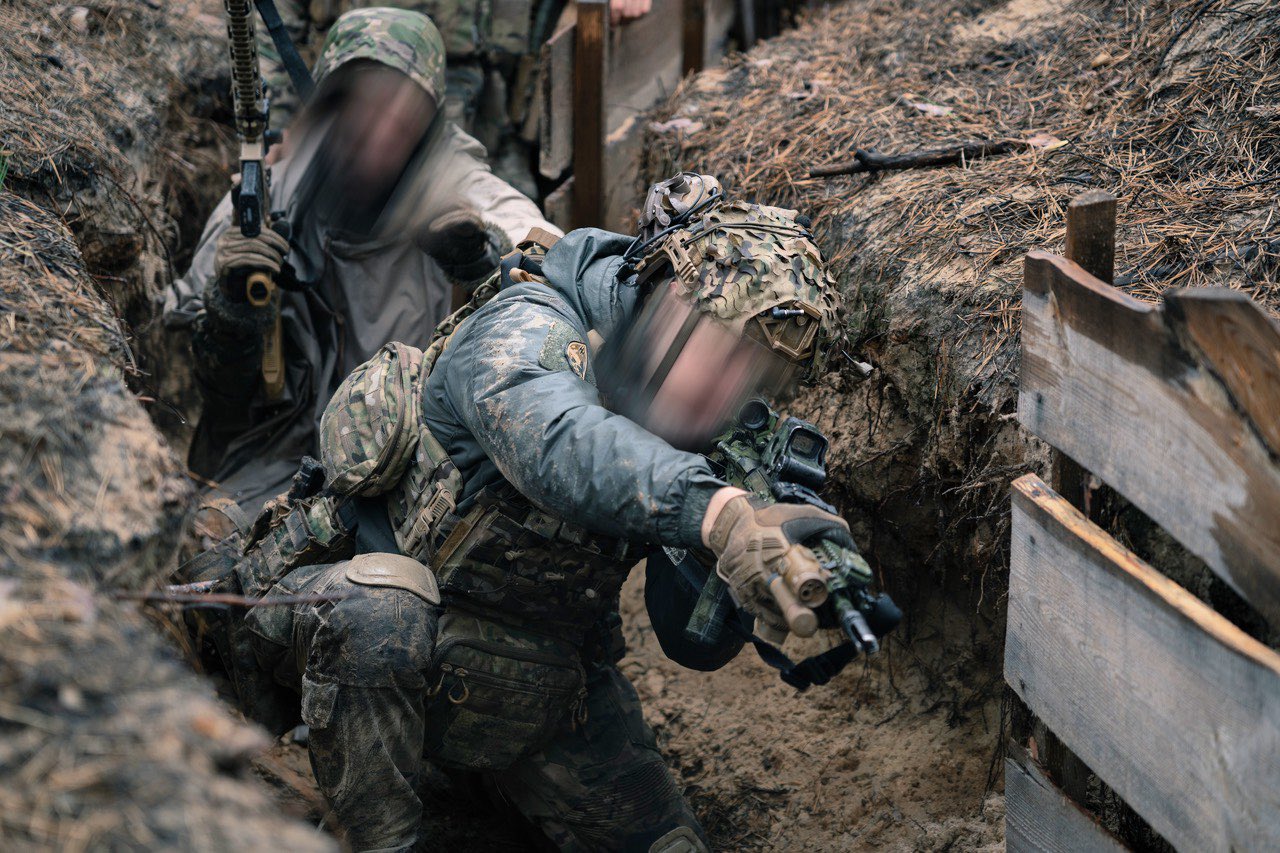
Assaulters in Kraken focus more on trench assault tactics and close-quarter combat. Western techniques like single stack and deliberate entries are seen in training images of the assault companies. Small Unit Tactics (SUTs) for breaking contact or suppressing threats on open ground are also displayed on training by the regiment’s social media channels. [source]
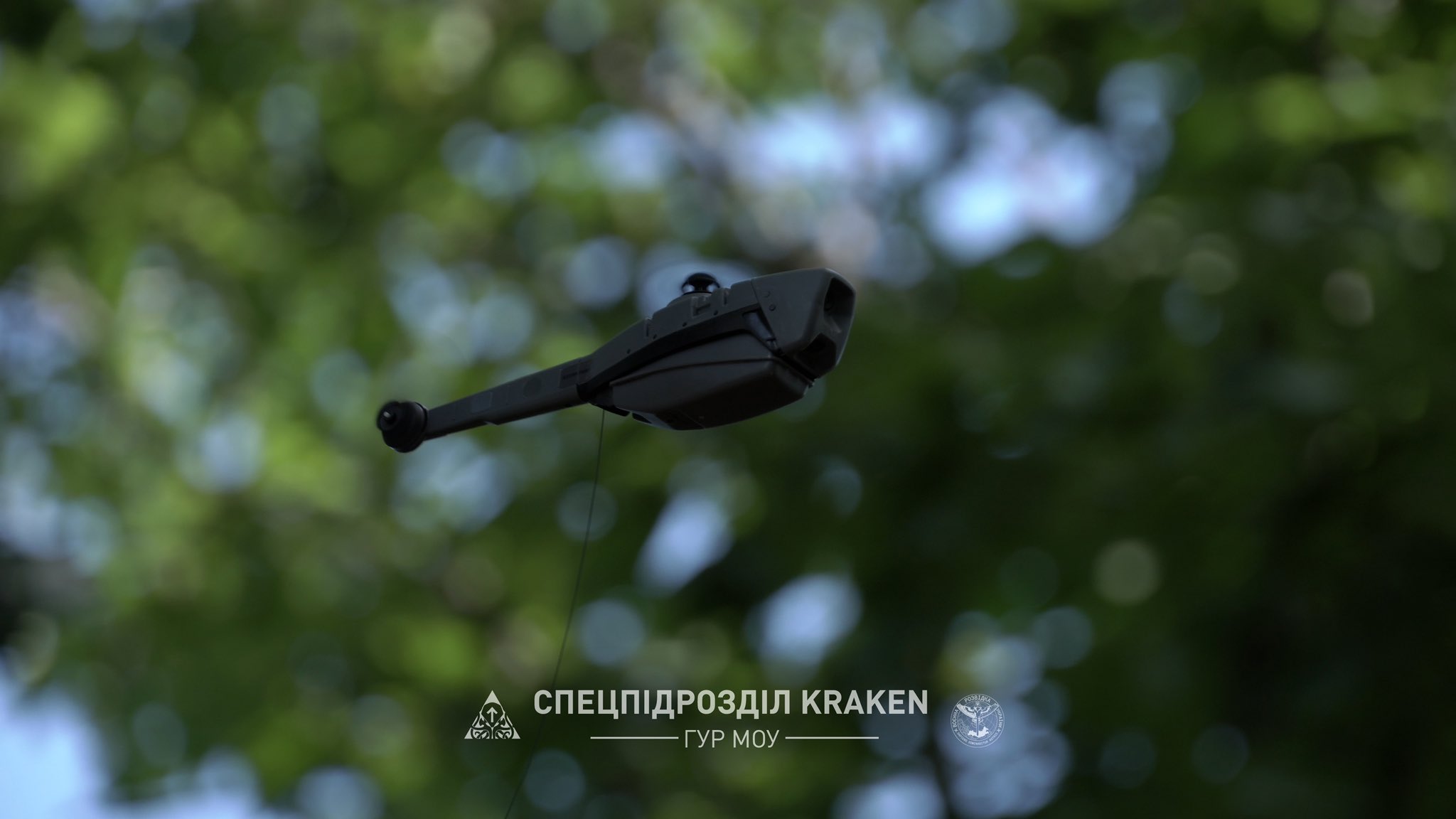
A senior commander of a special team who goes by the moniker “Drago” disclosed in a media interview that the unit turns their signal jammer on and off to cause chaos among enemy drones. Said tactic does not disengage the drone weapons or targeting system, but makes it crash due to a remote control critical failure. [source]
4.4 Personnel size
Public estimations for the number of active soldiers and support personnel combined range from 1500 to 3000. The actual numbers of the regiment could be higher or lower than the estimates, given the propensity of intelligence institutions throughout the world to misreport unit numbers to confuse enemy assessment on internal capabilities. [source]
5 The Future of Kraken
Previously documented history and operational patterns from 2022 to 2025 allow us to assess that the Kraken Unit is likely to continue increasing its capabilities in irregular warfare and direct action. Furthermore, the unit is likely to enhance the quality of its arsenal, as well as the quantity of its motor pool, through private donations and government funding. [source, source]
Regiment social media and recruitment channels are also expected to keep growing. Recent contract breaks in the International Legion due to alleged poor tactical performance among senior officers are also likely to push international volunteers, disgruntled contractors, and combat veterans into the new foreign brand of the regiment or more specialised formations. [source, source]
6 Conclusion
Kraken’s unique structure—bridging intelligence officers with light infantry and special operators—enables it to perform tasks far beyond the scope of a traditional military unit. Their combat responsibilities range from direct assaults and “trench sitting” in strategic positions to deep reconnaissance and sabotage missions behind enemy lines. Documented use of premium equipment, like Daniel Defence carbines and Crye Precision uniforms, reflects the regiment’s ability to gain access to enhanced funding and advanced platforms within the broader government and military institutions.
Recent developments in the regiment structure, including the introduction of heavy armour and drone operators, highlight Kraken’s ability to operate as an independent formation away from brigade support. Looking forward, it is highly likely that Kraken will continue to delegate sensitive operations (ambushes on armour, trench raids, logistical disruption and deep strikes) to special teams within the unit, while the bigger brigades engage in assault roles in critical areas, backed up by motorised cavalry and unnamed airframes.