
The Special Activities Center (SAC) is the covert action arm of the CIA. Covert action is known as the U.S. president’s “Third Option,” the first option being diplomacy and the second option being military action. Within SAC is its Special Operations Group (SOG), for tactical paramilitary operations, and Political Action Group (PAG), for covert political action. The center is largely composed of highly trained former military personnel, often from the special forces, who handle missions ranging from hostage rescue and sabotage to training of foreign fighters to counterterrorism to covert influence.
Special thanks to Magda Long, a leading academic in the field of covert action, for her insights and contributions to this article.
1.0 Insignia
CIA Directorate of Operations (DO) insignia. [source]
![[source]](https://commons.wikimedia.org/wiki/File:CIA_Directorate_of_Operations_Logo.svg)
2.0 Tertia Optio
Inside the lobby of the old Central Intelligence Agency headquarters building in Langley, Virginia there are stars carved into the marble wall. Each star represents an Agency officer who died in the line of duty and, as of this writing, the number stands at 140. Many names remain secret, but the names of the fallen who can be acknowledged are contained in a book that sits below the stars. Carved into the wall above the stars are the words: [source source]
“In honor of those members of the Central Intelligence Agency who gave their lives in the service of their country.”
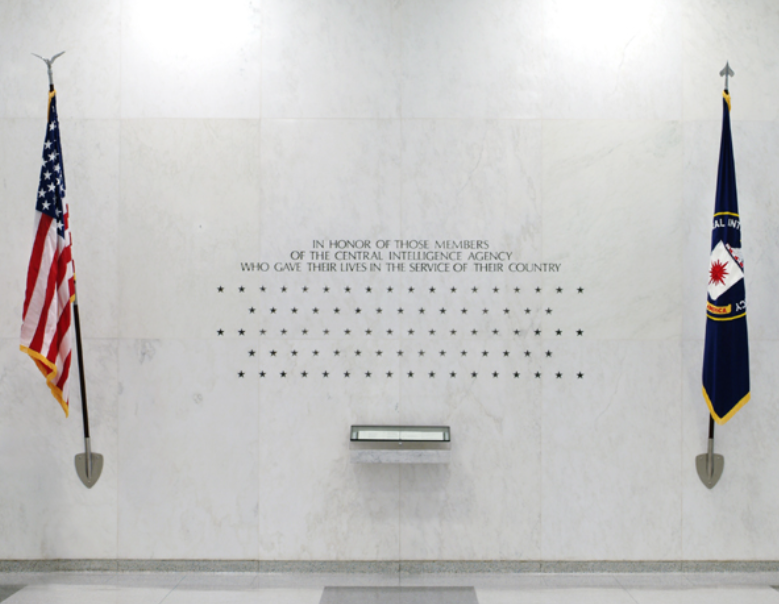
Memorial wall in the CIA headquarters. [source]
The executive branch of the United States government has two primary options by which the president can affect international issues. The first is diplomacy and the second is military action, both of an overt and clandestine nature. When neither of these are viable, the CIA’s SAC fills the gap. SAC officers have been at the heart of some of the most critical moments in history, including being among the first boots on the ground in Afghanistan following 9/11. [source]
2.1 Covert vs Clandestine
While subtle, the difference between covert and clandestine operations is essential to understanding how the SAC operates.
Covert action is defined in Title 50 of the U.S. legal code as an activity or activities of the United States Government to influence political, economic, or military conditions abroad, where it is intended that the role of the United States will not be apparent or acknowledged publicly. [source]
When speaking with Magda Long, she stated that treating the U.S. framing as the reference point stops us from recognising the wider range of activity that states conduct. In contrast, she defines covert action as a “foreign policy tool leaders use to secretly influence foreign state and non-state actors, while concealing sponsorship.” [source]
Department of Defense (DoD) doctrine describes clandestine activities as “operations sponsored or conducted by governmental departments in such a way as to assure secrecy or concealment.” [source]
The military, under Title 10, has the implicit authority to conduct operations that resemble covert action. However, the DOD classifies these as traditional military activities or operational preparation of the environment. [source]
Clandestine actions are those in which the activity itself is hidden, but the sponsor is known or identifiable, even if the operations remain secret. Unlike the term covert action, clandestine activities have not been defined by Congress. Legally, clandestine operations are carried out within a military chain of command that is directed by the Secretary of Defense, overseen by the armed services committees. Therefore, they are treated as “traditional military activities,” a category that is not defined in statute. [source]
Clandestine operations do not require a presidential finding, which is a legally required written directive issued by the President to authorise impending activity and must be reported to designated Congressional committees. Covert action does require a presidential finding, however. [source, source, source]
The CIA is the primary entity for covert action, which the Directorate of Operations (DO) oversees, and the SAC is the operational arm that implements it. [source]
3.0 History
While the exact founding date of the CIA’s SAC remains elusive, we know it has lineage older than the Agency itself. Tracing its origins back to the Office of Strategic Services (OSS) teams that parachuted behind enemy lines in WWII, the CIA’s paramilitary arm has a long history marked by controversy and congressional scrutiny. Furthermore, over the decades, it has been renamed several times, and faced repeated attempts to reduce or eliminate it.
In the aftermath of 9/11, where U.S. counterterrorism strategy increasingly militarised overseas operations, elevated the CIA’s Special Activities Division (later named SAC) purpose.
3.1 Office of Strategic Services
The precursor to the CIA, the OSS, created in 1942 under the Joint Chiefs of Staff, was the U.S.’ first centralised intelligence and special operations agency. It was led by Major General William J “Wild Bill” Donovan. The OSS was heavily modeled on the British SOE; in 1940, Donovan sent personnel to Britain to study SOE methods and help shape the OSS’s special operations capability.
The OSS was tasked with foreign intelligence collection and clandestine missions across every major theatre of WWII. When it was dissolved in 1945, the OSS intelligence and counterintelligence functions passed through several transitional bodies before helping form the foundation of the CIA as we know it today. Its paramilitary components – Special Operations (SO), Operational Groups (OG), Maritime Unit (MU), and Morale Operations (MO), did not survive the dissolution, being incompatible with the post-war world. [source, source]
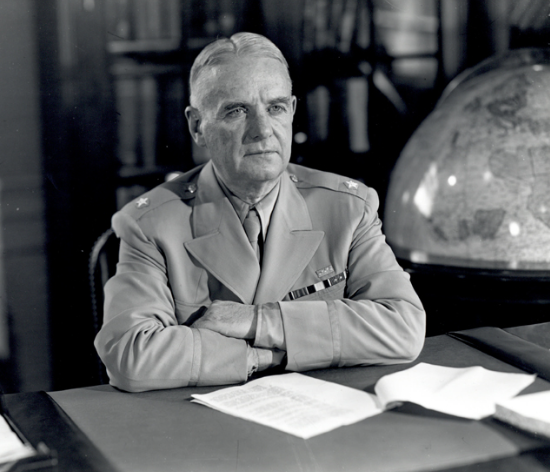
William “Wild Bill” Donovan. [source]
![[source]](https://www.archives.gov/research/military/ww2/oss/images/img7.jpg)
In late 1944 when the OSS reached its peak strength, it consisted of almost 13,000 men and women. Nearly three quarters of individuals were uniformed members of the armed forces.
During this time, however, the Army resented the OSS for giving “direct commissions” to civilians – granting them officer ranks despite having no prior military training or service. [source, source]
OSS insignia. [source]
![[source]](https://commons.wikimedia.org/wiki/File:Office_of_Strategic_Services_Insignia.svg)
Much of the renown went to the operational branches – most notably the Secret Intelligence (SI) and the Special Operations Branch (SO), along with the commando-style teams of the Operational Groups. [source]
During the war, the SO was tasked with running guerrilla campaigns throughout Europe and Asia. Like many other parts of OSS’ work, Special Ops branch’s structure and doctrine were directly modeled by British SOE in the emerging field of psychological warfare. [source]
3.1.1 Jedburgh Teams
Together the SO and SOE formed Jedburgh teams of paramilitary commandos that parachuted behind enemy lines in France to fight the Nazi occupiers. These Jedburgh teams were small, three man units, consisting of one SO officer, one SOE officer, and a radio operator from the Free French Resistance.
The origin of the name Jedburgh remains uncertain, but several explanations have circulated over the years. A popular theory links the term to a small Scottish border town in the 12th Century where Scots conducted guerrilla warfare with such ferocity against the English using their Jedburgh axes. Other accounts link the name to a South African town associated with Boer guerrilla tactics; others to the “Jed sets” radios used by the teams, or to J-Jour, the French equivalent of D-Day.
Trained as commandos at SOE’s Milton Hall, these teams linked up with the French Resistance, coordinated airdrops of weapons and supplies, organised sabotage, and guided partisan attacks to disrupt German forces ahead of the advancing Allied armies. Their work became one of the most iconic examples of OSS-SOE cooperation during the war. [source, source]
“Surprise, kill, and vanish.” – Motto of the Jedburgh teams
3.1.2 Detachment 101
Detachment 101 operated deep behind Japanese lines in Burma. With 120 Americans, the unit eventually recruited nearly 11,000 Kachin tribesmen alongside them to fight the Japanese. The detachment inserted deep behind enemy lines to gather military intelligence, conduct psychological operations, sabotage key Japanese installations, and also rescue pilots that had been shot down and eliminate hidden Japanese positions. A CIA history publication notes that when in Burma, the detachment “came perhaps the closest to realising General Donovan’s original vision of ‘strategic’ support to regular combat operations.” [source]
3.1.3 Morale Operations Division (MO)
The Morale Operations Branch broke away from SO in 1943 to take over the “black” propaganda work left behind after the Coordinator of Information (COI), the head of a civilian office attached to the White House, had been divided. Its job was to craft deceptive messages that appeared to come from disillusioned Germans or Japanese, aimed to weaken Axis troop morale and encourage resistance among civilians. It worked alongside the British, especially the Political Warfare Executive. It produced huge amounts of subversive leaflets, as well as creating rumours about Hitlers health by faking German newspapers, radio broadcasts and leaflets. By the end, MO and similar units had convinced the U.S. leaders that psychological warfare was indeed an essential front in conflict. [source]
3.1.4 The End of the OSS
As WWII ended, OSS found itself vulnerable to political shifts in Washington. Congress, at the time, was then very eager to dismantle “war agencies” like the OSS. Moreover, President Truman disliked and had little confidence in Donovan, and rival organisations, such as the FBI and Office of Naval Intelligence (ONI), were well positioned to influence the postwar climate.
On 20 September 1945, Truman announced the OSS would be terminated on October. Donovan subsequently had only ten days to break down the entire service, delivering his final farewells to his staff on the 28th.
Assistant Secretary of War John J McCloy directed that some personnel and assets, including the SI and X-2 branches, be preserved and transferred to the new Strategic Services Unit (SSU), then to the Central Intelligence Group (CIG). The X-2 branch, also known as the Counterespionage Branch, was a key part of the OSS solely responsible for coordinating and controlling the operations of double agents. [source, source]
When the National Security Act of 1947 was passed, CIG was turned into the Central Intelligence Agency. [source]
The OSS received numerous commendations, including Detachment 101 receiving the Presidential Distinguished Unit Citation. [source]
Today, the U.S. military has formally acknowledged how much it owes to the OSS. When the Pentagon created the US military’s Special Operations Command (USSOCOM) in 1987, it drew on the OSS model of inter-service cooperation and success in unconventional warfare. USSOCOM personnel, much like their counterparts in the CIA, view Donovan and the OSS as their true predecessors. Their insignia reflects this lineage: USSOCOM’s shoulder patch, a gold spearhead on a black background, was directly inspired by the unofficial patch worn within the OSS. [source]
SOCOM’s emblem. [source]
![[source]](https://commons.wikimedia.org/wiki/File:United_States_Special_Operations_Command_Insignia.svg)
3.2 The Central Intelligence Agency
The National Security Act of 1947’s formation of the CIA brought with it a great deal of restructuring. It was established as an independent civilian agency within the executive branch, and based on the act, was charged with “coordinating the nation’s intelligence activities and, among other duties, collecting, evaluating, and disseminating intelligence affecting national security.” The CIA began with four major operating components: [source]
- Reports and Estimates
- Special Operations
- Operations (overt collection)
- Collection and Dissemination
The position of Director of Central Intelligence (DCI) was also established at this time to oversee the entire U.S. Intelligence Community (IC) and serve as the president’s primary intelligence advisor. It was automatically filled by the CIA Director—in a dual role—until its disbanding in the post 9/11 reorganization of the IC that led to the creation of a separate Office of the Director of National Intelligence (ODNI). [source]
One of those most significant restructuring was the expansion of its covert and paramilitary dimension. The NSC issued a directive in December 1947 for this expansion, and in 1948, The Office of Policy Coordination was created. The OPC was responsible for psychological warfare, political operations and preventative direct action (paramilitary activities) all within the policy direction of the Departments of State and Defense.
By 1952, the OPC merged with the Office of Special Operations to form the Clandestine Service, creating a single command structure for espionage, covert actions and paramilitary functions. This merged structure is therefore the institutional ancestor of the late Special Activities Division (SAD), and eventually the SAC. [source]
Seal of the CIA. [source]
![[source]](https://commons.wikimedia.org/wiki/File:Seal_of_the_Central_Intelligence_Agency.svg)
3.2.1 Political Assassinations and Secret Rebellions
Operation Ajax
One of the CIA’s most impactful covert operations was Operation Ajax (TPAJAX) in 1953. TPAJAX led future presidents to believe the CIA can achieve what seemed unachievable. The effects of this operation indeed continue to shape the relations between the U.S. and Iran today.
Iran‘s selected prime minister Mohammad Mossadegh, a nationalist from the National Front party, moved to nationalise the Anglo-Iranian Oil Company (AIOC, later British Petroleum). The British had enjoyed extensive profits while Iran received a minimal percentage. [source]
However, Mossedegh sought to nationalise the oil industry and gain sovereignty over its own resources, which the British was not fond of. Britain threatened nations to not purchase from Iran, introduced a global embargo on Iranian oil and froze Iranian assets. When it reached 1952, Britain planned to remove Mossadegh and turned to the U.S. for help. When Eisenhower was elected, he was convinced to start an operation that would overthrow Iran’s democratic government, framed as a case of international security and the threat of communism. [source]
The CIA and MI6 successfully removed Mossadegh from power by recruiting military officers and organising protests to create the impression of widespread opposition against Mossadegh. The Shah was restored, and Iran’s oil was subsequently back on Western terms. The covert operation has immense significance today in the dynamics between Iran and the U.S., and U.K. [source]
Bay of Pigs
The CIA would come under significant scrutiny in 1961 after the botched Bay of Pigs operation. The goal was to overthrow Fidel Castro’s communist regime in Cuba. Their stated method of accomplishing this was to induce, support and, where possible, directly assist Cuban groups to take action against the regime – both inside and outside of Cuba. [source]
The CIA set up training camps to allow paramilitary operations officers (PMOO) to train Cuban exiles for a homeland invasion. As part of the operation, the CIA used obsolete World War II B-26 bombers, repainting them to pass as Cuban air force planes. However, the opening strikes failed to neutralise Castro’s air force, and several CIA affiliated pilots were lost. The Cuban government subsequently discovered the Americans were behind the attack, seeing remnants of repainted U.S. aircraft. [source]
Its core assumptions, that Cubans would rise up, airstrikes would cripple Castro’s air force, and U.S. involvement could stay hidden, fell apart almost immediately. After the first air attack failed, Kennedy cancelled the next strike and the 1,400-man Cuban exile invasion force was left exposed on the beach with no real cover. They were met with roughly 20,000 armed Cuban troops and were all captured or killed. [source]
At the same time, members of the CIA were also working in the Belgian Congo to counter Soviet influence. Lawrence Devlin was the (in)famous Chief of Station for the Congo in the 1960s, and coordinated covert support to anti-communist factions, including those aligned with Mobutu Sese Seko. [source]
In 1967 CIA personnel supported Bolivian forces in the campaign against Che Guevara. Felix Rodriguez, a former CIA paramilitary operations officer believed to be in the SAC, assisted Bolivian units trained by the U.S. in locating Guevara. According to declassified documents, Guevara was captured by Bolivian Rangers and Rodriguez was present during his interrogation. [source]
Throughout the 1960s and 70s, the CIA utilized its paramilitary branch with the aim of overthrowing regimes in places like Laos, Cuba, Angola, Nicaragua and many others. [source, source]
These operations have frequently been disputed as being counterintuitive. A 1976 Senate Select Committee to Study Governmental Operations with Respect to Intelligence Activities (The Church Committee) concluded that the CIA had engaged in “illegal, improper or unethical activities” and that its covert programs, sometimes conducted by SAD, contributed to “intelligence excesses, at home and abroad.” [source, source]
3.2.3 Cold War Success and Scandal
One of the better-known CIA covert actions was Operation Cyclone, one of the most expensive and longest CIA operations undertaken at the time. While the operation remains one of the CIA’s most significant cases of covert action during the Cold War, involvement by the Special Activities Division remains elusive.
The operation, which lasted between 1979-1992, was headed by CIA operations officer Gust Avrakatos and widely supported in policy circles by Texas Congressman Charlie Wilson. During the operation, the CIA covertly supplied money, weapons, training and logistical support to Afghan mujahideen groups fighting the Soviet-backed government. Furthermore, the agency funnelled much of the funding through Pakistan’s Inter-Services Intelligence, supplying billions of dollars to these guerillas. It was considered one of the greatest successes of the National Security Council (NSC) and CIA; however, the celebration wouldn’t last. [source, source, source]
At the same time, the Iran-Contra affair was beginning to come to light. A secret, illegal operation was carried out during the Reagan administration in which senior U.S. officials sold weapons to Iran – despite an arms embargo – and then diverted profits to fund the Contra rebels in Nicaragua. Early in the conflict, the CIA had helped organise, finance and train the Contras and carried out covert sabotage operations, including the mining of Nicaraguan harbors. [source]
Revising a law known as the Bolan Amendment, Congress had passed laws prohibiting U.S. support for the Contras. However, Reagan and/or his subordinates decided to continue supporting the Contras, and the scheme was transferred from the CIA to the National Security Council (NSC). Multiple indictments and convictions followed, largely White House figures. The CIA still faced intense public and political backlash for its role, leaving the Agency with significant reputational damage. [source, source, source]
Throughout the 90s, competition between the CIA and the Pentagon over covert and paramilitary responsibilities became so intense that some individuals in the U.S. government advocated for folding the CIA’s paramilitary wing into the Pentagon’s special operations forces. Analysts at the time described the turf wars as “horrendous” with both sides often duplicating efforts and even risking operational conflict. [source]
The Pentagon argued there was no need for the CIA to maintain its covert combat capabilities, while CIA officials countered that no military unit could replace the Agency’s ability to operate deniably in politically sensitive environments. The ability to operate deniably stems in large part from the flexibility of Title 50 authorities, which allow the CIA to deploy rapidly, adjust operations, and manage personnel or equipment in ways that conventional military structures cannot. Many argue that this institutional agility is a key reason the CIA’s SAC has endured. [source]
The CIA’s SOG during this time had been reduced to a shadow of its former self largely due to the political backlash and budget cuts from both congress and within the CIA. [source]
4.0 Entry Into The GWOT
The Global War on Terror reshaped modern conflict. Traditional front lines were blurred, enemies were not always in uniform, and the battlefield could be anywhere. When the twin towers were attacked, the White House needed operatives who could fight in this new unconventional battlespace. The CIA proposed a fast, relatively low-cost plan centred on inserting operatives into Afghanistan and reconnecting with the anti-Taliban Northern Alliance commanders – relationships built through years of prior engagement in the region. Compared to the military’s proposed plan, which was substantially broader, slower, and more resource intensive, making the CIA’s plan the preferred option for the initial U.S. response.
Within weeks CIA Paramilitary Operations Officers (PMOO) were inside Afghanistan. Carrying an attache case packed with roughly $3 million in cash, operatives used the money to reconnect with Northern Alliance commanders and secure cooperation. CIA officers knew the language, history, culture of the region and were in a great position to move quickly. [source, source]
In 2015 the National Clandestine Service would restructure itself along with the rest of the Agency. The NCS reverted to its former name from 1973, the Directorate of Operations (DO).
Around this time of reorganization, the Special Activities Division would rebrand itself the Special Activities Center (SAC). This conversion, along with the name change, was part of a broader Agency shift toward mission centers. Mission centers are structures that are more self-sufficient than the typical bureaucratic divisions, combining operational, analytical and administrative functions and focusing on a single area. [source]
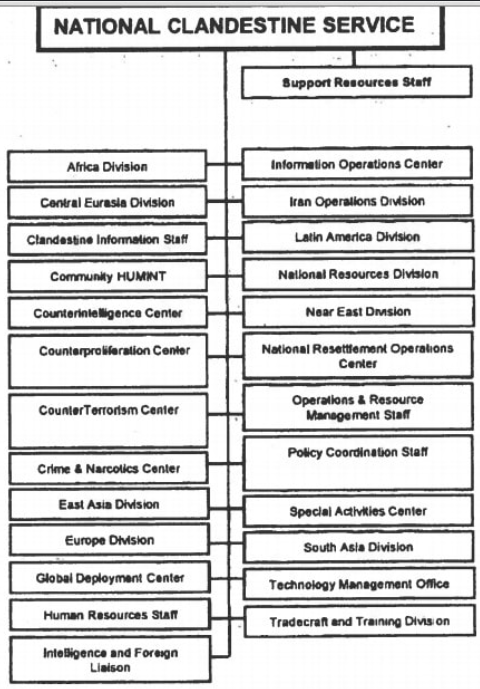
NCS organizational chart– SAC is located on the right side, 4th from the bottom.
In 2015 Archivist Jeffrey Richelson filed a Freedom of Information Act request for an old CIA organizational chart. Although at this point it is an outdated chart, it does look at where SAC used to fall into the organizational structure. [source]
4.1 U.S. Covert Action under Trump
Covert action under Trump is marked by a more assertive, more permissive use than in recent administrations. Early in his first term, he loosened long-standing constraints on the CIA and Joint Special Operations Command (JSOC) UAV strikes, giving both organisations greater freedom to operate outside declared war zones. Additionally, he publicly discusses actions that would previously have remained unacknowledged, turning covert activity into a tool of signalling as much as influence. [source]
This reflects much of what Magda Long told us in our correspondence. Long noted that Trump has pushed the legal barrier of covert action, however, his behaviour is a continuation of the approach by post 9/11 presidents using covert action more than a discreet policy tool it was intended to be. Furthermore, Long stated that Trump has lowered the “rhetorical barrier to acknowledging covert action, further normalising the use of this typically cloak-and-dagger policy tool.” Trump, according to Long, pushes covert action toward spectacle, making it more visible, more politicised and a way to demonstrate his own decisiveness. [source]
“For the U.S., covert action is no longer just a tool to pursue foreign policy objectives discreetly. It has become a tool of coercion and deterrence… The activities of U.S. covert action have not necessarily changed, although they have adapted to the times. It is the narrative around covert action that has become much more aggressive” – Magda Long.
5.0 Structure of SAC
The exact structure of the SAC is not officially disclosed. However, many external reports – including SOFREP which authors former US Special Operations and CIA personnel, understand SAC’s general organisation as built around four main components. [source]
- Ground Branch
- Air Branch
- Maritime Branch
- Political Action Group
CIA PMOO Darren J. LaBonte in Afghanistan, KIA 2009. Image retrieved via DEVTSIX. (Source)
5.1. Ground Branch
Ground Branch—now called “Ground Department,” according to an article by Jack Murphy on Yahoo News, who spoke with former CIA officers—is the land-based fighting force of the SAC. Like the rest of the CIA, SAC is precluded from operating within the U.S.; all operations are conducted overseas. [source, source]
The CIA’s SAC remains an elite paramilitary element with the capability to conduct high risk covert operations. However, for the most demanding direct-action missions, the U.S. government may still rely on military special mission units instead of the SAC’s GB. This is illustrated in the Osama bin Laden takedown – where a CIA led operation ultimately used the SEALs to execute the shooter role.
5.1.1 Responsibilities
- Deniable covert operations on foreign soil
- Organise and support guerrilla forces
- Renditions
- Hostage rescue
- Counterterrorism
- Training foreign military elements [source]
5.1.2 Weapons and Equipment
Former CIA Case Officer John Smith (his nom de plume) stated in his book “Left of Boom” that GB officers wore civilian clothes and were equipped with “the most advanced light weaponry on the planet.” Some weapons and equipment CIA’s SAC personnel have been reported using include: [source, source]
- M4 carbine
- M203 40mm grenade launcher
- M249 SAW
- AKMs
- Browning Hi-Power 9mm pistols
5.2 Maritime Branch
The Maritime Branch operates a small-scale naval fleet. According to a 2020 Yahoo article by Jack Murphy, who spoke with former CIA employees, the branch maintains fleets in regions including South America and West Africa. The vessels can be used to discretely move personnel and equipment across the ocean and to conduct intelligence collection in maritime environments.
According to the Yahoo News article, a former CIA officer told the outlet that the Maritime Branch has actually been trying to reassert its role within SAC – noting that it was sometimes viewed as a holding spot for former SEALs between Ground Branch assignments. [source]
5.2.1 Responsibilities
There is little publicly available information on the Maritime Branch and thus its exact responsibilities are not well-documented in reliable sources. However, it is likely the unit conducts the following operations: [source]
- Deniable covert operations in foreign waters
- Underwater demolition
- SIGINT/MASINT collection from boats
- Covert insertion and extraction of CIA personnel
- Covert transportation of cargo
- Personnel and material recovery
- Underwater reconnaissance
One reported case includes a failed CIA operation that resulted in the deaths of several SAC MB officers. The men, named Stephen Stanek, Michael Perich, Jamie McCormick and Daniel Meeks were sent to the north of Philippines to place a listening device under the sea, intended to pick up Chinese vessels operating in the area. However, the men were caught in Tropical Storm Higos and disappeared. [source]
5.2.2 Weapons and Equipment
Unsurprisingly, the Maritime Branch does not publicly disclose its equipment or loadouts. It is reasonable to assess, however, that its operators use gear broadly comparable to that of elite naval special operations units, especially those adapted for covert maritime environments.
It is likely they favour platforms suited to harsh maritime conditions like the Heckler and Koch HK416. They are known for reliability in adverse environments, including exposure to water. At the same time, it is likely they avoid heavy weapons or overtly destructive equipment due to the nature of their mission.
5.3 Air Branch
Air Branch operates as the covert aviation element of CIA’s SAC. Its pilots likely fly an array of both fixed and rotary-wing aircraft in both combat and non-combat roles.
Many of its jetliners operate under front companies to appear as ordinary commercial flights. Its inventory of Russian built aircraft, like the Mi-8 and Mi-17, helps the unit blend into regions where U.S. aircraft would stand out. This is exemplary in Operation Jawbreaker – the mission to enter Afghanistan after 9/11, link up with the Northern Alliance, gather intelligence on Al-Qaeda and the Taliban, and prepare the way for U.S. operations following the 9/11 attacks. [source]
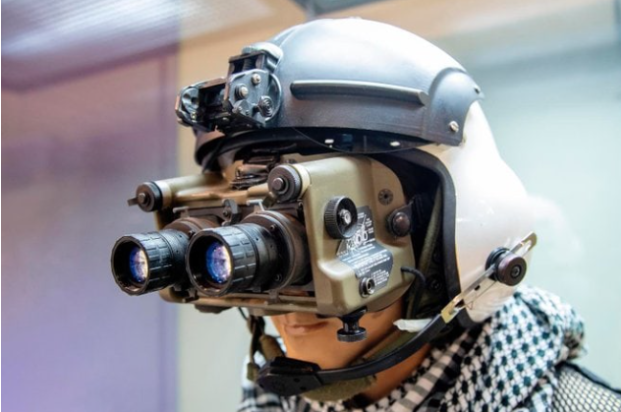
Helmet and night vision used by Air Branch while serving in Afghanistan post 9/11. [source]
5.3.1 Air America
Air America was a clandestine airline owned and operated by the CIA’s Air Branch from 1950 to 1976. Originally formed from an entity known as Civil Air Transport (CAT), the airline evolved into the CIA’s private fleet, conducting missions that ranged from humanitarian relief and search and rescue to inserting special forces, supplying anti-communist guerrillas, and transporting weapons. It operated extensively in China, Korea, Tibet, Laos, Vietnam as well as Thailand, where it operated their own headquarters. Additionally, they became central to the CIA’s “Secret War” in Laos, where it supported the Hmong forces and maintained clandestine airstrips. [source, source]
Their motto was “Anything, Anywhere, Anytime, Professionally.” [source]
However, Air America drew significant scrutiny for its alleged involvement in opium trafficking, to which CIA’s involvement is still up for debate. Leading authority on the Secret War and Air America, Alfred McCoy, claimed the airline quickly became a narcotic trafficking service for General Pao. In McCoy’s seminal work, he wrote:
“Air America began flying opium from mountain villages north and east of the Plain of Jars to Gen. Vang Pao’s headquarters at Long Tieng…The U.S. Embassy in Vientiane adopted an attitude of benign neglect toward the opium traffic.” [source]
McCoy further details how the CIA actively encouraged the cultivation of Opium with improved agricultural techniques, with the assistance of a former farmer from Indiana, Edgar “Pop” Buell:
“[Buell used his] agricultural skills to improve Hmong techniques for planting and cultivating opium. “If you’re gonna grow it, grow it good,” Buell told the Hmong, “but don’t let anybody smoke the stuff.” [source]
5.3.2 Responsibilities
- Covert insertion and extraction of CIA personnel
- Covert transportation of cargo
- Airborne surveillance/intelligence gathering
- Close Air Support
5.3.3 Aircraft and Equipment
While SAC does not provide a list of their aircraft and equipment, open source reporting provides glimpses into platforms used, for example in CIA’s “JAWBREAKER” team. The team were covertly inserted into Afghanistan aboard a Mil Mi-17 Hip helicopter. The American Special Ops outlet, notably unverifiable, also lists the following: [source]
- DHC-6
- DCH-8
- Antonov AN-32
- Lockheed L-100-30 (Civilian version of the C-130)
- Boeing 737
- MQ-1 Predator
- MQ-9 Reaper
- Mil MI-8 / MI-17
5.4 Armor and Special Programs Branch
Another element within the CIA’s SAC is the Armor and Special Programs Branch. Secondary sources, including the Operation Military Kids organisation – a national initiative that employs writers with prior U.S. military experience – describe this branch as distinct from the other SAC branches because it operates behind the scenes rather than in direct combat.
Members of this branch are thought to be responsible for the development, testing and covert acquisition of new personnel capabilities, weapons, equipment and transport. It thus plays a critical role in ensuring, for example, Ground Branch operatives have weapons and gear that is sourced clandestinely so that nothing can be traced back to the U.S. government if an operative is captured. [source]
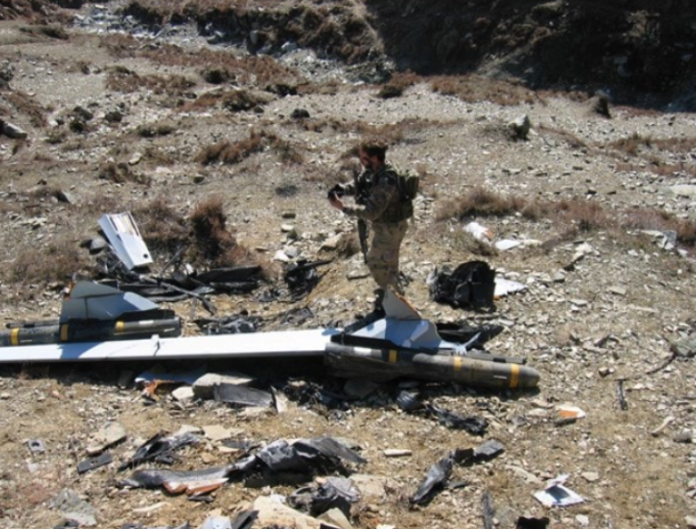
Alleged Ground Branch Paramilitary Operations Officer near aircraft wreckage. Image retrieved from Reddit. [source]
5.5 Political Action Group
The Political Action Group (PAG) is one of the least publicised elements. Reports consistently refer to the group as specialising in the arts of PSYOPS, economic sabotage and covert political influence. PAG therefore works to manipulate political and other decision-making outcomes in favor of U.S. interests while avoiding direct military intervention. [source, source]
In an age defined by digital conflict, algorithm-shaped narratives and deeply divided political societies, the PAG’s influence campaigns are likely exerting a level of global reach and consequence unlike ever before.
5.5.1 Responsibilities
- Covert influence (psychological operations)
- Economic warfare
- Covert political action
6.0 Assessment and Selection
CIA paramilitary officers are drawn from former military personnel, often having elite backgrounds, according to a Time magazine article that cited CIA officials. For military experience, “five years is the minimum requirement.” CIA recruiters “regularly prowl clubs like those at Fort Bragg” to find Green Berets interested in more unconventional work.
Special forces soldiers, such as Navy SEALS and Air Force commandos, are sometimes dispatched to the CIA when their expertise is needed for covert missions. In some cases, when one of these service members is assigned to operations that must remain deeply hidden, the military alters his official file to make it look as though he left active duty or shifted into a civilian role – a secrecy measure known as “sheep dipping.” [source]
The Farm
All operations officers both paramilitary and regular are required to attend an 18-month-long Clandestine Service Trainee Program. This takes place at “The Farm” in Camp Peary, Virginia.
There, officers learn how to infiltrate hostile environments, communicate in codes, retrieve messages from dead drops, and recruit and handle foreign sources who can provide vital intelligence.
Trainees sharpen their tradecraft as well as their practical paramilitary skills, like sharpshooting, preparing improvised landing zones for agency aircraft, and conducting small unit assaults. A portion of these recruits continue to Fort Bragg, where they train inside Delta Force’s restricted compound and learn advanced counterterrorism skills, like how to carry out hostage-rescues. [source]
6.1 Paramilitary Operations Officer
Paramilitary operations officers (PMOOs) are the CIA’s go-to officers for combat-related operations. TIME describes them training and advising local partner forces, gathering intelligence in dangerous environments, and being assembled into quick ‘pickup teams’ when the CIA needs a deniable unit for sensitive missions. Apparently, some in the DO degrade PMOOs as “knuckle draggers” – unintelligent, crude and aggressive individuals. However, operatives that worked closely with CIA SAC’s PMOO stated this is a misrepresentation. [source, source]
6.1.1. PMOO vs PM vs OO
CIA Operations Officers (OO), also known as case officers, manage full cycle human source recruitment operations to collect intelligence and, sometimes, are involved in various types of covert action programs.
Paramilitary officers (PM or PMOs) focus on covert actions of a military nature. PMs are the CIA’s subject matter experts in paramilitary operations. Like all contractors who work for the CIA, specialists are known as “green badgers,” are sometimes hired as independent contractors, and are highly regarded in the agency for being essential to the operations. Moreover, they often have decades of experience in special operations.
Paramilitary Operations Officers (PMOO) are a combination of a PM and OO and their assignments and careers can straddle the two worlds. Unlike PMOO, the paramilitary specialists stay in the paramilitary mission for their entire career, whereas PMOOs are able to switch between jobs, sometimes doing OO work. [source, source]
6.1.2. PMOO Minimum Requirements
- Ability to meet the minimum requirements for joining CIA, including U.S. citizenship, a background investigation, age 18+
- Bachelors degree from one accredited institution
- At least 3.0 GPA on a 4 point scale is preferred
- Served on active duty with the US Armed Forces in either of the following Military Occupations/Career Fields:
- Special Operations or Combat Arms
- Aviation or Aviation related specialties
- Successful completion of specialized paramilitary training and demonstrates a high level of physical readiness
- Willingness to serve in hazardous and austere environments overseas
- Personal integrity and the ability to operate with minimal supervision
- Strong interpersonal and communications skills (verbal and written)
- Ability to work effectively as part of a team as well as work independently
- Flexibility, adaptability, and commitment to the mission of the CIA and the Directorate of Operations
6.1.3. PMOO Desired Qualifications
- Minimum of 8 years of active-duty experience
- Served in multiple leadership positions generating a proven record of responsibility and critical decision-making in stressful situations
- Experience serving in combat and conducting combat operations; multiple tours, particularly in leadership positions, is highly desired
- Currently on active duty or within three years following departure from active duty
- Applicants on Reserve or National Guard status, more than three years from active duty, are more competitive if they have completed overseas deployments in that timeframe
Qualifications also considered:
- Non-combat overseas deployments with real-world impact
- Foreign language, foreign travel, and area knowledge
- Experience in advanced combat skills
- Experience conducting military/combat diving and underwater operations
6.2. Specialized Skills Officer
A Specialized Skills Officer (SSO) is a DO professional who supports and conducts CIA missions by applying specialised skills they acquired from education or/and experience. Additionally, SSOs serve primarily at CIA headquarters, although are still sometimes assigned overseas or duty travel. SSOs are found in SAC, however, they form a minority and function mainly as support personnel.
6.2.1. Minimum Qualifications
- Bachelor’s degree from an accredited institution (applicants within one year of earning a four year degree will be considered); there is no preferred major or program of study (degrees from foreign academic institutions are accepted, but you are responsible for obtaining and providing CIA with a credential evaluation from an accredited firm confirming that the foreign degree is the equivalent of a BA/BS and/or MA/MS degree conferred by a U.S. college or university)
- At least a 3.0 GPA on a 4-point scale is preferred
- Personal integrity
- Strong interpersonal and communications skills (verbal and written)
- Action- and results-oriented
- Ability to work effectively as part of a team as well as work independently
- Flexibility, adaptability, and commitment to the mission of the CIA and the Directorate of Operations
- Ability to meet the minimum requirements for joining CIA, including U.S. citizenship and a background investigation
6.2.2. Desired Qualifications
Knowledge and/or experience in any of the following categories:
- Social media, marketing, advertising, public relations, issue advocacy, crisis communication, or technology development.
- Business, finance, or legal fields.
- Military psychological operations or civil affairs.
- Merchant Marine/Commercial Maritime industries or military nautical experience.
- Commercial or military diving and underwater experience.
- Military aviation career fields such as:
- Pilot (fixed wing, rotary wing, manned/unmanned)
- Navigator
- Flight engineer
- Crew chief/mechanic
- Maintenance
- Avionics technician
- Mission sensor operator
- Forward air controller
- Para-rescue
- Aviation foreign internal defence
- Counterintelligence
7.0 Notable Engagements
7.1 Operation Jawbreaker
Following the attack on the World Trade Center, President George W. Bush ordered the Special Activities Center operatives to collaborate with foreign intelligence services. Within 15 days the first CIA paramilitary operators were on the ground in Afghanistan.
Pilots from Air Branch flew a crew of Ground Branch operators on a Soviet-made Mi-17 helicopter. Once on the ground, the team re-established contact with Northern Alliance leaders – relationships the CIA had cultivated decades earlier. With cash, intelligence, and solid HUMINT networks, they began persuading Afghan commanders to cooperate, gathering critical information that would shape the opening phase of the U.S. campaign and pursuit of Usama bin Laden. [source]
7.2 Operation Red Dawn
After the U.S. invaded Iraq in 2003, President Saddam Hussein disappeared from public view and began moving between a network of safe houses. His disappearance triggered the creation of Task Force 121 created specifically to track Hussein. The unit consisted of members from CIAs SAC, Delta Force, U.S. Army Special Forces and others.
Over several months, the combined effort conducted an intensive campaign of raids, interrogations, and network mapping to isolate individuals still in contact with Saddam. This pressure gradually narrowed the search area to villages south to Tikrit.
On 13 December 2003, U.S. forces located Saddam hiding in a concealed underground chamber, often described as a “spider hole,” on a small farm near ad-Dawr. [source, source, source]
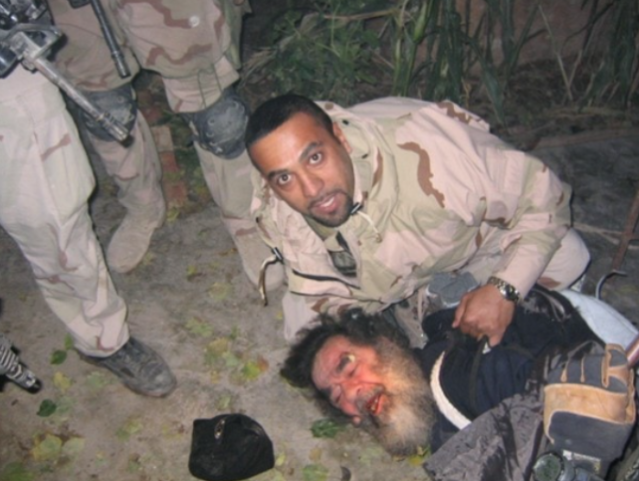
An Iraqi interpreter pulling Saddam Hussein out of his hiding hole. [source]
![[source]](https://commons.wikimedia.org/wiki/File:SaddamSpiderHole.jpg)
7.3 Abu Kamal Raid
On 26 October 2008, U.S. forces conducted a cross-border raid into eastern Syria near Abu Kamal, targeting a network of foreign fighters into Iraq. CIA’s SAC paramilitary officers, along with members from the United States Special Operations Command and Joint Special Operations Command, carried out the operation.
That day, the CIA confirmed the location of logistics coordinator Abu Ghadiya, a key target of this operation. While relatively unknown, he was reportedly largely responsible for smuggling fighters, weapons and cash into Iraq. A strike was quickly authorised, and according to US officials, Ghadiya was killed in the raid with several other cell members.
The Syrian government condemned the raid as a violation of sovereignty, claiming that eight civilians were killed. However, the U.S. government denies these claims, stating all that were killed were hostile militants. [source, source]
7.4 Ukraine
SAC’s activity in Ukraine, according to reporting by national security Correspondent Zach Dorfman based on interviews with current and former CIA officials, involved a small contingent of CIA paramilitary officers who began rotating into the country after Russia’s 2014 seizure. Working in “low single digits” and prohibited from combat, these officers trained select Ukrainian units in operational planning, long-range marksmanship, Javelin employment, secure communications and more. Dorfman noted that tactical specialists, including snipers, from the SAC accompanied other CIA paramilitaries. This initiative, according to former agency officials, has “helped battle-hardened Ukrainian special operations forces for the current Russian assault.” [source]
8.0 Summary
SAC stands as a key component of the CIA. Operating almost entirely in the shadows, its influence is felt across decades of conflict and covert action. For many, those who serve and have served within it are regarded as unswung heroes, operating without public recognition in some of the most dangerous environments.
In an era increasingly defined by hybrid warfare and operating below the threshold of conventional conflict, the CIA’s SAC is likely to play a growing role in providing deniable capabilities in sensitive theatres. The uboquity of surveillance technology and the rise of cyber warfare have presented new but challenging realities for SAC, forcing covert action to operate in an environment where deniability must be engineered against the highest levels of visibility the world has seen.
9.0 Reading List: CIA Special Activities Center
9.1. Surprise, Kill, Vanish: The Secret History of CIA Paramilitary Armies, Operators, and Assassins
Author: Annie Jacobsen
Publication Year: 2019
Why It’s Relevant
A revealing look at how the CIA’s covert arm conducts deniable operations—perfect for understanding America’s “third option.”
9.2. The Art of Intelligence: Lessons from a Life in the CIA’s Clandestine Service
Author: Henry A. Crumpton
Publication Year: 2012
Why It’s Relevant
Written by a high-ranking officer who oversaw paramilitary campaigns in Afghanistan, detailing how CIA covert action and counterterrorism intersect.
9.3. The Way of the Knife: The CIA, a Secret Army, and a War at the Ends of the Earth
Author: Mark Mazzetti
Publication Year: 2013
Why It’s Relevant
Examines the evolution of the CIA and the rise of paramilitary tactics essential to the SAC.
9.4. Legacy of Ashes: The History of the CIA
Author: Tim Weiner
Publication Year: 2007
Why It’s Relevant
A Pulitzer Prize–winning chronicle covering the Agency’s origins and controversies, including its paramilitary forays around the globe.
9.5. The Mission: The CIA in the 21st Century (sequel to Legacy of Ashes)
Author: Tim Weiner
Publication Year: 2025
Why Its Relevant
A stark, insider-led account of how the CIA shifted from post-Cold War agency to transforming itself into a “lethal paramilitary force” following 9/11.
9.6. Ghost Wars: The Secret History of the CIA, Afghanistan, and Bin Laden, from the Soviet Invasion to September 10, 2001
Author: Steve Coll
Publication Year: 2012
Why It’s Relevant
Examines CIA activities in Afghanistan, revealing how clandestine alliances paved the way for SAC’s post-9/11 missions.
9.7. Black Ops: The Life of a CIA Shadow Warrior
Author: Ric Prado
Publication Year: 2022
Why It’s Relevant
A firsthand memoir from a career paramilitary officer, illustrating CIA SAC-style manhunts, direct-action raids, and high-risk assignments.
9.8. The Third Option: Covert Action and American Foreign Policy
Author: Loch K. Johnson
Publication Year: 2022
Why It’s Relevant
A seminal examination of how covert action—beyond diplomacy (first option) and overt military force (second option)—shapes U.S. foreign policy. Johnson’s analysis clarifies the strategic rationale for the CIA’s Special Activities Center.
9.9. Jawbreaker: The Attack on Bin Laden and Al Qaeda: A Personal Account by the CIA’s Key Field Commander
Author: Gary Bernstsen
Publication Year: 2006
Why Its Relevant
A first-person account by a CIA field commander describing the pursuit of Osama bin Laden and al-Qaeda.
10. Covert Action: National Approaches to Practicing Unacknowledged Intervention
Author: Magda Long, Rory Cormac, Mark Stout, Damien Van Puyvelde, Genevieve Lester
Publication Year: 2025
Why Its Relevant
Brings together leading scholars to examine the history of covert action in twenty countries. The book challenges the conventional narrative on covert action and offers a comparative international perspective on statecraft.