
1.0 Introduction
The Freedom of Russia Legion (FRL) is a paramilitary unit composed of Russian citizens fighting for Ukraine against the Russian government. The Legion has also established the largest known resistance network operating inside Russia, conducting sabotage missions, reconnaissance and other covert activities. Formed in early 2022 and operating under Ukraine’s military intelligence directorate, the Legion includes army defectors, volunteers and anti-Putin activists committed to armed resistance against the Motherland. It conducts cross-border raids into Russian territory and frontline combat, often in coordination with other anti-Kremlin formations like the Russian Volunteer Corps and Siberian Battalion. Beyond its battlefield role, the Legion plays a part in the ongoing cognitive war, having become a potent symbol of resistance within Russia itself – representing an armed defiance from within the Russian population.
2.0 Motto, Symbols, Patches
2.1 Motto
“За Россию! За свободу!” – “For Russia! For Freedom!”
“Россия будет свободной!” – “Russia will be free!”
While not formally and officially declared as their motto, these lines have been frequently used in their social media channels. [source, source]
2.2 Symbols

The updated insignia of the Freedom of Russia Legion features a geometric emblem in olive and black tones. During our correspondence with the Legion’s Public Affairs Office, we received information regarding their symbolism and its meaning. They explained the patch reflects both the Legion’s primary combat capabilities – artillery, ground units, and UAVs and its three channels of influence: frontline operations, covert actions inside Russia carried out by the Freedom of Russia Resistance, and overseas support under the Freedom of Russia Movement.

Their previous insignia depicted a white clenched fist within a dark shield outline, symbolising resistance and defiance. It includes the Russian text “СВОБОДА РОССИИ” which translates to the unit’s name, Freedom of Russia. [source]

The emblem used by the Resistance wing of the Freedom of Russia Legion features a flame rising from a dark base. This is likely a symbol representing their typical sabotage operations inside Russia.
2.3 Patches

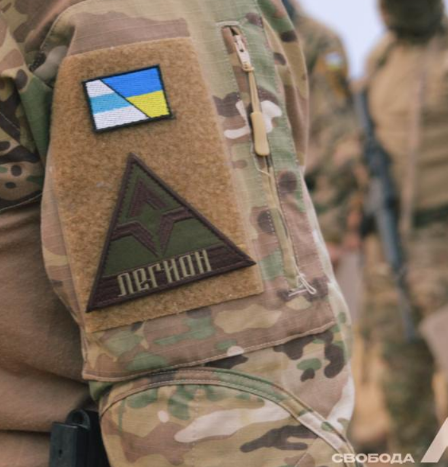
The patch mirrors their new insignia in both forms. We have also observed it centrally on the chest in a velcro format. Moreover, the unit commander posted on Telegram that the sleeve insignia will be placed 80mm below the top stitching on the left sleeve. [source]

Their older patch features the same clenched fist insignia with the text “СВОБОДА РОССИИ” appearing in different colour formats. Variants include olive/green hues, with other versions displaying a white-blue-black format.
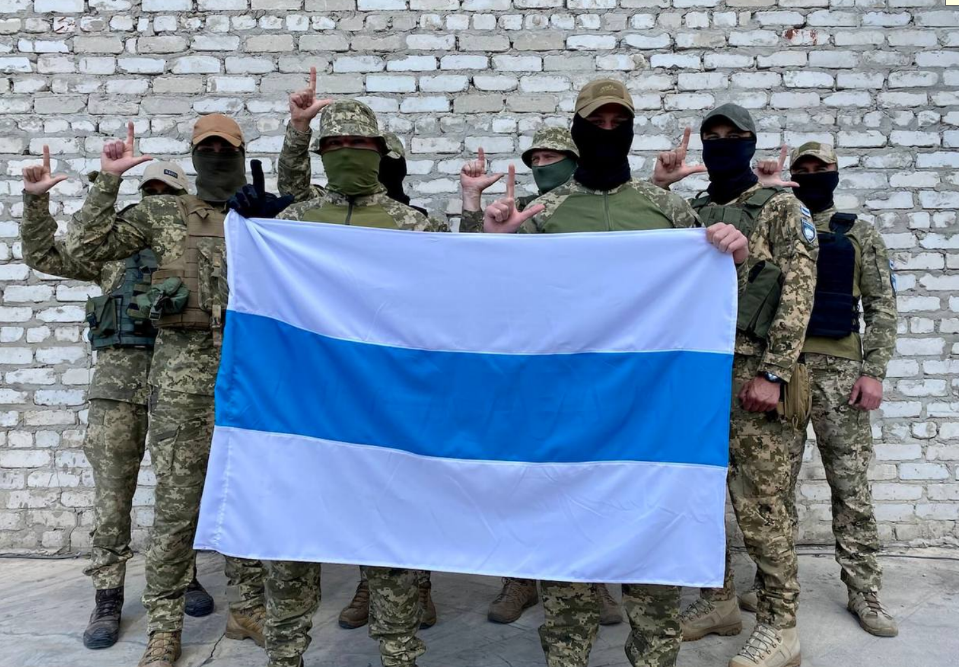
The Freedom of Russia Legion flag is a white-blue-white horizontal triband, and is widely recognised as a symbol of anti-Kremlin resistance. It resembles the flag originally used in Veliky Novgorod, one of the oldest cities in Russia and “known as the cradle of national democracy.” Furthermore, as the Legion’s Public Affairs Office told us, the removal of the red stripe is associated with the rejection of bloodshed and imperial aggression. The white stripes supposedly represent peace and hope, while the blue stands for freedom and civic unity. Additionally, Russian authorities have labelled the flag extremist and some officials attempted to ban it. [source, source]
3.0 Organisation
3.1 Place within Ukrainian Defence
3.1.1 Command Structure
FRL operates as a paramilitary group embedded within the International Legion for the Defence of Ukraine. It was formed in early March 2022 and formally integrated into the Ukrainian Armed Forces in August 2022. Caesar, the deputy commander of the legion, told ABC News in 2023 that the group cooperated with Ukraine’s Armed Forces only when operating on Ukrainian soil – a clarification that highlights its semi-autonomous status, functioning between a formally integrated unit and a paramilitary group under Ukrainian military coordination. This is further clarified when Caesar stated, “[when] defending the territory of Ukraine, we are interacting with the Armed Forces of Ukraine, we are a part of them… On the territory of the Russian Federation, we act absolutely independently.” [source, source, source]
3.1.2 Internal Composition
According to the FRL’s official website, the unit consists of the following primary functional components. They each have its own structure and number: [source, source]
- Unit Headquarters: The central command and coordination hub.
- Assault unit (including ATGMs and MANPADS groups).
- Artillery components.
- UAV (reconnaissance, adjustment and strike group).
- Radio Engineering/ Electronic Warfare units.
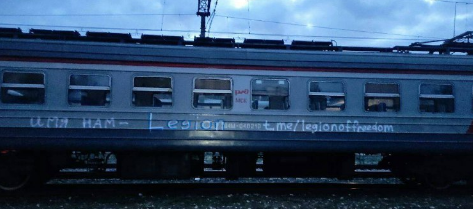
In addition, the FRL reportedly maintains a partisan network within Russia. The option to join the “Freedom of Russia Resistance” on their website likely refers to these internal networks. In a 2023 interview with ABC News, FRL leaders asserted that the unit comprises of two parts. Firstly, a combat wing (on Ukrainian territory) and second, a partisan movement that operates inside Russia. Furthermore, partisan movements or activities associated with FRL include railway sabotage in Russia, like the attempt near Rezh, or other clandestine tactics like sabotage. [source, source, source]
3.3 Financing
The Freedom of Russia Legion is likely financed primarily through private and personal channels, like other paramilitary, volunteer formations in Ukraine. Moreover, a lot of the funding identified comes from anti-Kremlin activists, Russian citizens, and small-scale crowdfunding campaigns coordinated through Telegram and similar platforms. One campaign raised roughly USD $23,000 to purchase FPV drones and related equipment. The Legion’s website lists Bitcoin, Ethereum, and USDT wallet addresses for donations under the “Support” section. In 2023, the legion signed a memorandum of cooperation with the 24.02 Foundation and, thus, is able to accept donations through their checking account. [source, source, source, source, source]
Operational security in funding the group from Russia is paramount. Video footage and local media has reported the detention of 19 year old Danila Yakovlev from Biysk for transferring 5000 rubles, approximately $60, to the legion. Russian authorities treat the Legion as a terrorist group and charge those who knowingly fund it under anti-terrorism laws. [source, source]
When asked about their current support needs, the Legion’s Public Affairs Office stated they depend on sustained informational and financial backing to continue operations. Furthermore, they stressed that advocacy is essential to reach Russians who “need to find out that the fight isn’t over and we can take back our country together.” Moreover, they added that European policy adjustments are also needed so volunteers with Russian passports can travel safely to Ukraine, given the extensive restrictions and surveillance inside Russia.
3.4 Key Figures
Maximilian Alexandrovich Andronnikov, Callsign “Caesar”
Maximilian Alexandrovich Andronnikov serves as the spokesperson and deputy commander of FRL. He was born on 19 March 1974 in Sochi and, according to his public statements, worked as a coach before joining the resistance against Putin’s regime. Andronnikov was previously affiliated with the Russian Imperial Movement (RIM), an ultranationalist organisation that opposes Vladimir Putin’s government but has also fielded fighters loyal to the idea of a pro-Russian motherland. However, the Guardian reports Andronnikov left the group before the war in Ukraine began in 2014. Andronnikov is on Rosfinmonitoring’s List of Terrorists and Extremists. [source, source]
Andronnikov has urged Ukrainian journalists to avoid harsh rhetoric toward Russians, emphasizing that the Legion targets the Kremlin, not ordinary citizens. As he stated, “the task of the legion and my personal task is to broadcast a vision of a positive future to Russia.” [source, source]

Ilya Ponomarev
Ilya Ponomarev, a former Russian State Duma deputy who serves as the Representative of the Freedom of Russia Legion, representing its political and public outreach wing. However, following the group’s emancipation from politics, particularly the break from the Irpin Declaration of 2022, it is unclear whether Ponomarev continues to play a role, considering his political title. [source, source, source]
Ponomarev was the only member to vote against the annexation of Crimea in 2014. He was also one to refuse to endorse Russia’s so-called “gay propaganda law.” The Kremlin quickly branded him a state traitor. Furthermore, Ponomarev was reported living in exile in Ukraine, from where he advocated the overthrow of Putin’s regime. [source, source]
Igor Mikhailovich Volobuev
Igor Volobuev, a former Vice President at the state owned Russian bank Gazprombank, publicly defected to Ukraine after Russia’s full scale invasion. While his exact rank within the legion remains unclear, Volubuev’s move from being within the “Kremlin’s trusted inner circle to [Russia’s] most wanted list within a matter of months” underscores his significance within the Legion and the potent symbolism his defection carries. [source]
3.5 Recruitment
Methods
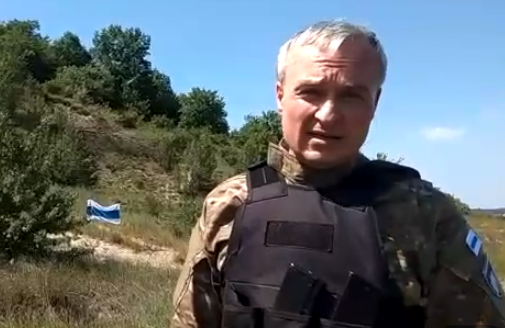
Recruitment into the FRL occurs through a mix of online outreach, vetted applications and selective personal referrals. The Legion maintains a presence on Telegram and its official website, where prospective applicants can apply and undergo preliminary screening. The Legion’s Telegram and website directs interested individuals to a google form. It provides three paths within the legion; the military wing, the resistance, and intelligence. Responses are within seven days of applying. Additionally, many Russian citizens who oppose the Kremlin either crossed Ukraine voluntarily or were POW’s and later chose to enlist. [source, source, source, source]
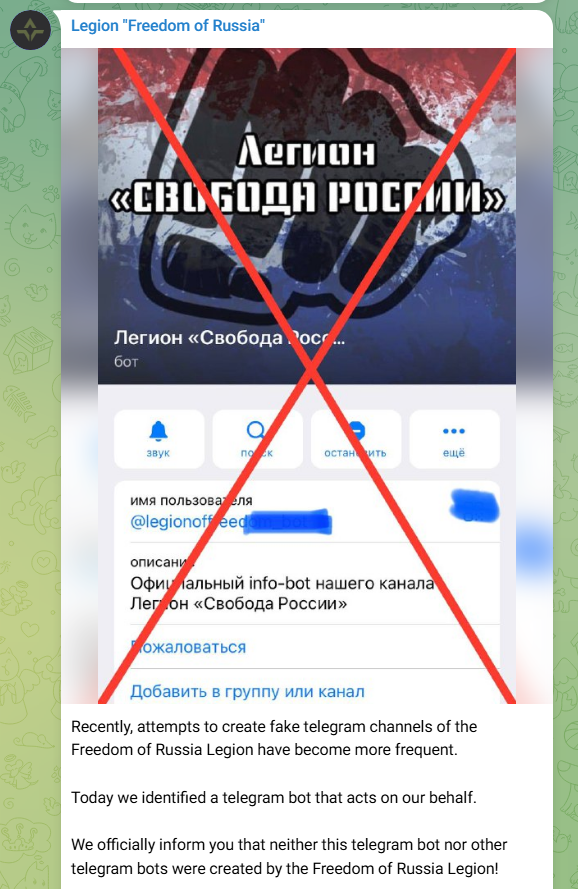
Operational security is paramount for the Freedom of Russia Legion. This is especially relevant in recruitment, where persistent impersonation attempts pose serious risks. Furthermore, the Legion’s Public Affairs Office told us the “FSB creates numerous twink accounts in telegram messenger, they try to fake our website, provide corrupted links and arrest everybody trying to contact us or just follow our updates.” For example, in 2022, FRL identified a fake Telegram bot falsely claiming to represent the Legion’s official channel, prompting a formal warning to their supporters. [source]
Requirements
The FRL mentions three core requirements for joining: applicants must hold Russian citizenship, demonstrate basic physical fitness, and show strong motivation and commitment to the Legion’s cause. Moreover, recruiters encourage volunteers without Russian citizenship to join other units within the International Legion. Additionally, recruits do not need prior combat or military experience, as they learn and develop most skills during training. We infer that volunteers must speak the Russian language, and it is likely that some command of Ukrainian is desired. [source]
Training
The Freedom of Russia legion combines strict vetting with a short intensive training cycle. Applicants go through identity checks, several rounds of interviews, psychological tests, and polygraph tests before selection. [source]
Accepted individuals complete a concentrated basic course, usually lasting one to three months. Furthermore, recruits undergo military training, which include special tactics, fire, engineering, topography, medicine and others. Toward the beginning of the legions formation, UNIAN reported that the Legion was instructed by the Armed Forces of Ukraine when training them on Western equipment. For example, the Next-generation Light Anti-tank Weapon (NLAW) and Stinger MANPADS (Man-portable Air Defence System). [source, source]
4.0 Equipment
4.1 Weapons
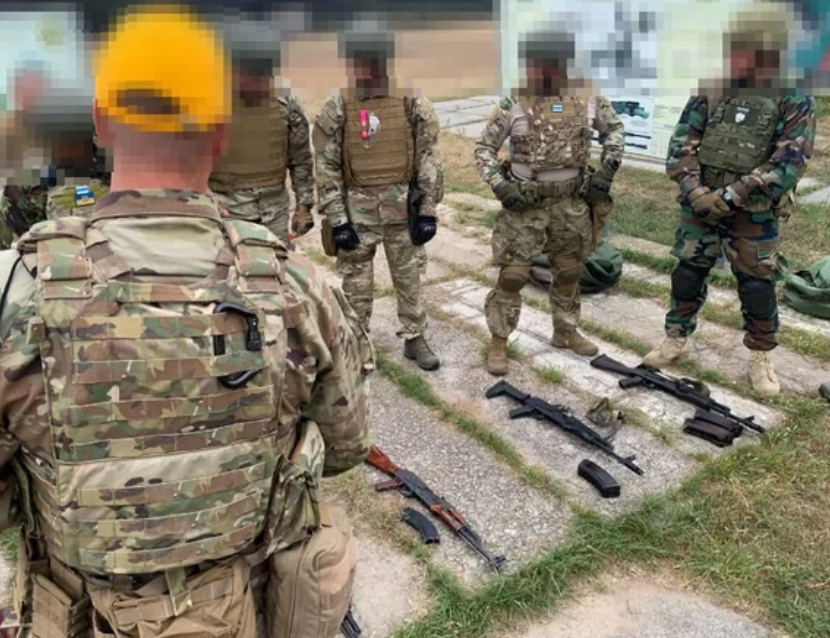
The Freedom of Russia Legion employs a range of weaponry aligned with the operational roles of its specialised subunits. Based on open-source imagery and reporting, their arsenal includes, but is not limited to:
Rifles
- Daniel Defense DDM4 assault rifle. [source]
- FN F2000 bullpop. [source]
- M-4 pattern carbines. [source]
- AK-47 series rifles (including variants equipped with GP-25 under-barrel grenade launchers). [source]
- AK-74 variants. [source]
- SCAR assault rifles. [source]
Sniper Rifles
Unmanned Systems
- TerMIT ground drones with American Browning M2 heavy machine guns installed. [source, source]
- Likely use of Aerorozvidka R18. [source, source]
Other weaponry
- PKM general purpose LMG. [source]
- 120mm mortars. Use of French mortar MO-120-RT61. [source, source]
- AGS-17 automatic grenade launcher. [source]
- Pansarskott m/86 anti-tank weapon. [source]
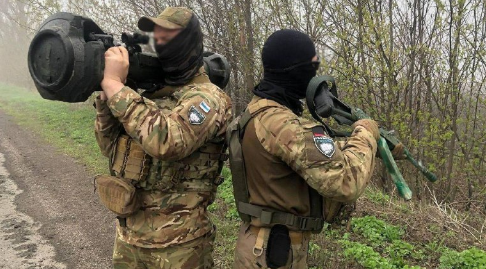
- MBT LAW anti-tank weapon. [source]
4.2 Vehicles
FRL has been documented operating a range of vehicles including the BMP-1, UAT GYURZA, Humvee M1151, and CFMOTO CFORCE 1000 Overland quad bikes. Additional vehicles such as the T-64BV main battle tanks and captured BTR-82A armored personnel carriers have also been visually confirmed through FRL social media documentation. This list, however, is certainly not exhaustive and the inventory is likely to be fluid and opportunistic, shaped by battlefield captures, allied donations, and evolving mission needs. [source, source]

4.3 Optics
Across the images reviewed, most of the optics of the FRL weapons are difficult to identify with certainty. However, at least one rifle appears to be equipped with an Aimpoint Micro-series optic, likely a T-1 or T-2. Other rifles show signs of mounted optics consistent with EOTech holographic sites, low power variable optics and others show standard red dot sights. Furthermore, the variety of optics likely reflects the multiple supply paths of FRL, from formal military channels to informal donor networks and opportunistic battlefield recovery. [source, source]
4.4 Armor and Kit
FRL fighters consistently wear a mix of Ukrainian-standard and Western-supplied armor and kit, though configurations vary by role and operational context. Most personnel are equipped with modular plate carriers in Multicam, olive drab, or woodland patterns, fitted with STANAG- compatible magazine pouches, IFAKs and utility gear. Additionally, ballistic helmets are standard, often high cut with NVG shrouds. [source, source]
Uniforms range from NATO-style camouflage to civilian tactical apparel, reflecting diverse sourcing. Face coverings, balaclavas or shemaghs are universally worn to maintain anonymity. Moreover, tactical gloves and MOLLE-compatible backpacks are common. Night vision goggles, potentially the PVS-14, have been frequently observed. [source, source]
5.0 Tactical-Operational Information
5.1 Operations
Much of the Freedom of Russia Legion’s operations remain classified due to their sensitive nature. However, the Legion regularly publishes curated combat reports, strike footage, and activities are occasionally publicised by media and other platforms. When speaking to the Public Affairs Office, we were told their “biggest achievements include destruction of several military aircrafts, lots of military vehicles, powerplants at the army facilities, railway signaling control units and locomotives.” Some key operations of FRL that have been reported include:
5.1.1 March 2024: Cross-border raid into Belgorod and Kursk Oblasts
On 12 March 2024, the Freedom of Russia Legion, in coordination with the Russian Volunteer Corps and the Siberian Battalion, launched a large-scale cross-border raid into Russia’s Belgorod and Kursk Oblasts. Furthermore, the operation marked one of the largest incursions to date, and coincided with Russia’s presidential election week. Fighters crossed the border with tanks and armoured vehicles. Additionally, FRL published footage showing a destroyed Russian APC in the village of Tyotkino, Kursk, which the BBC verified. The Russian Defense Ministry denied this defeat. They claimed “Ukrainian terrorists who tried to break into Russian territory were struck by aviation, missile forces and artillery.” [source, source, source, source]
Ukraine’s military intelligence spokesperson, Anriy Yusov, emphasised that these units were independent organisations and were “operating at home” (in Russia), distancing Ukraine from direct involvement. Yusov proceeded to also state “these are citizens of the Russian Federation, and at home they have the right to do whatever they think is necessary in this situation to protect their civil rights and free their country from the Russian Putin dictatorship.” [source]
5.1.2 September 2023: Direct action in Belgorod Oblast
On 28 September 2023, the Freedom of Russia Legion conducted a targeted operation inside Russia’s Belgorod Oblast. They engaged in an intense firefight with Russian forces and claimed tactical success. The Legion stated their 1st Mechanised Battalion carried out their operation. Furthermore, the group entered the territory through the border of the Sumy region and fought in the east of Starosilske in the Krasnoyaruzhsky district. The footage published on the Legion’s YouTube shows the operation began at dusk with the use of night vision devices. During the battle, an aerial reconnaissance unit coordinated with those on the ground, and soldiers used the support of FPV drones and 120mm mortars. Furthermore, the Legion reported that all of the FRL soldiers remained unharmed. Five Russian soldiers died and the Legion 13 wounded 13 others. [source, source, source]
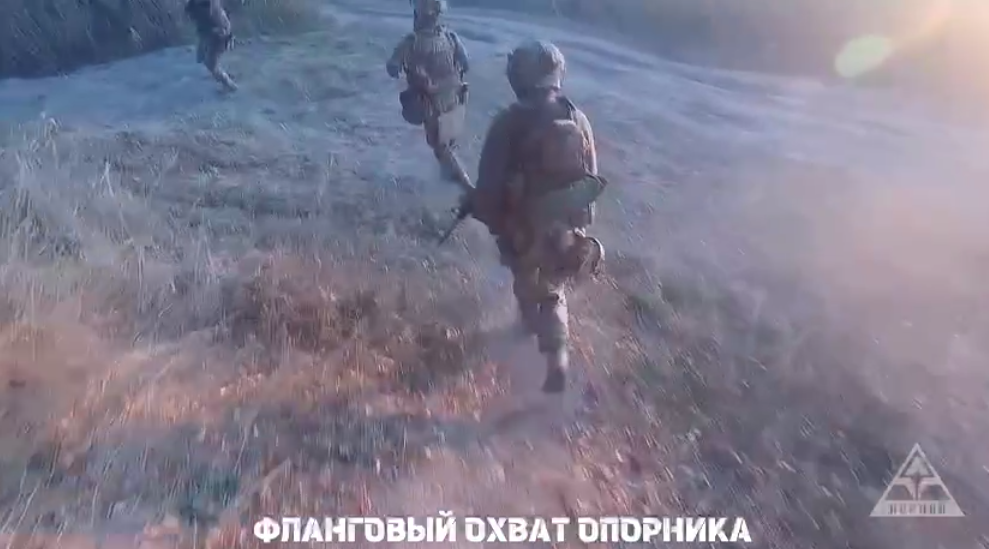
Footage of FRL operatives engaging in CQC during the operation on 28 September 2023.
June 2025: Zaporizhia logistics target
In late June 2025, the Freedom of Russia Legion conducted a precision strike on Russian logistics infrastructure near Nesrerianka in Zaporizhzhia Oblast. They targeted a key supply route for troop and equipment movement. Coordinated with the Ukraine Defense Forces, the operation rendered the road virtually impossible, with intercepted Russian comms referring to it as “death road.” Furthermore, combat footage released by the Legion showed drone and ground-based attacks. The disruption indeed significantly hindered Russian mobility in the sector. [source]

5.2 Core Purpose
FRL serves as a Russian volunteer formation that fights against the Russian regime, primarily serving as frontline combat and reconnaissance units. They also conduct specialised tasks such as UAV operations and electronic warfare. Following the full-scale invasion, the FRL emerged as one of several volunteer units of Russian citizens fighting in coordination with Ukrainian forces.
When asking the Public Affairs Office on their goals, we received the following statement:
“The main goal for the Freedom of Russia Legion — is to stand with the Ukrainians at the hardest time, to support and help them save their independence and liberate their land. It’s the ultimate purpose for all of us to come to Ukraine and join the Ukrainian defence forces.”
They further stated: “The next goal — is to eliminate Putin’s regime in Russia as we all agree that his ruling simply destroys our Motherland. We all agree that every Russian aggression in the world that Putin started led to the further decay of the Russian state and society, both moral and economic. The goal of liberating Russia from the regime is complex, it’s distanced in time and hard to achieve but through the years of unprovoked war we’ve seen that the Russian army, economy and society has deteriorated to the state lower than ever before.”
5.2.1 Personal motivations
As many of its members are Russian dissidents, defectors or exiles, their motivations for joining the Freedom of Russia Legion may differ but centre on opposition to the Kremlin and a desire to fight for a democratic, post-Putin Russia. In an Intefax-Ukraine press conference in 2022, the commander of FRL, a former Ukrainian PoW, outlined his motivations for joining the unit. Moreover, he stated that, among other factors, witnessing the destruction in Irpin, Bucha and Hostomel prompted him to reassess Russia’s “special military operation” which he described as a campaign of genocide intended to establish new political control over occupied territories. Other members have also stated their personal motivations for joining these units: [source]
“I am fighting for the opportunity to live in a country where you are not afraid to speak the truth, where people are respected, their choices and dignity are respected.” [source]
“I am fighting to ensure that in the future my nation…will not be fully associated with the concept of racism or fascism.” [source]
“We are not Ukrainian saboteurs, we are citizens of Russia who have long understood that Putin’s power can only be removed with a weapon in hand.” [source]
“When the regime killed Alexei Navalny, we lost hope but found it again in the Legion Freedom of Russia’s strife. We decided that it’s not enough just to leave Russia, our personal values, such as honor and conscience led us to the ranks of armed opposition – Legion’s ranks.” (FRL’s Public Affairs Office)

5.2.2 Freedom of Russia Legion: on Prisoners of War (POWs)
The Legion’s Public Affairs Office further highlighted their stance on the handling of prisoners of war and their strong commitment to the Geneva Convention. They stated:
“As a unit we always put a lot of effort to capture occupants alive and save their lives. We follow the Geneva convention strictly, focusing on saving Russians in order to exchange them for our brothers in arms from the Ukrainian defence forces. Even though such an extraction operation may be dangerous and Russians tend to be willing to eliminate just-captured comrades with UAVs, we’re figuring out how to bring them to safety, provide with all the medical aid needed and transport them to the safer city to become POWs and wait for the exchange.”
“There were even cases when Legionnaires saved their ex fellow citizens at the cost of their lives. Russian state propaganda spends a lot of money, time and resources to discredit us and haunt our supporters but still we’re trusted in Russia.”
5.3 Tactics
Tactics employed by the FRL indeed vary depending on terrain, objective and operational constraints. The following are the Legion’s primary tactical doctrines:
- Cross border raiding: Short, high impact incursions into Russian territory. [source]
- Small unit maneuvers: Combat footage and DIU releases consistently show 5-10 person assault teams, often moving through forested terrain/urban edges. [source]
- Sabotage: Destruction, disruption or obstruction of Russian equipment, infrastructure or operations. Evident in the operation of former Russian sailor “Goga” who assisted in sabotaging a Baltic Fleet Serpukhov missile ship and extracting classified data. [source]
- Night deployments: Infiltration under the cover of darkness to reduce detection and maximise surprise. [source]
- Infrastructure disruption: Targeting adversary headquarters, railways and supply nodes to cripple Russian military logistics. [source, source]
- Flanking maneuvers: Assault groups attacking from the side to bypass enemy defenses. Documented in the operation in Belgorod, 28 September.
- Close-quatre-combat: Operatives specialise in direct action. [source]
5.4 Personnel size
Accurate figures on the FRL manpower remain uncertain, as the Ukrainian government directly prohibits disclosing the number of the soldiers in a Ukrainian unit. However, open-source assessments suggest a steady expansion since its inception in 2022, where the group reportedly began with around 100 volunteers. Recruitment reportedly surged within months of its establishment. Moreover, the Legion claimed to receive hundreds of applications daily at its peak.
Ilya Ponomarev hinted at its size in 2024. He stated “If you listen to what Mr. Putin has said recently, he said that it was 2,500. … It’s not that far off. His number is a little bit over. The actual number is smaller.” Furthermore, Ponomarev also claimed they receive about 1,000 applications a month. However, the number of applicants who leave Russia to join the legion are about 50 a month. In the same way as other formations of this kind, FRL scrutinises applicants not only to identify those most likely to be reliable fighters, but to weed out Russian double agents and spies. Thus, the number of applicants does not necessarily equate to those who are eventually recruited. Therefore, based on these factors, the group’s active military strength likely falls somewhere between 1,000 and 3,000 personnel. [source, source, source]
6.0 The Future
Based on patterns from the beginning of its formation in 2022 to the present, 2025, the Freedom of Russia Legion is likely to continue expanding its capabilities. The unit has indeed demonstrated increasing tactical sophistication, and this trajectory is likely to accelerate through improved equipment and sustained support via private donations and Ukrainian government funding. Personnel numbers are also likely to rise. Furthermore, this is driven by active recruitment campaigns and the unit’s ever-growing visibility and reputation across Russian and Ukrainian media. Additionally, as the technological landscape of warfare continues to rapidly evolve, and as adversaries adapt in parallel, the Legion is likely to integrate advanced systems, including AI enabled platforms, to counter emerging threats and gain advantage.

7.0 Conclusion
The Freedom of Russia Legion has indeed evolved beyond its role as a combat unit. Its growing visibility, signs of internal support within Russia, and the increasing association of the white-blue-white flag within the unit itself has elevated the Legion from a combat formation to a defining emblem of armed defiance, adding a psychological element to its overall impact. The Legion draws attention not only for its operations and successes on the battlefield, but for what it has come to represent in an era of sustained Russian aggression and the broader struggle against authoritarianism.